September 6, 2026 · Guide
What Is Ube? The Complete Guide to Purple Yam
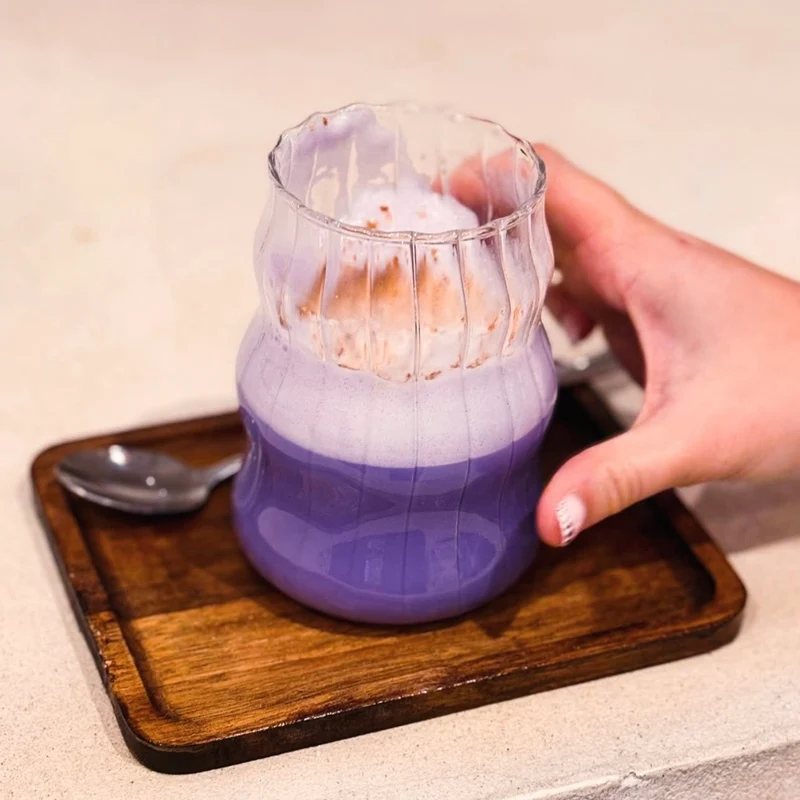
Ube is the purple yam from the Philippines that's taking over lattes, desserts, and social media worldwide.
From Starbucks menus to TikTok trends, ube is everywhere. But what exactly is it? Where does it come from? And why is everyone obsessed with this vibrant purple ingredient?
In this complete guide, we cover everything: ube's origin, flavor, nutrition, health benefits, how it compares to taro, and how to use it at home.
Updated on
Quick answer
Key Takeaways
- Ube is a purple yam (Dioscorea alata) from the Philippines
- Flavor: vanilla + toasted biscuit + white chocolate, naturally sweet
- Not the same as taro (earthy, starchy) or purple sweet potato (dry, fibrous)
- Rich in anthocyanins, fiber, vitamin C, manganese, iron
- Caffeine-free, gluten-free, vegan, ~120 kcal per 100g
- Used in lattes, desserts, ice cream, baking, and smoothies
- Ube powder is the easiest way to use it at home
Where Does Ube Come From?
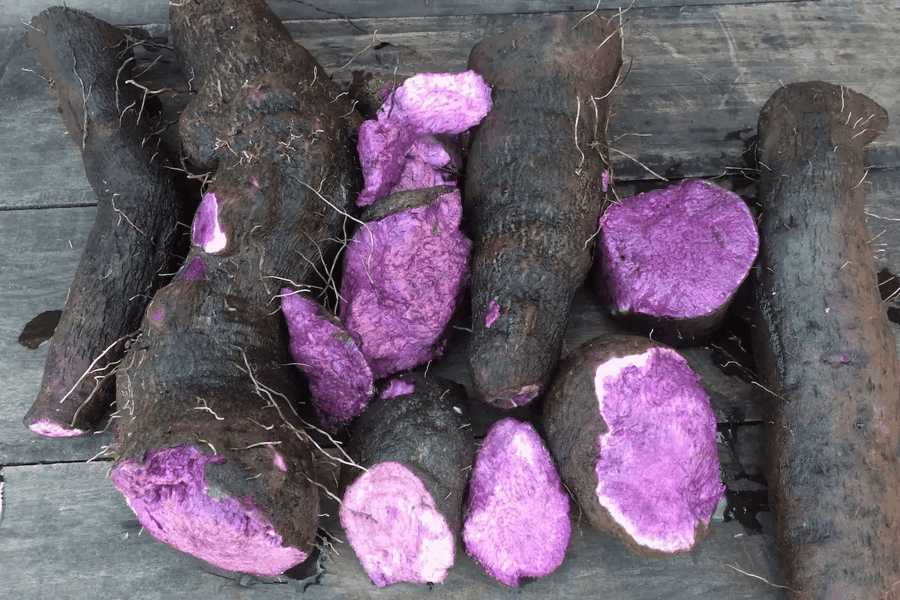
Ube, also known as purple yam, is a climbing tuber from the Dioscorea family. It's been cultivated for centuries in the Philippines, Indonesia, and other tropical regions of Southeast Asia. The word "ube" (pronounced OO-beh) comes from the Filipino language.
Unlike regular yams or potatoes, ube has an intensely purple flesh that retains its vibrant color after cooking. This natural pigment comes from anthocyanins, the same powerful antioxidants found in blueberries and acai, but in much higher concentrations.
Ube thrives in humid tropical climates, often grown on small family farms. It typically requires 8-10 months of careful cultivation to reach maturity, making it a premium, seasonal crop.
What Does Ube Taste Like?
This is what surprises most people: ube tastes nothing like a potato. It delivers a complex, naturally sweet flavor that's often described as dessert-like but without any added sugar.
Three notes come back every single time: vanilla (warm and enveloping, never artificial), biscuit (like a light, delicate shortbread), and white chocolate (a creamy, buttery finish that lingers). Together they create a flavor profile you won't find anywhere else in the plant world.
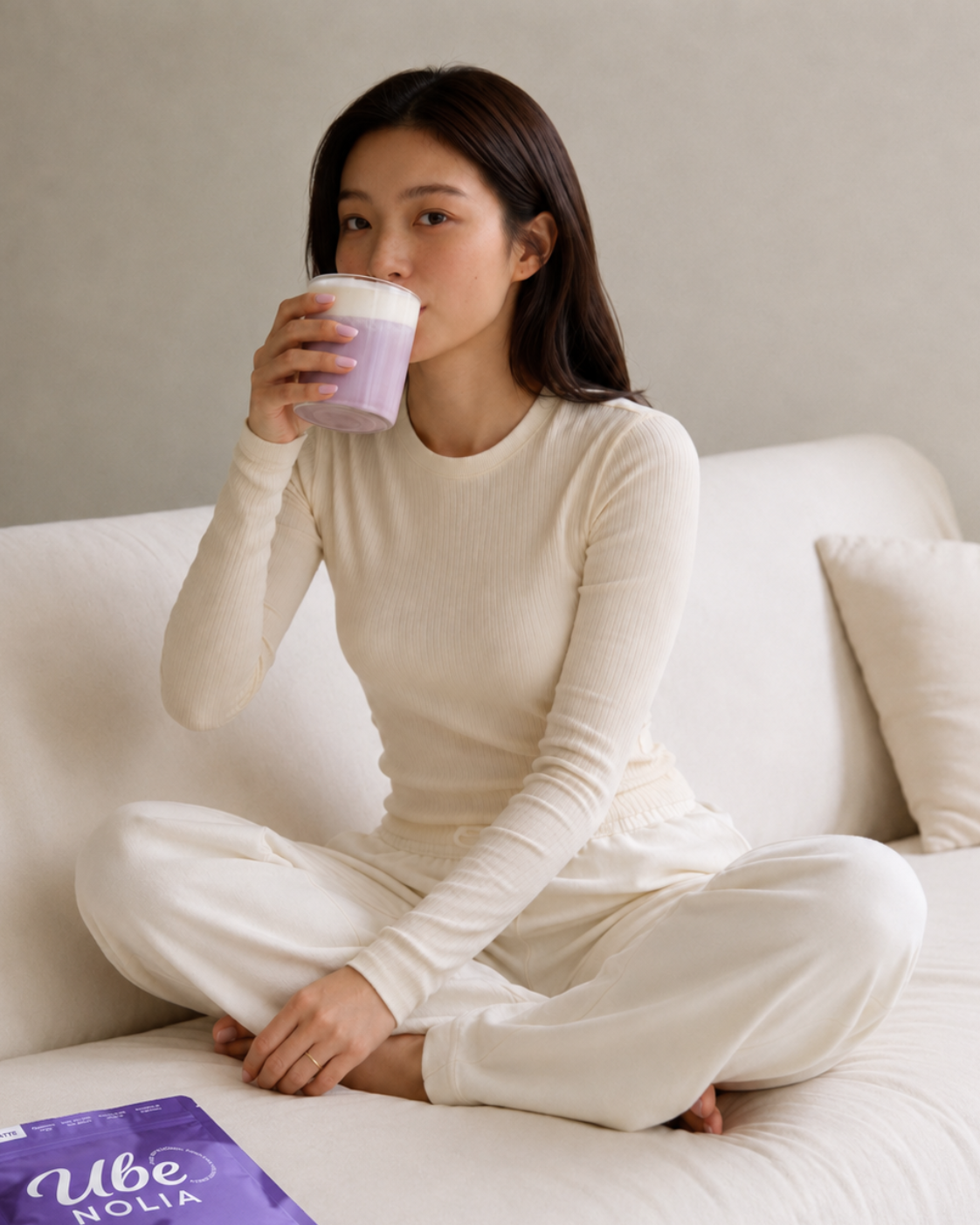
The first sip of an ube latte surprises everyone: it tastes closer to a premium dessert than to any vegetable. The sweetness is real but subtle, it comes from ube's natural aromatic compounds, not from added sugar.
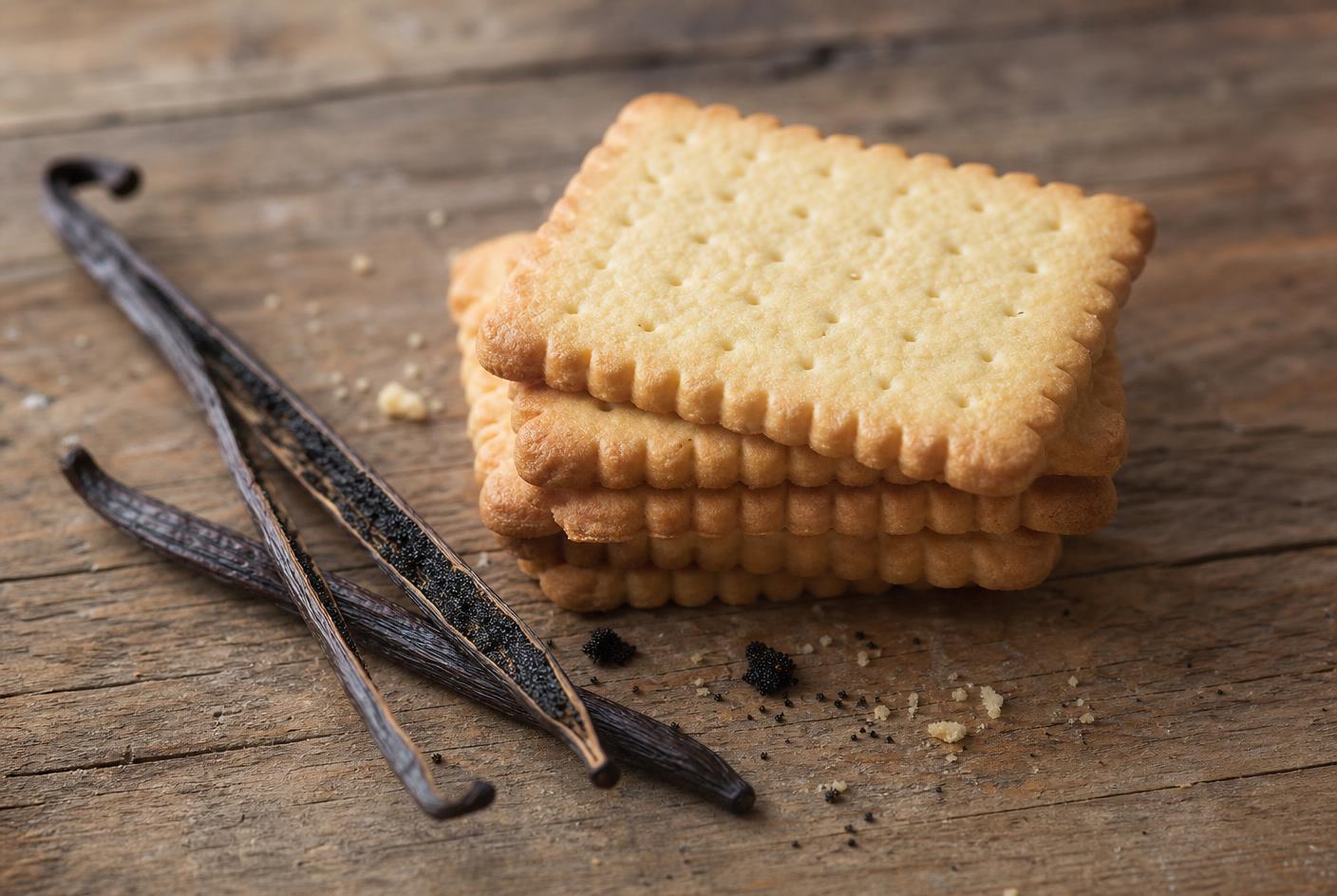
How Ube Flavor Changes by Preparation
Ube's flavor shifts slightly depending on how you prepare it, which is part of its versatility:
- Hot ube latte: vanilla-forward, warm biscuit, comforting, with a velvety foam.
- Iced ube latte: lighter, refreshing, with a sweet finish.
- Ube ice cream: rich and intense, with a dense, silky texture.
- Ube in baking: subtle and aromatic, it enhances butter notes in cakes and cookies.
- Ube halaya (jam): intensely sweet, coconut-vanilla, thick and spreadable.
The common thread across all preparations is ube's signature vanilla-biscuit warmth. Hot or cold, in a drink or a dessert, you will always recognize ube's unique flavor fingerprint.
Real Ube Flavor vs Artificial Flavoring
Not everything labeled "ube" delivers authentic ube flavor. Many commercial products, especially ube-flavored drinks in chain stores, use artificial flavoring and synthetic purple dye rather than real ube. The difference is dramatic:
Real ube flavor
- Complex layers of vanilla, biscuit and white chocolate
- Naturally sweet, no sugar needed
- Rich, stable purple color from anthocyanins
- Made from 100% real ube
Artificial ube flavor
- One-dimensional, generic sweet taste
- Needs added sugar and syrups
- Color from artificial dyes that fade quickly
- Often contains fillers, starches and additives
The key to authentic ube flavor is a 100% pure ube powder with no fillers or additives. Ube Nolia ube powder is pure ube from Dagupan and Urdaneta in the Philippines, with no coloring, no additives and no added sugar.
Best Flavor Pairings with Ube
Ube's vanilla-biscuit profile makes it incredibly versatile. The combinations that bring out the best in ube:
- Coconut: the classic Filipino pairing. Coconut milk amplifies ube's creaminess and adds a tropical dimension.
- Oat milk: the most popular choice for ube lattes, its natural sweetness complements ube without overpowering it.
- Mango: a bright, tropical contrast that makes ube's sweetness pop.
- Cinnamon: a warm spice that deepens ube's vanilla notes.
- White chocolate: echoes ube's natural white chocolate undertones for a truly indulgent result.
- Matcha: an earthy counterpoint that creates a stunning visual and flavor contrast.
Vanilla
The dominant note. A warm, natural vanilla aroma that's elegant and never artificial.
Toasted Biscuit
A subtle biscuity note that adds depth and warmth. Think biscuit praline, but lighter.
White Chocolate
A creamy, buttery finish that makes every bite or sip feel indulgent.
Want to dive deeper into ube's flavor? Read our full guide: What Does Ube Taste Like?
Ube vs Taro vs Purple Sweet Potato
These three purple tubers are constantly confused, but they're completely different plants with distinct flavors, textures, and uses:
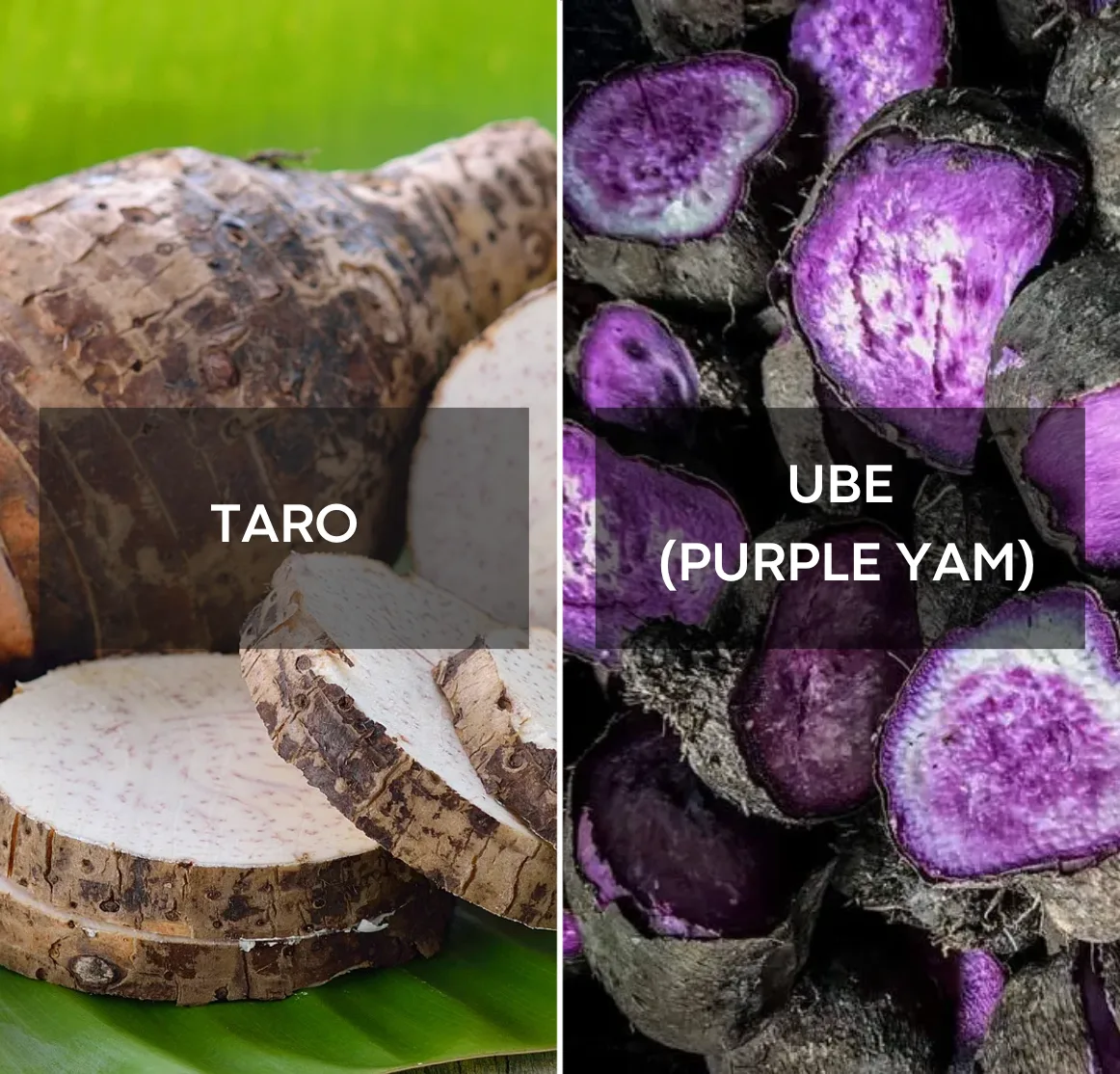
| Feature | Ube | Taro | Purple Sweet Potato |
|---|---|---|---|
| Scientific name | Dioscorea alata | Colocasia esculenta | Ipomoea batatas |
| Color | Deep purple throughout | White/light purple | Purple flesh, brown skin |
| Taste | Sweet, vanilla, biscuit | Earthy, starchy, neutral | Mildly sweet, earthy |
| Texture | Silky, creamy, mousse-like | Starchy, dense | Fibrous, drier |
| Best for | Lattes, desserts, baking | Soups, savory dishes | Gratins, curries |
Ube vs Taro: Full Comparison →
Different families, different flavors. Learn why they're nothing alike.
Ube vs Purple Sweet Potato →
Similar color, completely different taste and texture.
Health Benefits of Ube
Ube isn't just beautiful - it's a nutritional powerhouse. Here's what makes it a superfood:
Antioxidants
Ube contains 7x more anthocyanins than blueberries. These powerful antioxidants protect cells from oxidative stress and support heart and brain health.
Vitamins & Minerals
155% daily manganese, 31% iron, 64% copper, 25% magnesium per 100g. Plus vitamin C for immunity and healthy skin.
Fiber
8.8g fiber per 100g supports digestion and gut health. Keeps you feeling full and energized longer.
Clean Profile
Naturally gluten-free, vegan, caffeine-free. Only ~120 kcal per 100g. No major allergens. Perfect for any diet.
Ube in Filipino Culture
In the Philippines, ube is more than an ingredient - it's a cultural icon. For centuries, Filipino families have prepared ube halaya (a sweet purple jam made by slowly cooking ube with condensed milk and butter) for festivals, holidays, and family celebrations.
Ube also stars in halo-halo (a layered shaved ice dessert), pandesal (purple bread rolls), ensaymada (sweet brioche), and countless modern creations.
The ube latte is the latest chapter in this rich culinary tradition, bringing Filipino flavors to coffee shops worldwide.
How to Use Ube at Home
The easiest way to enjoy ube is with ube powder - no peeling, boiling, or prep required. Here's what you can make:
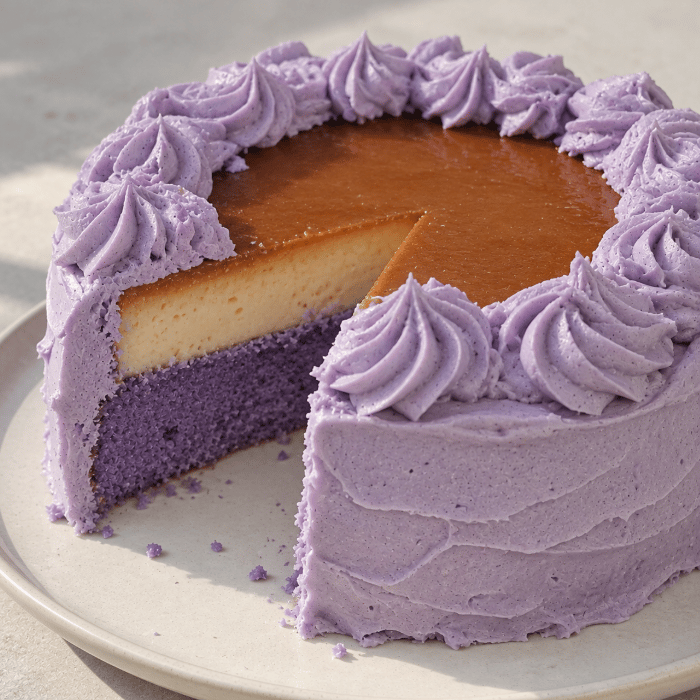
☕ Ube Lattes
🍰 Desserts & Baking
- Ube cheesecake and panna cotta
- Naturally purple muffins and cookies
- Ube halaya (Filipino jam)
- Smoothie bowls and ice cream
Explore all our recipes: Ube Recipe Collection
Quick Ube Latte Recipe
Ready to try ube? Here's the simplest way to make your first ube latte:
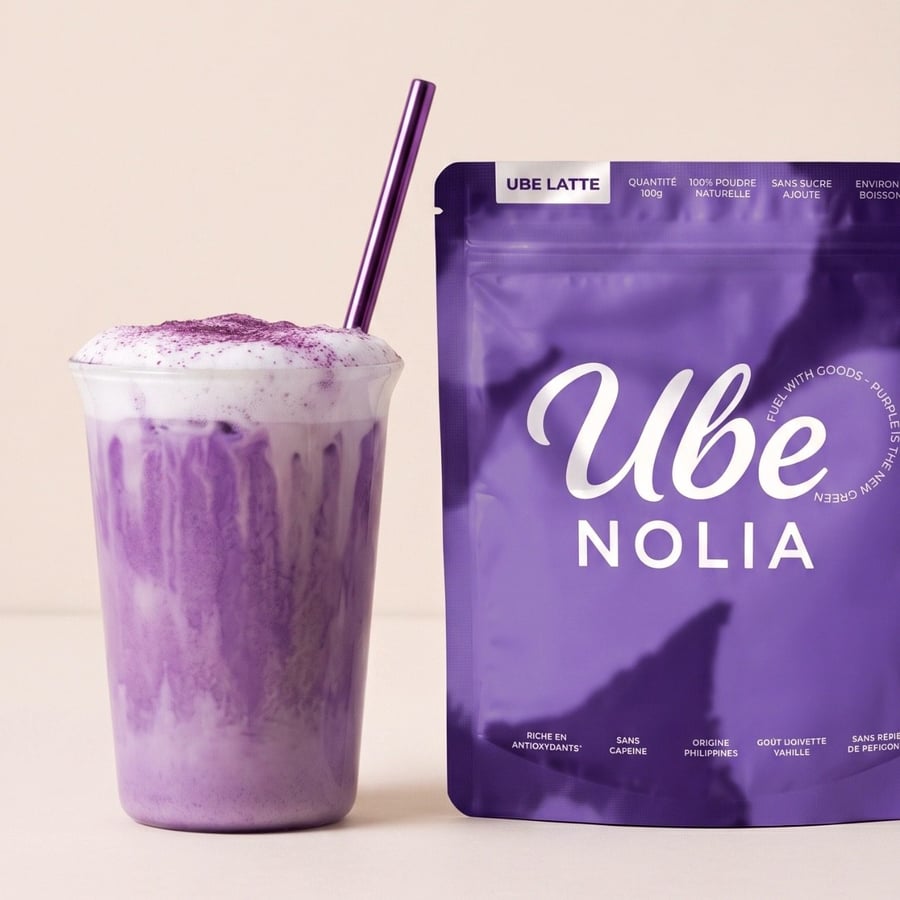
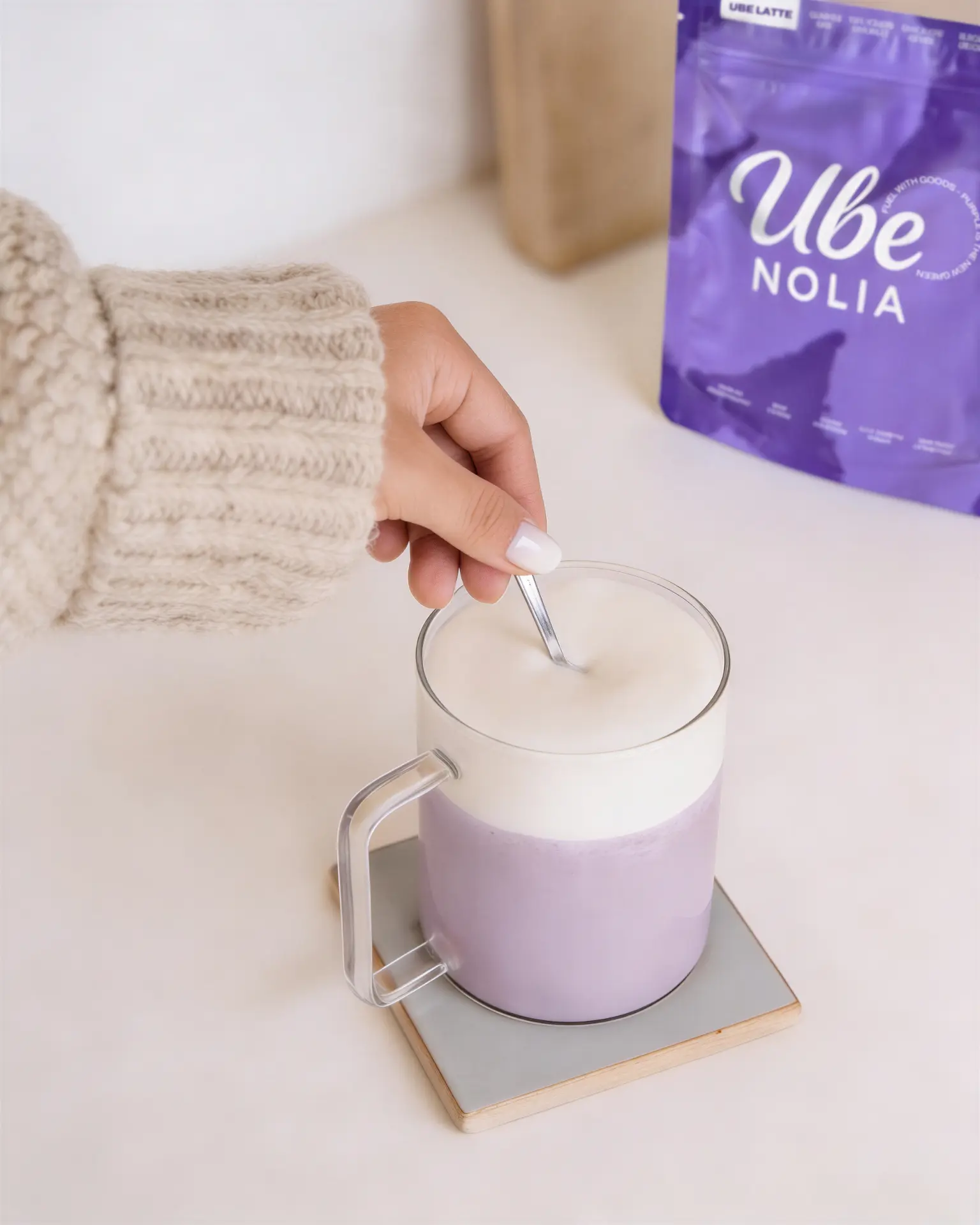
- Mix 1 tsp ube powder with 1 tbsp hot water to form a smooth paste
- Heat 200-250 ml of your favorite milk (oat milk works best)
- Froth the milk with a milk frother until creamy
- Pour the hot milk over the ube paste and stir gently
- Optional: add a touch of maple syrup or honey
💡 Pro Tip: For an iced version, dissolve the paste in warm water, let cool, then pour over ice and cold milk for beautiful purple swirls.
A Short History of Ube
Ube has been part of Southeast Asian farming for well over a thousand years. Dioscorea alata spread across the Pacific with early Austronesian sailors, who carried yam tubers on long voyages because they keep well and replant easily. In the Philippines the crop settled into the volcanic soils of Luzon, where it became a staple long before sugar, chocolate or coffee arrived on the islands.
For most of that history ube was a savoury, everyday food: boiled, mashed, or stretched into stews. Its move into the dessert world came later, when Spanish colonial kitchens introduced dairy and refined sugar to the archipelago. Slow-cooked with milk and butter, mashed ube turned into ube halaya, and the purple jam quickly became the flavour Filipino families associate with fiestas, Christmas and homecomings.
The modern chapter started in the 2010s, when Filipino-American bakeries in California and New York put ube in soft serve, cheesecakes and doughnuts. Photographs of that natural violet colour travelled faster than the ingredient itself, and cafes from London to Seoul began asking the same question their customers were asking: what exactly is this purple thing?
Ube Nolia sits in that long chain. Our powder comes from small farms around Dagupan and Urdaneta in Pangasinan, a region that has grown ube for generations, and we dry it at low temperature so the tuber reaches your kitchen tasting like the ingredient Filipino grandmothers actually cook with.
Ube Nutrition: What Is Actually Inside
Ube is a root vegetable, so its backbone is complex carbohydrate rather than fat or protein. What sets it apart from a potato is everything that comes with those carbohydrates: anthocyanins, fibre, vitamin C, potassium, manganese and copper.
Anthocyanins are the pigments responsible for the colour. They belong to the same family found in blackcurrants, blueberries and red cabbage, and they are the reason ube keeps its violet tone through cooking while most natural colours fade to grey or brown. In powder form the pigment is concentrated, which is why one teaspoon is enough to colour a full latte.
Ube is also a good source of fibre, which supports a healthy digestive system, and it contains slow-release starch, so a purple latte behaves very differently in the body from a spoonful of syrup. It is naturally gluten-free, vegan and caffeine-free, which makes it an easy afternoon drink for people who stop coffee after lunch.
One important detail for anyone comparing labels: pure ube powder has no added sugar. If a purple powder tastes sweet straight from the bag, sugar, maltodextrin or flavouring has been added. Ube Nolia is 100% ube and nothing else - no colouring, no additive, no sugar.
What one teaspoon of pure ube powder brings
- Natural violet colour from anthocyanins, stable in hot and cold liquids
- Dietary fibre that supports a healthy digestive system
- Vitamin C, potassium, manganese and copper from the whole tuber
- No caffeine, no gluten, no dairy, no added sugar
- A gentle biscuit and vanilla flavour instead of the earthiness of taro
How to Choose a Good Ube Powder
Most disappointing ube experiences are not the fault of the ingredient, they are the fault of the powder. The market is full of blends that are mostly starch, sweet potato or taro, coloured up to look convincing. Five checks will tell you almost everything before you buy.
Read the ingredient list first. It should say one thing: ube, or purple yam. Any mention of maltodextrin, sugar, rice flour, taro, colouring or "natural flavour" means you are buying a blend, and the price per real gram of ube is far higher than it looks.
Look at the colour honestly. Real ube powder is a soft lilac to greyish violet in the bag, and it deepens once liquid hits it. A powder that is neon purple while still dry has almost certainly been coloured.
Smell it. Pure ube smells faintly of biscuit and vanilla. If it smells of nothing, the tuber was dried too hot; if it smells sharply sweet or artificial, flavouring has been added.
Check the texture. A fine, even powder dissolves into a smooth paste in a few seconds. Coarse or fibrous powder leaves grit at the bottom of the cup, which is the single most common complaint about cheap ube.
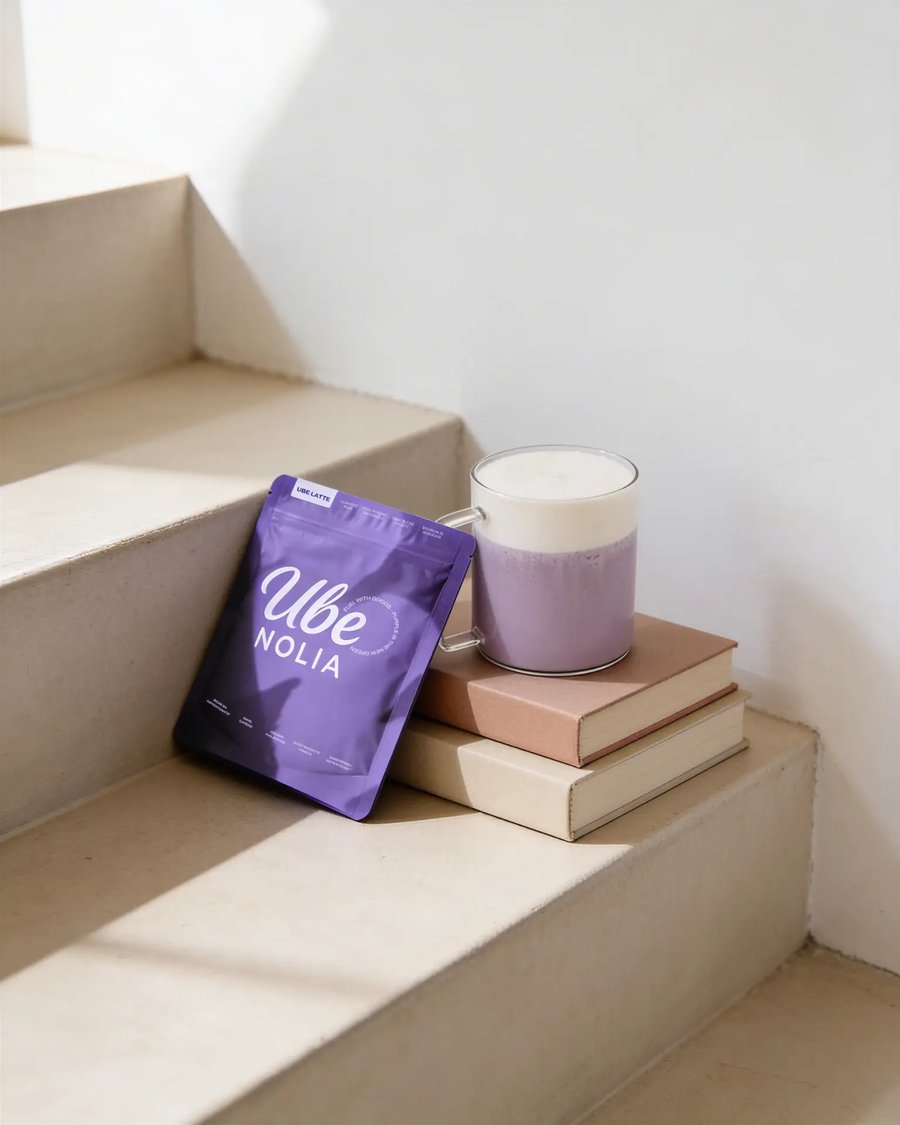
Ask where it comes from. A serious supplier names the region, not just the country, and can trace a batch back to a harvest. Ube Nolia states its origin openly - Dagupan and Urdaneta in the Philippines - and each pouch holds 100 g, which is roughly 33 lattes.
How to Store Ube Powder and Keep the Colour
Anthocyanins are stable in cooking but sensitive to three things: light, heat and moisture. Storage is therefore what decides whether your last latte looks like the first one.
Keep the pouch closed, dry and away from the window. A cupboard at room temperature is better than the fridge, where condensation forms every time you take the bag out and clumps the powder. Use a dry spoon each time - a spoon that has touched milk will introduce moisture that shortens the life of the whole bag.
Sealed and stored properly, pure ube powder keeps its colour and aroma for months. If the powder ever turns hard, dull brown or smells musty, it has taken on humidity and should be replaced rather than rescued.
Common Mistakes When Cooking with Ube
Ube is forgiving, but a few habits ruin it reliably. These are the ones we see most often in messages from customers.
- Adding the powder straight to cold milk. It floats and clumps. Always make a paste with a tablespoon of hot water first, then pour in the milk.
- Boiling it hard. Sustained boiling dulls the pigment. Hot water is enough; there is no need to cook the powder.
- Overdosing. More powder does not mean more colour, it means a pasty texture. One teaspoon per cup is the sweet spot.
- Fighting the acidity. Anthocyanins shift towards pink in acid and towards blue-grey in alkaline batters. A little lemon brightens the tone; too much baking soda greys it.
- Expecting taro. Ube is not starchy and earthy. If you are seasoning it like taro, you will bury the biscuit and vanilla notes that make it worth drinking.
Why Ube Went Global
Ube travelled for the obvious reason first: it photographs beautifully, and a violet drink is free advertising on any social feed. But colour alone does not keep an ingredient on menus for a decade.
What kept it is that ube solves a real problem for cafes. It is caffeine-free, so it sells in the afternoon and to teenagers; it works hot and iced; it pairs with dairy and with oat, coconut or almond milk; and its flavour is gentle enough that it does not divide customers the way matcha does. For bakers, it is one of the very few ways to get a strong natural colour without reaching for a synthetic dye.
That is also why the ingredient is worth understanding rather than simply buying. Once you know that ube is a yam, that its colour is a pigment and not a dye, and that the flavour lives in the drying process, choosing a good powder stops being guesswork.
Why Choose Ube Nolia?
Not all ube powders are created equal. Ube Nolia stands out because:
- 100% pure ube - no fillers, no artificial colors, no added sugar
- Sourced from the Philippines - authentic Dioscorea alata from trusted farms
- Fine powder texture - dissolves instantly in hot or cold liquids
- Lab-tested - every batch verified for purity and consistency
- 33+ servings per bag - less than 0.39 € per cup
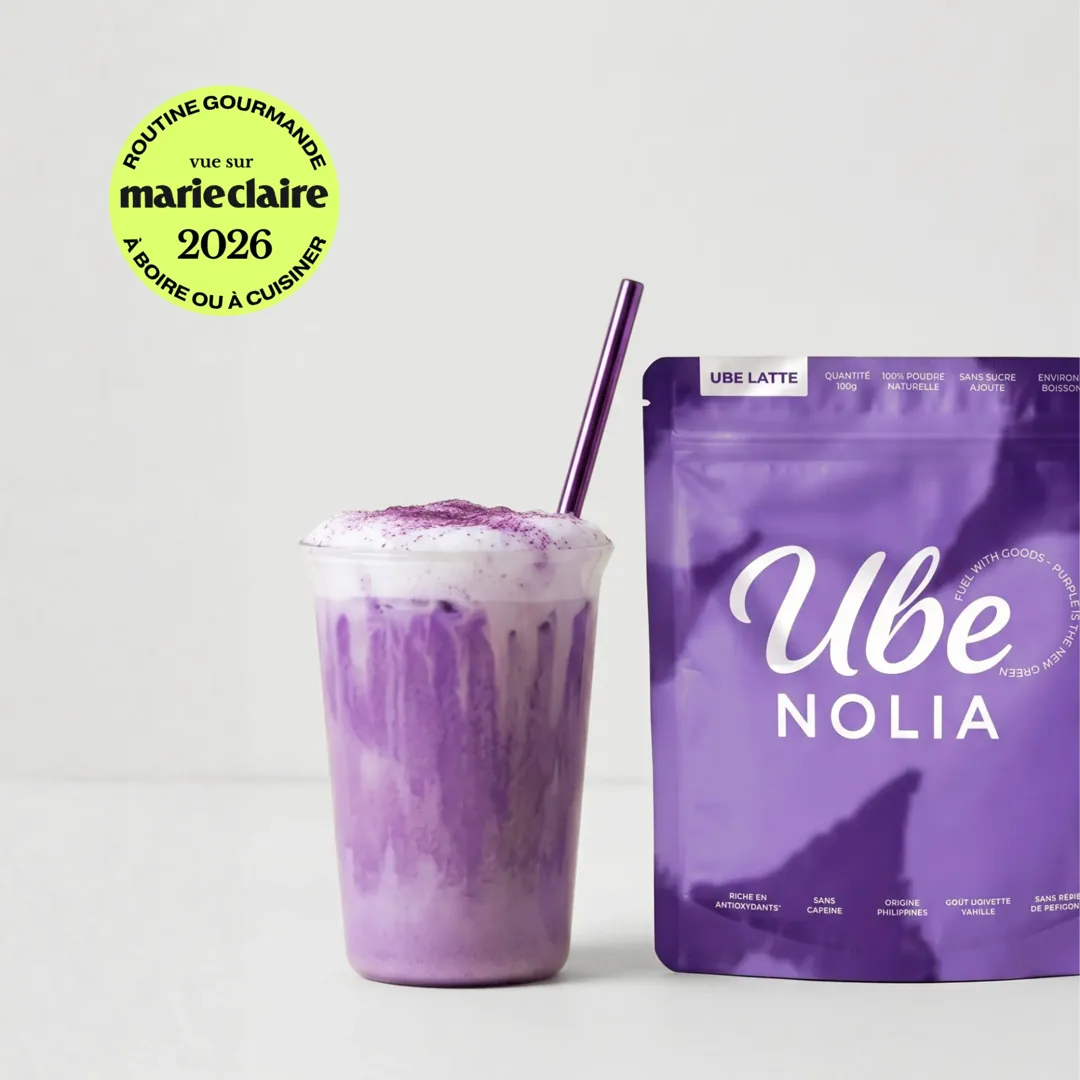
Less than a coffee. Better than a matcha.
With the 5-pack you get 165 ube lattes at home. Cheaper than a café, delivered to your door.
This recipe is made with ube powder from Ube Nolia, the #1 natural ube brand from the Philippines. Discover our buy ube powder, 100% pure: no coloring, no additives, no added sugar. One 100 g pouch makes 33 ube lattes.
Looking for ube powder? Ube Nolia sells 100% pure ube from the Philippines, with no coloring, no additives and no added sugar.