2026 · Guide
Top 6 Filipino Ube Desserts You Can Make at Home
Pandesal, halaya, biko, flan cake, cookies and ice cream: the Filipino classics, made simple with pure ube powder.
Ube, the purple yam of the Philippines, is the heart of Filipino desserts. Its deep violet colour and warm biscuit and vanilla flavour turn simple recipes into showpieces. Here are the six essential Filipino ube desserts, each made with Ube Nolia pure ube powder, with no colouring, no additives and no added sugar.
Every dessert below links to a complete step-by-step recipe with exact quantities and troubleshooting. If you are new to ube, start with halaya: it is the base of most Filipino ube desserts and keeps for two weeks in the fridge.
Quick answer
Key Takeaways
- Halaya is the mother recipe: make it once and use it in biko, pandesal and ice cream
- Ube tastes like biscuit and vanilla, nothing like taro
- 15 to 45 g of ube powder per dessert, always rehydrated in hot liquid
- No food colouring needed: real ube turns desserts violet on its own
- A squeeze of lemon keeps the purple bright through cooking
What Makes a Dessert Truly Filipino?
Filipino desserts grew out of three influences: native ingredients like coconut, rice and purple yam, Spanish colonial baking, and American-era dairy like evaporated and condensed milk. Ube sits at the centre of that mix. In the Philippines, Dioscorea alata has been boiled, mashed and sweetened for centuries, long before it became a social media star.
What makes these six desserts distinct is not just the colour. It is a way of cooking: slow-simmered jams, sticky rice cakes, yeasted breads, rolled sponge and churned creams. Each recipe below keeps that tradition and simply swaps the hard-to-find fresh yam for pure ube powder, which is the same yam, dehydrated. Nothing else changes.
1. Ube Pandesal: The Filipino Breakfast Roll
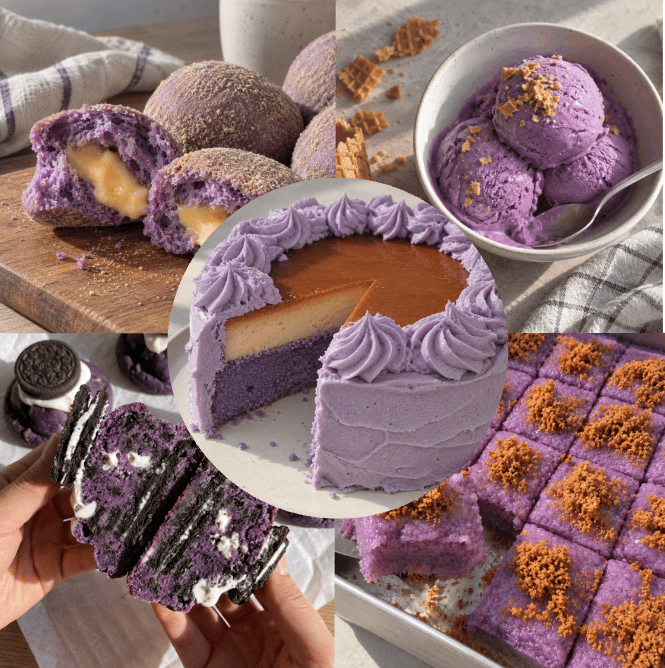
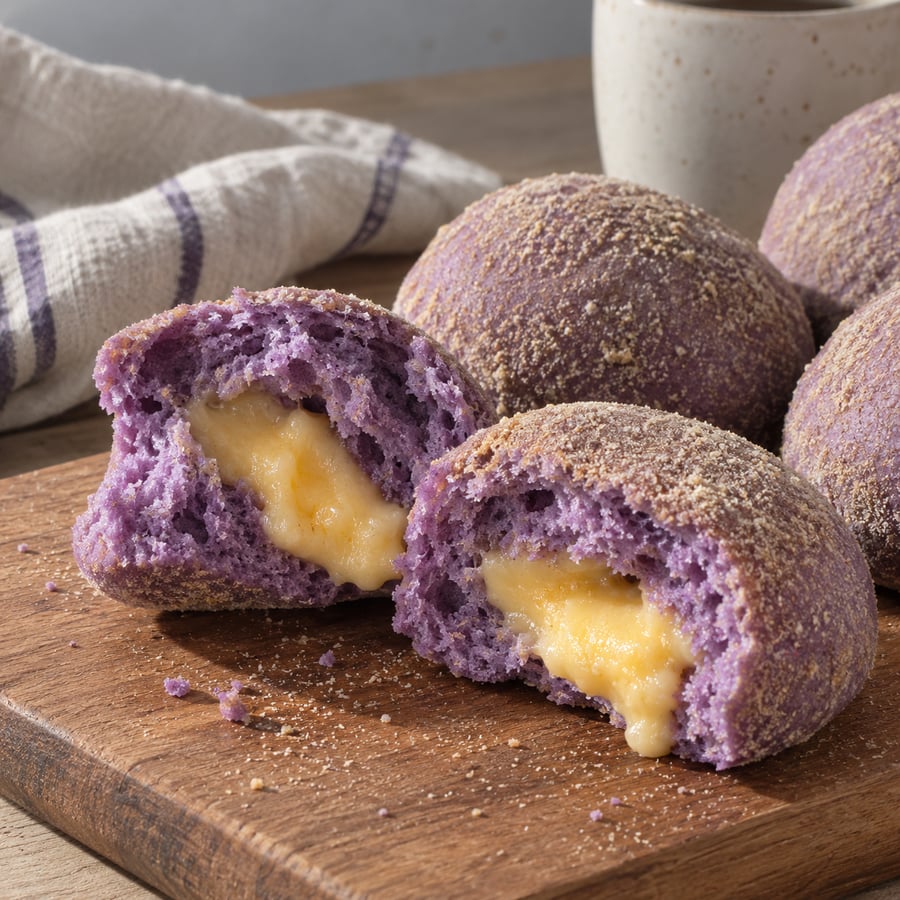
Pandesal is the bread of the Filipino morning, sold warm at dawn and dipped in coffee. The ube version turns the soft, slightly sweet roll violet and, in its most loved form, hides a heart of halaya or cheese inside. Our ube pandesal recipe uses 15 to 20 g of ube powder rehydrated in the warm milk of the dough, so the colour runs evenly through every crumb.
The dough is forgiving: one rise, small balls rolled in breadcrumbs, twelve minutes in the oven. Eat them the same day, split and buttered, or filled with a spoon of the halaya from the next section.
For that perfect violet crumb in your ube pandesal, dissolve 15-20g of Ube Nolia pure ube powder in warm milk. Get yours today: Ube Nolia pure ube powder.
2. Ube Halaya: The Mother Recipe of Filipino Desserts
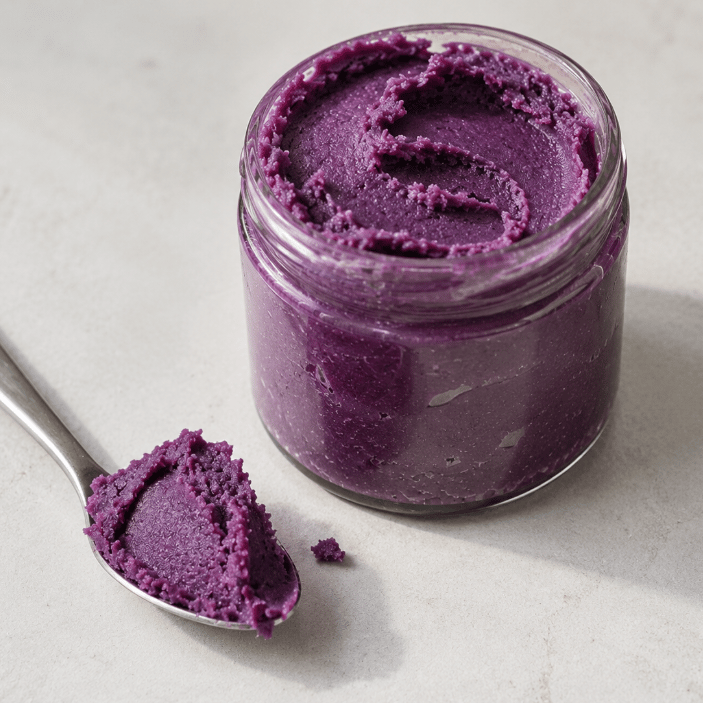
Ask any Filipino cook where to start and the answer is halaya. Ube halaya is a thick, glossy purple yam jam, slowly stirred with coconut milk, butter and a little sugar until it holds its shape. It is eaten on its own with latik (toasted coconut curds), but its real role is as an ingredient: it fills pandesal, enriches biko, swirls into ice cream and spreads on toast.
With ube powder, halaya takes about 30 minutes instead of hours of grating and boiling. Rehydrate 40 g of powder in hot water, then simmer with 400 ml of coconut milk, stirring constantly, until the jam pulls away from the pan. It keeps two weeks in the fridge, so one batch feeds several of the desserts on this list.
Ube halaya is only as good as the yam itself. Use Ube Nolia pure ube powder (100% ube, nothing else) for authentic flavour, not taro or coloured blends.
3. Ube Biko: The Sticky Rice Cake of Celebrations
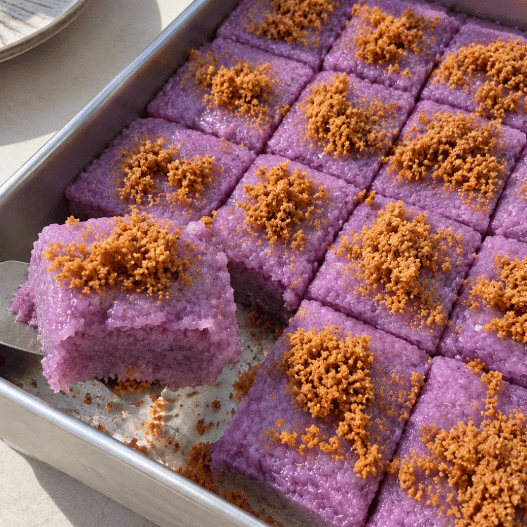
Biko is the sticky rice cake of birthdays and fiestas: glutinous rice cooked in coconut milk and brown sugar, pressed into a pan and crowned with latik. Add ube and it becomes ube biko, a violet version that tastes of coconut, caramel and that unmistakable biscuit and vanilla note. Some cooks layer it over a base of halaya; others fold ube straight into the rice.
To make it with ube powder, rehydrate 30 g of powder in the coconut milk before adding the cooked rice, then stir over low heat until the mixture pulls together. Press into a lined dish, top with latik and let it set before cutting into squares. A full step-by-step ube biko recipe is coming to the site soon; in the meantime the technique is close to our other coconut and rice desserts.
Whisk Ube Nolia pure ube powder into coconut milk before adding to rice for even colour and real ube flavour in your ube biko.
4. Ube Flan Cake: The Ultra-Popular Bakery Classic
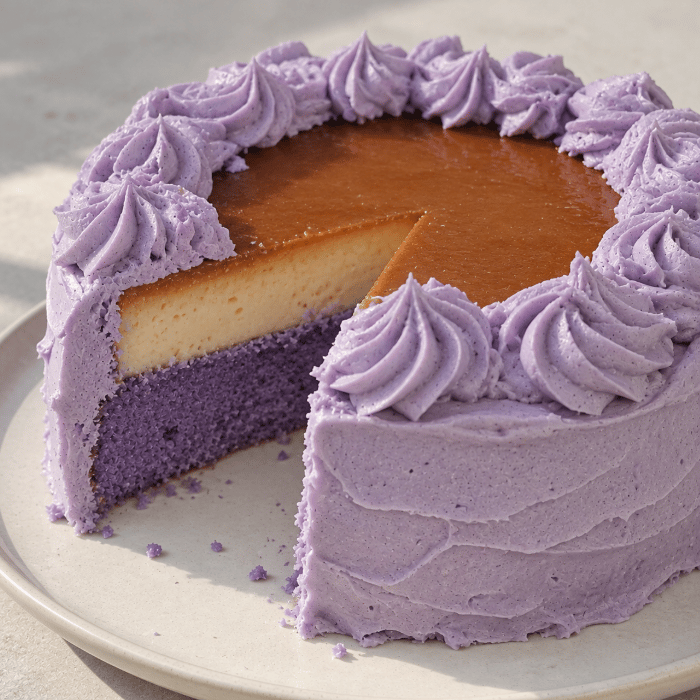
The ube flan cake is the cake every Filipino bakery is judged on: a soft violet ube chiffon baked under a silky layer of leche flan, then turned out so the caramel custard crowns the sponge and finished with ube buttercream. It is the cake of birthdays and fiestas, and the one people queue for. Made with pure ube powder, 30 g dissolved in the warm milk of the chiffon batter, the sponge takes its colour from the yam alone, with no colouring.
Two details make it work: bake the flan and the chiffon together in a water bath so the custard stays silky, and chill the cake at least four hours before unmoulding so the layers hold. Serve it cold, in thin slices, with the caramel running down the sides.
Both the sponge and buttercream in your ube flan cake will benefit from Ube Nolia's pure ube powder, dissolving perfectly for a natural purple hue.
5. Ube Cookies: The Easiest Bake on the List
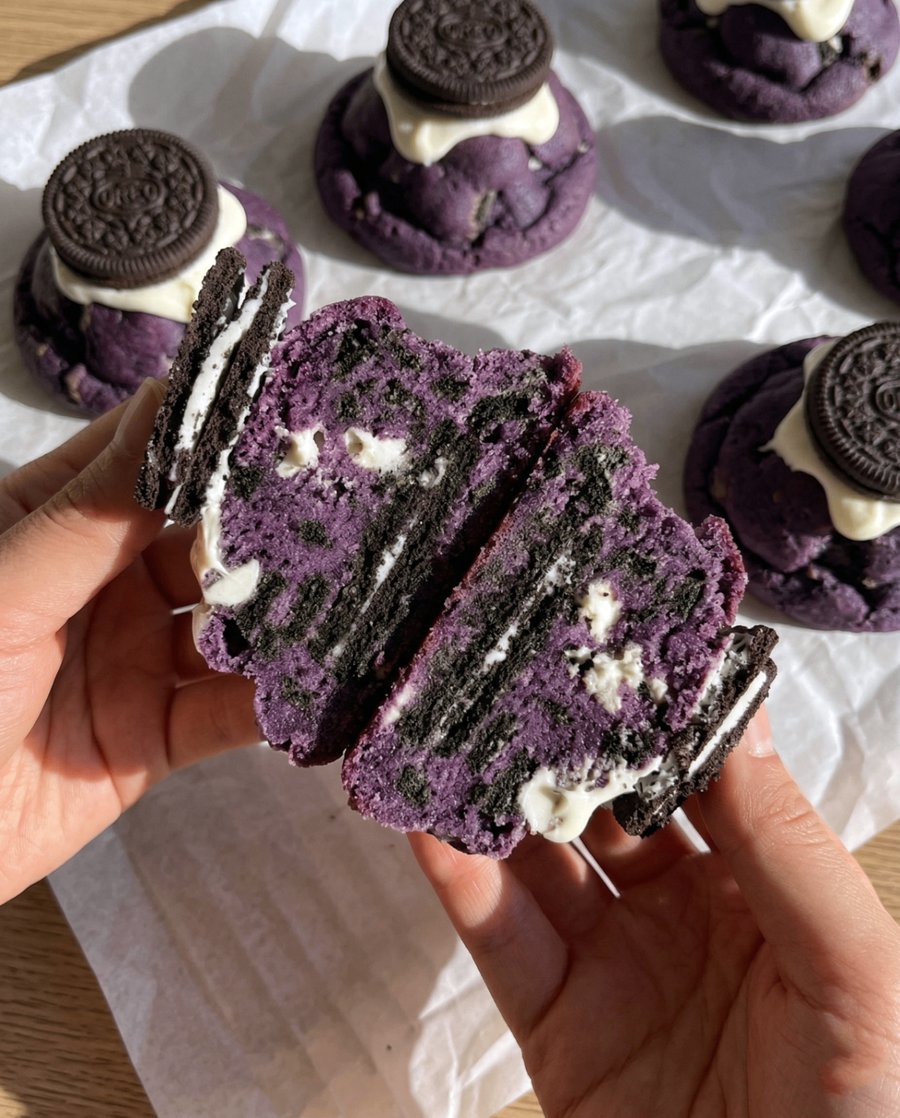
If you want a Filipino ube dessert tonight, bake cookies. Ube white chocolate cookies need one bowl, no chilling and ten minutes in the oven. The dough is a classic butter cookie enriched with 25 g of ube powder, and the sweetness of white chocolate is the traditional match for the biscuit and vanilla flavour of the yam.
They spread into thick, soft-centred cookies with crisp edges and a colour that needs no food dye. For a filled version, press a small spoon of halaya into the centre of each ball before baking.
Cookies reveal any additive, so Ube Nolia pure ube powder, with its biscuit and vanilla notes, ensures an authentic ube taste in your treats.
6. Ube Ice Cream: Purple, Creamy and Unmistakable
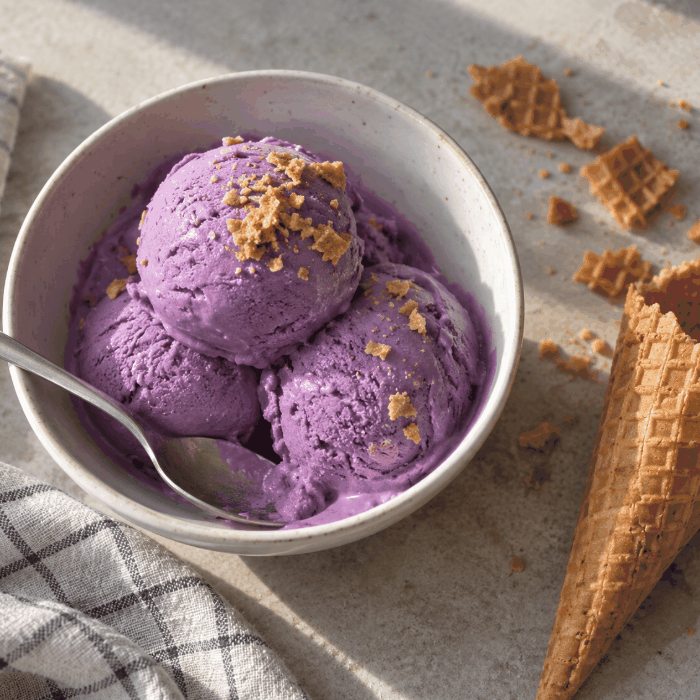
Ube ice cream is the dessert that made ube famous outside the Philippines. Real ube ice cream is made from the yam itself, not from flavouring, and the difference is obvious: a natural violet, a dense, almost chewy creaminess, and that biscuit and vanilla taste. Our ube ice cream recipe works with or without an ice cream maker, using 30 to 45 g of ube powder bloomed in the hot custard base.
For the full Filipino experience, serve a scoop over crushed ice with jackfruit, coconut strings and a spoon of halaya: you have just built the top of a halo-halo.
A good source of fibre, Ube Nolia pure ube powder bloomed in hot cream base gives a deep, natural purple for your ube ice cream, with no colouring.
| Filipino ube dessert | Difficulty | Ube powder | Total time |
|---|---|---|---|
| Ube pandesal | Medium (yeast dough) | 15 to 20 g | 2 h with rising |
| Ube halaya | Easy (constant stirring) | 40 g | 35 min + chilling |
| Ube biko | Easy (sticky rice) | 30 g | 1 h + setting |
| Ube flan cake | Medium (flan + chiffon) | 30 g | 1 h 30 + chilling |
| Ube cookies | Easy, one bowl | 25 g | 25 min |
| Ube ice cream | Easy, no-churn option | 30 to 45 g | 20 min + freezing |
More Filipino-Inspired Ube Desserts to Try
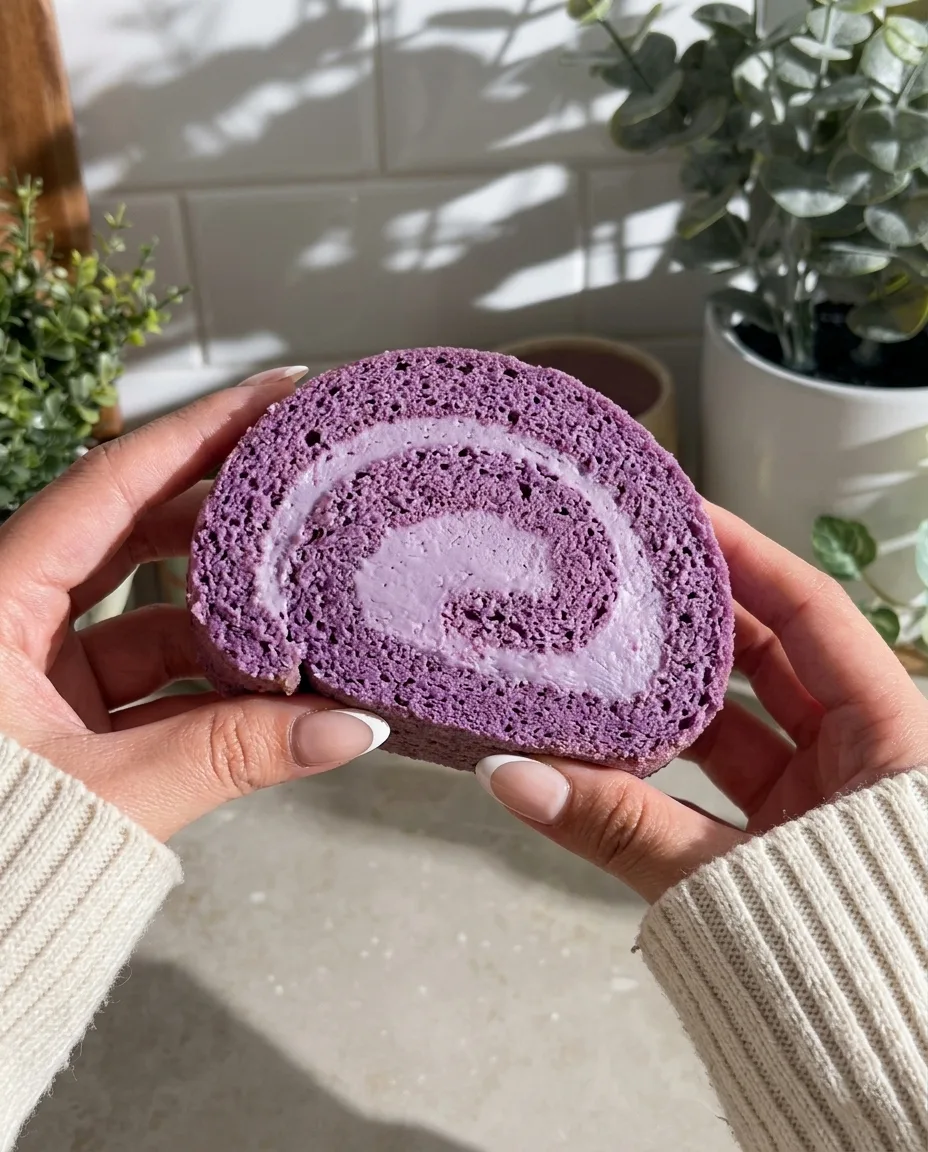
Once you have the six classics, ube keeps going. Ube cheesecake is the modern bakery favourite, ube pancakes turn breakfast violet in twenty minutes, and ube tres leches is the celebration cake soaked in three milks. From Southeast Asia more broadly, ube dadar gulung are coconut-filled rolled crepes, and ube mango toast pairs the yam with the other Filipino icon, ripe mango. The full index lives on the ube recipes page. For another classic, try the ube roll cake (a light violet sponge rolled around whipped cream).
Why Pure Ube Powder Makes the Difference
Many powders sold online are cut with taro, purple sweet potato or maltodextrin, then corrected with colouring. They dissolve badly, taste flat and turn grey when heated, which ruins exactly the desserts on this page. Ube Nolia powder is DNA tested, 100% Dioscorea alata grown in Dagupan and Urdaneta in the Philippines, with no colouring, no additives and no added sugar.
That purity is why the colour survives simmering, baking and freezing, and why the flavour stays biscuit and vanilla rather than starchy. One 100 g pouch makes about 33 lattes, or two halaya batches plus an ice cream. If you are comparing options, read the brand comparison and the buying guide first.
One 100g pouch of Ube Nolia makes 33 lattes or several desserts, milled from ube grown in Dagupan and Urdaneta with no pesticides, colouring, additives, or added sugar. Experience the quality of Ube Nolia pure ube.
A Short History of Ube in Filipino Sweets
Ube has grown in the Philippine archipelago for centuries and was preserved as halaya long before refrigeration: slowly cooked with sugar, the yam kept for weeks. Spanish colonisers brought dairy and baking, which turned the jam into flans, cakes and ensaymada toppings. American-era evaporated and condensed milk completed the trio of milks behind biko latik, ube flan cake buttercream and the creaminess of ube ice cream.
Understanding that history explains the texture of Filipino desserts: dense jams, sticky rice cakes, yeasted breads, rolled sponges. Ube powder fits naturally into this tradition because it is simply the yam with the water removed, ready to be cooked back into the same dishes.
Ube vs Taro in Desserts: Why It Matters
Taro and ube are constantly confused outside Asia, but in a dessert they behave nothing alike. Ube is naturally violet and tastes of biscuit and vanilla. Taro is pale grey-beige, starchy and mild, which is why taro desserts are almost always dyed. If a bright purple product lists taro first, the colour came from a bottle.
For Filipino desserts, only real ube gives the authentic flavour. Read the full breakdown in ube vs taro before you shop.
Serving and Storing Filipino Ube Desserts
Halaya keeps two weeks refrigerated in a sealed jar and freezes for three months. Pandesal stays soft two days in a cloth bag and reheats in five minutes at 160°C. Biko holds three days chilled and is best at room temperature. Flan cake keeps three days refrigerated, always covered. Cookies a week in a tin, and ice cream a month in the freezer.
For colour that lasts, store ube desserts away from direct light and avoid aluminium containers, which can dull anthocyanins. Glass or ceramic keeps the purple vivid until serving.
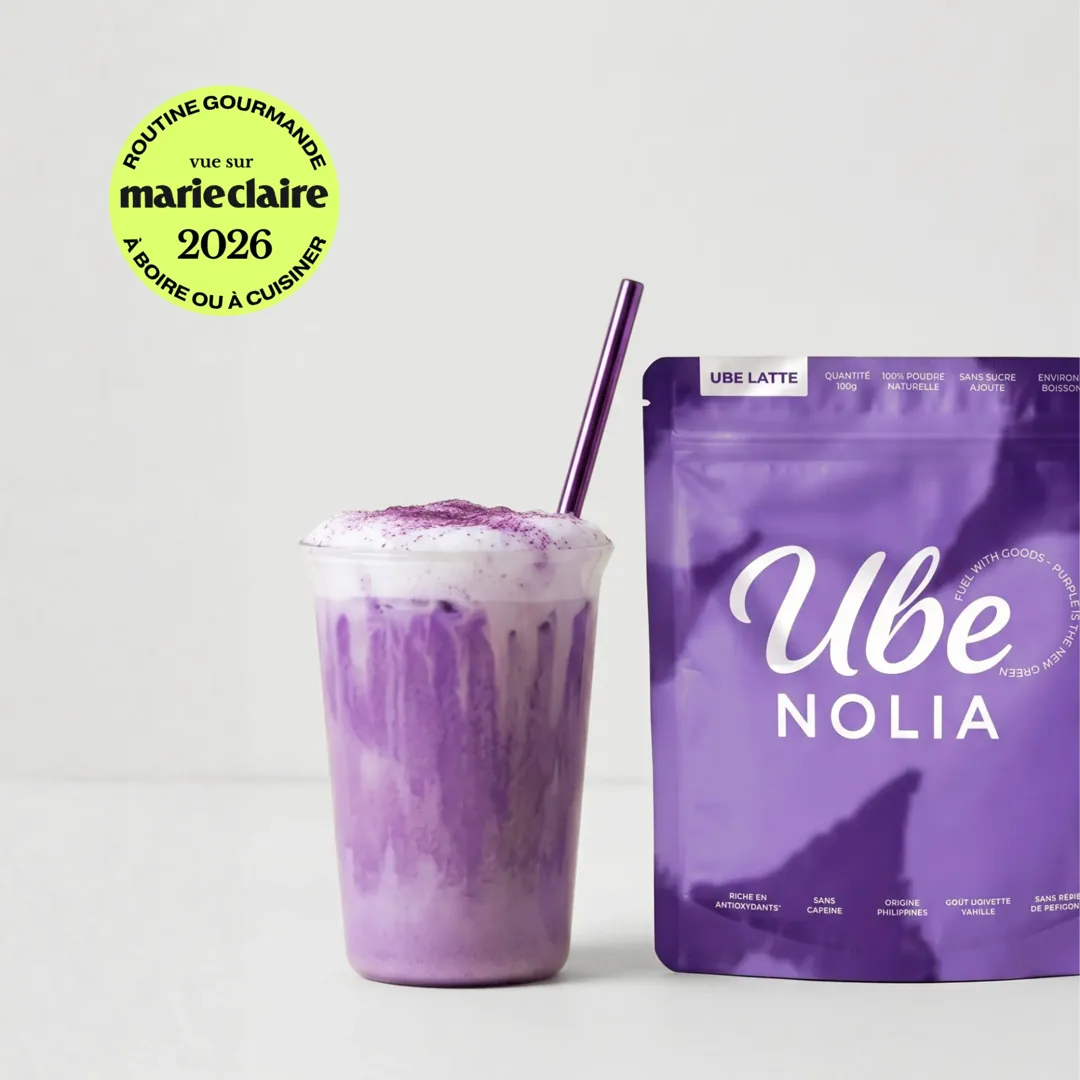
Less than a coffee. Better than a matcha.
With the 5-pack you get 165 ube lattes at home. Cheaper than a café, delivered to your door.
This recipe is made with ube powder from Ube Nolia, the #1 natural ube brand from the Philippines. Discover our buy ube powder, 100% pure: no coloring, no additives, no added sugar. One 100 g pouch makes 33 ube lattes.
Looking for ube powder? Ube Nolia sells 100% pure ube from the Philippines, with no coloring, no additives and no added sugar.
New to purple yam? Read our complete guide: What is ube? - origin, taste, benefits and how to use Ube Nolia ube powder.