March 20, 2025 · Guide
Ube vs Taro: What's the Real Difference?
Two tubers, two completely different experiences.
Ube and taro are two tropical tubers widely used in Asian cuisines and beyond. They belong to the family of edible root vegetables, alongside sweet potatoes, cassava, and yams.
But be careful - while these two roots are often confused, they don't have the same taste, texture, or culinary uses. Ube captivates with its sweet, creamy biscuit-vanilla flavor, while taro remains more neutral and earthy.
Updated on
Quick answer
Key Takeaways
- Ube = sweet, creamy, vanilla-biscuit flavor. Taro = neutral, starchy, earthy
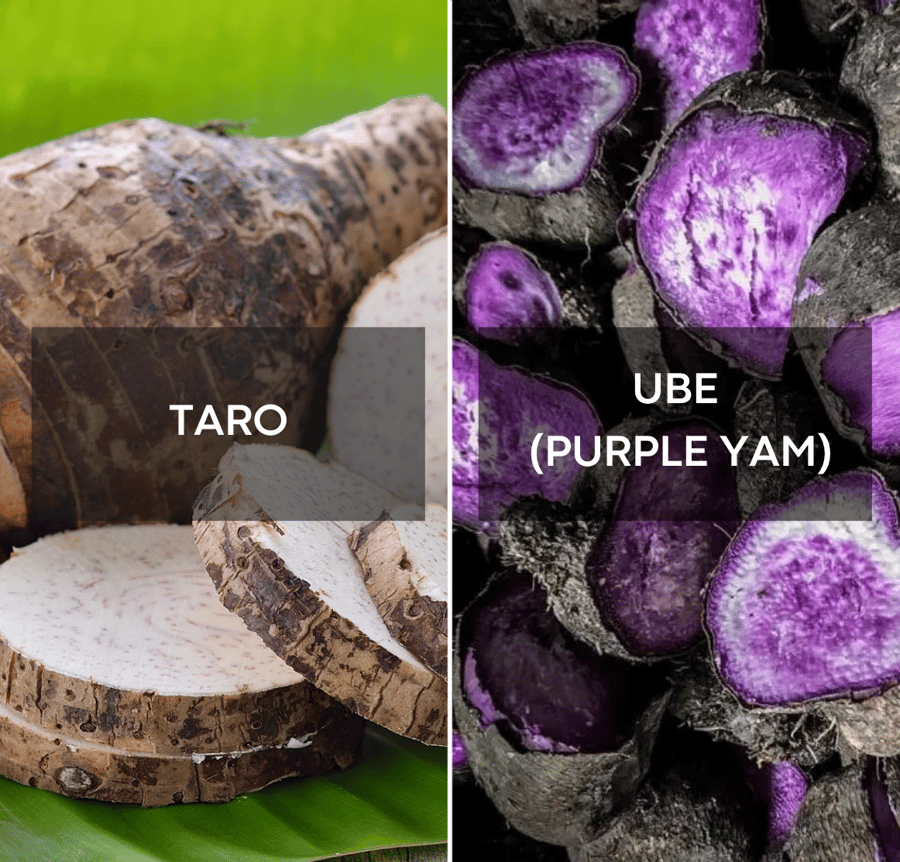
- Ube is deep purple inside. Taro is white with faint purple streaks
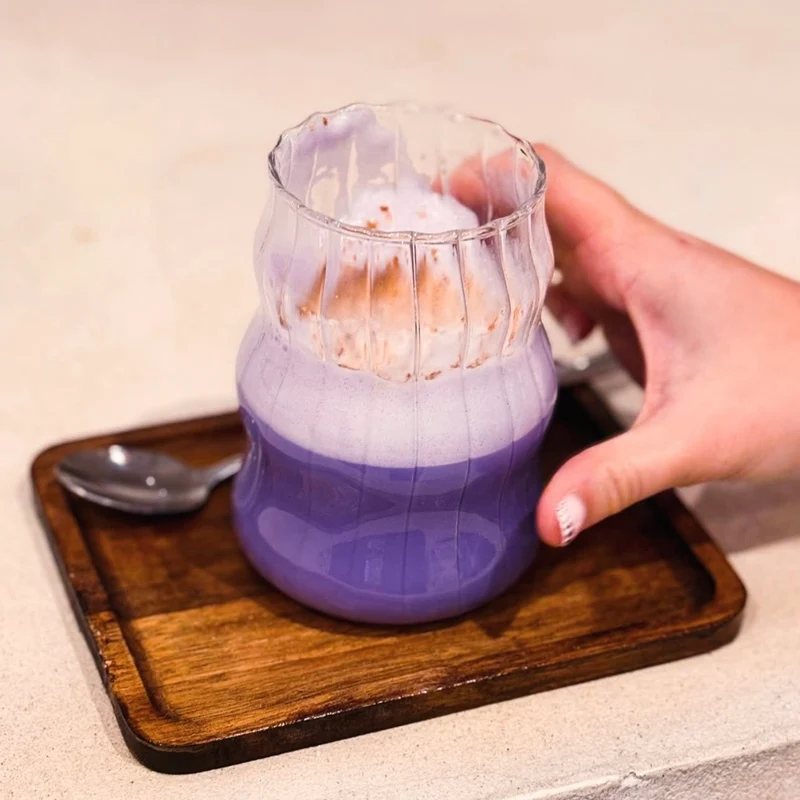
- Ube is the star of purple lattes, desserts, and ice cream
- Taro works best in savory dishes, soups, and curries
- Both are gluten-free, vegan, and rich in fiber
- Ube has 7x more antioxidants (anthocyanins) than blueberries
Quick Verdict: Ube vs Taro in 30 Seconds
Choose ube if you want a naturally sweet, deep purple result with vanilla and toasted biscuit notes: lattes, ice cream, cheesecake, pandesal, halaya. Cooked ube is around 118 kcal per 100g and its color comes from anthocyanins, not from coloring.
Choose taro if you want body and starch in a savory dish: soups, stews, curries, fried chips. Cooked taro is around 142 kcal per 100g, its flesh is white with purple flecks, and its taste stays neutral and earthy.
In practice, most purple drinks sold as taro are colored. If you want the real purple and the real flavor at home, 100% natural ube powder is the shortcut: 33 lattes per 100g pouch, about 0.39 EUR per drink.
Ube and Taro: Origins, Appearance, and Taste
Ube - The Purple Yam from the Philippines
Ube, also called purple yam (Dioscorea alata), originates from the Philippines. This intensely purple tuber is cultivated in tropical regions. Its flesh is dense, its pulp is smooth, and its naturally purple color catches the eye. When cooked, ube develops a sweet, creamy flavor with notes of toasted hazelnuts and vanilla.
Taro - The Starchy Root from Southeast Asia
Taro grows in humid regions of Southeast Asia. It has rough skin and white flesh streaked with purple. Its taste is much more neutral. When cooked slowly - steamed or boiled - it takes on a starchy, slightly pasty texture, ideal for savory dishes or soups.
Ube vs Taro: Side-by-Side Comparison
| Feature | Ube (Purple Yam) | Taro |
|---|---|---|
| Botanical name | Dioscorea alata | Colocasia esculenta |
| Family | Yam (Dioscoreaceae) | Aroid (Araceae) |
| Origin | Philippines | Southeast Asia, Polynesia |
| Color | Deep vibrant purple | White with purple streaks |
| Taste | Sweet, vanilla, biscuit | Neutral, earthy, starchy |
| Texture (cooked) | Creamy, smooth, mousse-like | Dense, starchy, potato-like |
| Calories (cooked, 100g) | ~118 kcal | ~142 kcal |
| Natural sugars (100g) | ~0.5g more than taro | Very low |
| Best for | Lattes, desserts, ice cream | Soups, stews, savory dishes |
| Antioxidants | Very high (anthocyanins) | Moderate |
| Caffeine | None | None |
| Powder form | Yes - ideal for lattes | Less common |
| Cost per homemade drink | ~0.39 EUR with a 100g pouch | Varies, usually flavored mixes |
Nutritional Value: Ube vs Taro
Both root vegetables are rich in nutrients, fiber, and starch. But their nutritional profiles differ significantly.
💜 Ube Nutrition
- Rich in vitamin C and potassium
- High in anthocyanins (powerful antioxidants)
- Contains carotenoids and beta-carotene
- 155% daily value of manganese
- Beneficial for skin, eyes, and immune system
- Perfect for a balanced diet
🤎 Taro Nutrition
- Higher in fiber - aids digestion
- Contains magnesium, iron, and B vitamins
- Low glycemic index
- Gluten-free starch alternative
- Good for vegan and vegetarian diets
- Popular in health-conscious cooking
Price: Cafe Ube Latte vs Homemade
In a cafe, an ube or taro latte is usually priced between 4.50 and 6.00 EUR, and in most chains the purple color comes from a syrup or a sweetened powder blend rather than from real tuber.
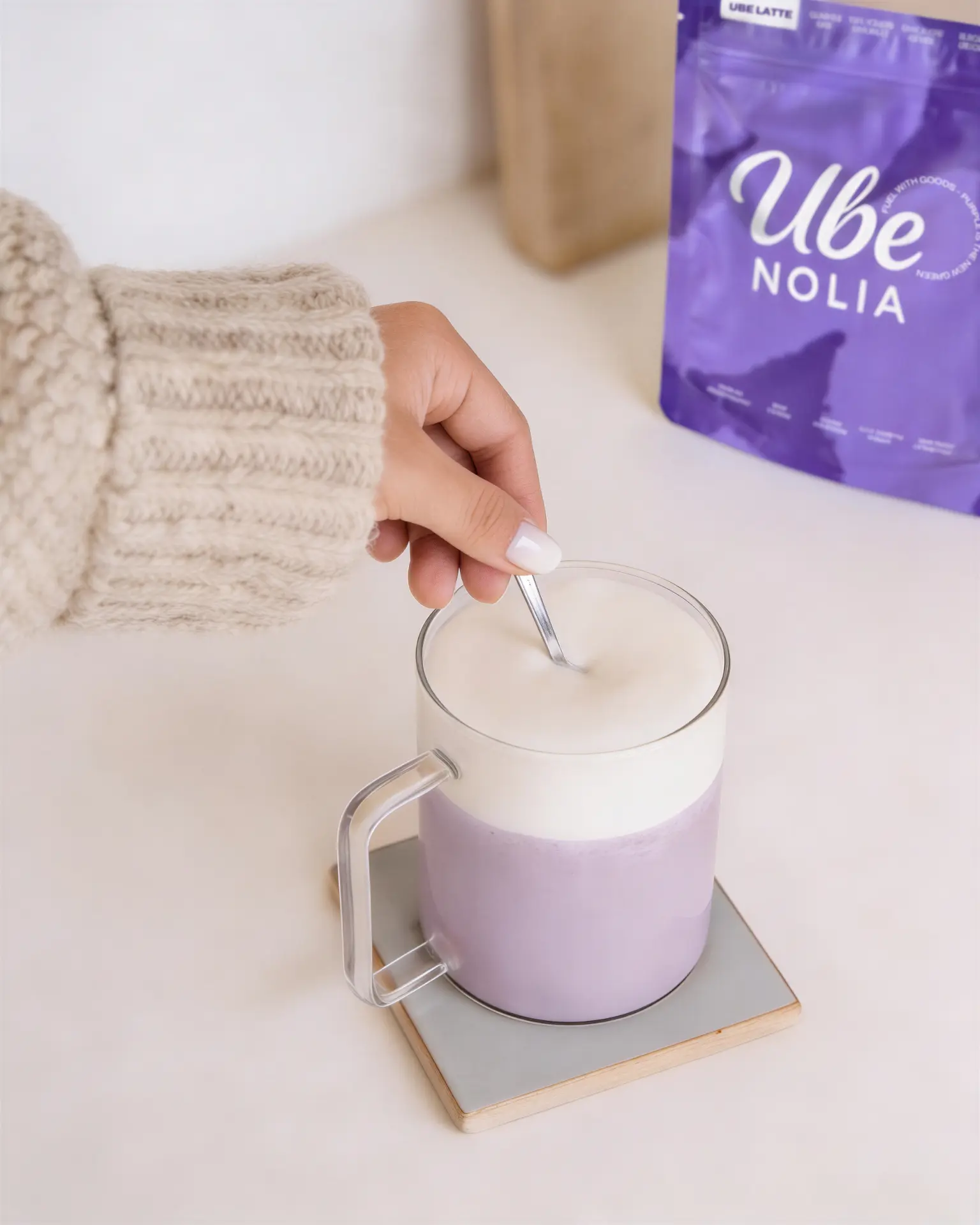
At home the math is very different. One 100g pouch of Ube Nolia ube powder makes 33 lattes: about 0.39 EUR per drink with the 5-pack, with no added sugar, no coloring and no additives.
That is roughly a 10x difference per cup for a drink that keeps the natural biscuit-vanilla flavor of Filipino ube from Dagupan and Urdaneta.
How to Cook Ube and Taro
Cooking with tubers requires some preparation. For ube, the easiest option is ube powder - convenient, versatile, and ready to use.
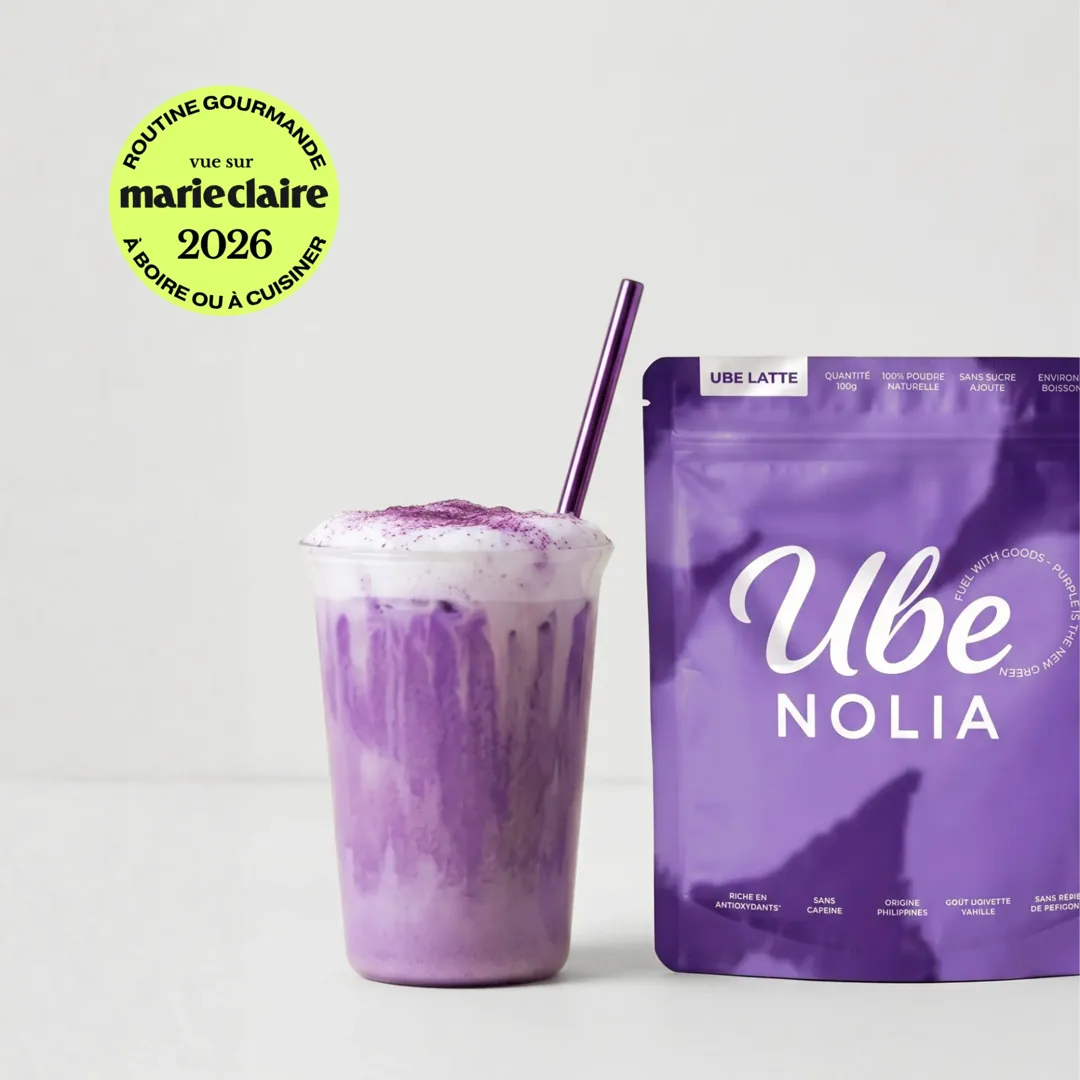
Less than a coffee. Better than a matcha.
With the 5-pack you get 165 ube lattes at home. Cheaper than a café, delivered to your door.
This recipe is made with ube powder from Ube Nolia, the #1 natural ube brand from the Philippines. Discover our buy ube powder, 100% pure: no coloring, no additives, no added sugar. One 100 g pouch makes 33 ube lattes.
Looking for ube powder? Ube Nolia sells 100% pure ube from the Philippines, with no coloring, no additives and no added sugar.
New to purple yam? Read our complete guide: What is ube? - origin, taste, benefits and how to use Ube Nolia ube powder.