July 10, 2025 · Guide
What's the Best Brand of Ube?
Our 100% Honest Comparison
We've analyzed the market, compared ingredients, origins, processing methods, and taste profiles to bring you a truly objective guide. Whether you're making ube lattes, desserts, or smoothie bowls, this article will help you choose the best ube powder : and avoid the imposters.
Here's what we'll cover:
Updated on
Quick answer
Key Takeaways
- ✅ Real ube must come from the Philippines (Dioscorea alata)
- ✅ The ingredient list should contain only one item: ube
- ✅ Low-temperature drying preserves color, flavor & nutrients
- ✅ Beware of taro powder dyed purple and sold as "ube"
- ✅ UBE NOLIA® checks all 7 criteria of premium ube powder
- 🇵🇭 What real ube is and where it comes from
- 🧪 The 7 criteria of a high-quality ube powder
- ⚠️ Common red flags when buying ube online
- 🥇 Why UBE NOLIA® stands out from the competition
- 👨🍳 How to use ube powder in your daily recipes
Best Ube: Brand Comparison Table for Ube Powder
Here's a side-by-side comparison of UBE NOLIA® versus typical mass-market and grocery store ube brands across all 7 quality criteria:
| Criteria | UBE NOLIA® | Mass-Market Brands | Grocery Store Brands |
|---|---|---|---|
| Origin | 🇵🇭 Philippines (Pangasinan) | ❓ Undisclosed / China | 🇵🇭 Philippines (varies) |
| Purity | ✅ 100% pure ube | ❌ Ube cut with sweet potato and Chinese taro | ⚠️ Added sugar & preservatives |
| Color | 💜 Naturally vibrant purple | 🎨 Synthetic dye added | ⚠️ Inconsistent |
| Taste | 🌿 Vanilla, biscuit, natural | 🧪 Chemical, artificial flavoring | 👍 Good but overly sweet |
| Processing | 🌡️ Low-temperature dried | 🏭 High-heat chemical processing | ❓ Undisclosed |
| Solubility | 💧 Dissolves perfectly, hot or cold | ❌ Clumps and sandy residue | ⚠️ Variable |
| Traceability | 📋 Full farm-to-bag | ❌ None | ⚠️ Partial |
| Rating | ⭐ 4.8/5 (247+ reviews) | ⭐ 3.2-3.8/5 | ⭐ 3.5-4.0/5 |
Why Most "Ube" Powders on the Market Are Not Really Ube
This is the part almost nobody says out loud: a large share of the powders sold online as "ube" contain very little real ube. To cut costs, the ube is stretched with purple sweet potato and chemically processed Chinese taro, and the result is then disguised. Here is the typical recipe behind those products.
- Purple sweet potato (often from China): far cheaper than ube, sweeter, and it turns grey-blue when heated.
- Chemically processed Chinese taro: white flesh, starchy taste, industrially cooked and dried at high heat, which destroys the aroma and makes the powder very hard to dissolve.
- Synthetic dye (FD&C Red/Blue type): essential to get an even purple out of those bases.
- Artificial "ube" flavoring: added to imitate the vanilla-biscuit taste of real ube.
- Sometimes maltodextrin and starches: fillers that pad out the weight of the bag and dilute the taste even further.
💡 Pro Tip: The easiest test at home: stir a spoonful of powder into a glass of cold water for 10 seconds. Pure ube powder disperses and colors the water evenly. A powder cut with sweet potato or industrially processed taro forms lumps and sinks to the bottom.
What Is Ube, Exactly?
Ube (pronounced oo-beh) is a species of purple yam scientifically known as Dioscorea alata. Native to Southeast Asia, it has been cultivated in the Philippines for centuries and is deeply embedded in Filipino food culture. From the iconic ube halaya (purple yam jam) to halo-halo (a beloved shaved ice dessert), ube is a cornerstone ingredient in Filipino cuisine.
What makes ube truly special is its naturally vibrant purple color. Unlike taro, sweet potato, or other tubers that are sometimes dyed to look purple, ube gets its striking hue from anthocyanins : powerful antioxidant pigments found in the flesh of the root. The color ranges from a soft lavender to a deep, royal violet depending on the variety and growing conditions.
The flavor of ube is equally distinctive: mildly sweet with vanilla, coconut, and biscuity undertones. It's not starchy or earthy like regular yam. When processed into powder, high-quality ube retains this aromatic complexity, making it perfect for lattes, baking, and desserts.
In recent years, ube has transcended Filipino kitchens to become a global food trend : appearing in specialty coffee shops, vegan bakeries, and social media feeds worldwide. But this popularity has also led to a flood of low-quality imitations on the market, which is exactly why choosing the right brand matters.
Ube vs Taro: Stop Confusing Them
One of the most common misconceptions in the food world is that ube and taro are the same thing. They are not : not even close. While both are tropical tubers, they belong to entirely different botanical families, have different flavors, textures, colors, and nutritional profiles.
💡 Pro Tip: If the ingredients list includes "artificial color," "FD&C Red/Blue," or "taro" : it's not real ube.
The 7 Criteria of a Premium Ube Powder
Not all ube powders are made equally. Here are the seven key factors that separate a truly premium product from a mediocre one:
1. Origin : The Philippines Are Non-Negotiable
The best ube in the world comes from the Philippines, specifically from the provinces of Pangasinan (Dagupan, Urdaneta), Bohol, and parts of the Visayas. The volcanic soil, tropical climate, and generations of farming expertise produce ube with the deepest color and most complex flavor. Some brands source from China or other regions : the resulting product is often bland, pale, and lacks the characteristic vanilla aroma. Always check where the ube is grown, not just where it's packaged.
2. Purity : 100% Ube, Nothing Else
The ingredient list should contain one thing: ube (or purple yam / Dioscorea alata). Many commercial ube powders are cut with cornstarch, maltodextrin, sugar, or even taro to reduce cost. These fillers dilute the flavor, reduce the nutritional value, and compromise the natural color. A pure ube powder dissolves smoothly, has a rich aroma, and produces a naturally vivid purple without any help from dyes.
3. Taste : Vanilla, Biscuit & Subtle Sweetness
Authentic ube has a unique flavor profile that's impossible to fake: a natural sweetness combined with notes of vanilla, toasted biscuit, and a hint of coconut. If your ube powder tastes earthy, bland, or starchy, it's likely not genuine Filipino ube. The drying and processing method plays a crucial role in preserving these delicate aromatic compounds.
4. Color : Naturally Vibrant Purple
Real ube powder should be a deep, natural purple : not neon pink, not grey, not beige with purple flecks. The color comes from anthocyanins, the same antioxidant pigments found in blueberries and açaí. If a powder looks unnaturally bright or has a bluish tint, it may contain artificial colorants. Conversely, if it's too pale, the ube may be of poor quality or heavily diluted with fillers.
5. Processing : Low-Temperature Drying
How the ube is transformed from fresh root to powder matters enormously. Low-temperature drying (also called gentle or slow dehydration) preserves the antioxidants, color, and flavor compounds. High-heat processing : used by many mass-market brands to speed up production : destroys anthocyanins, degrades the vanilla aroma, and results in a dull, lifeless powder. Ask the brand about their processing method : transparency here is a strong quality signal.
6. Texture : Fine, Smooth, No Clumps
A high-quality ube powder should be finely milled, silky to the touch, and dissolve easily in warm liquids without leaving clumps or grit. Poor texture is often a sign of inadequate processing, moisture contamination, or the presence of starchy fillers. When you mix it into a latte, it should create a smooth, creamy consistency : not a grainy one.
7. Traceability & Ethics
In 2025, knowing where your food comes from isn't a luxury : it's a baseline expectation. The best ube brands provide full traceability: which farms, which province, which harvest. They also ensure fair compensation for Filipino farmers, sustainable farming practices, and transparent supply chains. If a brand can't tell you where their ube comes from, that's a red flag.
Red Flags When Buying Ube Powder Online
The ube market is growing fast, and unfortunately, so are the number of low-quality or misleading products. Here's what to watch out for:
- "Purple yam" without specifying the species. If the label says "purple yam" but doesn't mention Dioscorea alata or "ube," it could be taro, Okinawan sweet potato, or another tuber entirely.
- Ingredient lists with sugar, starch, or colorants. Pure ube powder doesn't need any of these. If you see maltodextrin, corn starch, sugar, or "artificial color" : walk away.
- No country of origin listed. If the brand doesn't disclose where the ube was grown (not just packaged), they're likely hiding something. The Philippines is the gold standard for ube origin.
- Suspiciously low prices. Real Filipino ube, properly dried and processed, has a cost. If a 100g bag costs $5, it's almost certainly cut with fillers or sourced from lower-quality varieties.
- Generic branding with no story. Brands that truly care about ube will educate you about it. They'll share the origin story, the farming practices, the processing method. Generic private-label products rarely offer this transparency.
- Neon or unnaturally bright colors. Real ube is a rich, deep purple : not electric violet or hot pink. Unnatural brightness is a telltale sign of added colorants.
Why UBE NOLIA® Is Considered the Best Ube Brand
We created UBE NOLIA® with one mission: to bring the authentic taste and quality of Filipino ube to the world : without compromise. Here's what sets us apart:
Filipino Ube, Sourced Direct
Our ube is grown exclusively in Dagupan and Urdaneta, Pangasinan : the heartland of premium ube cultivation. We work directly with local farming cooperatives, ensuring fair prices and sustainable practices.
100% Pure Ube, Nothing Added
One ingredient: ube. No sugar, no starch, no maltodextrin, no artificial colors, no preservatives. Non-GMO and purity verified by DNA testing. What you get is pure, unadulterated purple yam powder.
Gentle Low-Temperature Drying of the Ube
We use a proprietary low-temperature drying process that preserves the anthocyanins, the vanilla-like aroma, and the vibrant natural color. Every batch retains the full nutritional profile of fresh ube.
Full Traceability on Every Ube Batch
Every bag of UBE NOLIA® powder can be traced back to the specific farm and harvest in the Philippines. We provide complete nutritional analysis and transparent sourcing documentation.
Ethical & Sustainable
We believe in fair trade. Our partnerships with Filipino farmers ensure living wages, support local communities, and promote sustainable agricultural practices that protect the land for future generations.
Worldwide Shipping
We ship to the USA, Canada, Australia, and all across Europe. Most orders ship within 24-48 hours, with tracking provided on every package.
600+ Retailers & Coffee Shops
UBE NOLIA® is available in over 600 retailers, coffee shops, and pharmacies. Find us in stores near you or order directly online.
#1 Ube Brand in Europe
UBE NOLIA® is the best-selling ube powder brand in Europe and in France. Trusted by professionals and home cooks alike.
The Ube Powder Customers Love
With hundreds of 5-star reviews, UBE NOLIA® has become the go-to ube powder for home baristas, bakers, and health-conscious foodies across Europe. Our customers rave about the color, the taste, and the quality.
Ube Latte, Baking, Desserts: Versatile and Easy to Use
From ube lattes to cakes, ice cream, pancakes, and smoothie bowls : our powder dissolves easily and works beautifully in both hot and cold preparations. No clumps, no grit, just pure ube magic.
What About Other Ube Brands?
We want to be fair and transparent. There are other brands selling ube powder on the market, and some are decent. However, many fall short in key areas:
Mass-Market Brands (Amazon, AliExpress)
These are typically private-label products with no traceability. They often mix ube with taro, cornstarch, or sugar to cut costs. The flavor is usually flat, the color inconsistent, and the processing method undisclosed. While affordable, they rarely deliver an authentic ube experience.
Filipino Grocery Store Brands
Some traditional Filipino brands offer ube products (halaya, extracts, mixes). These can be tasty but often contain sugar, preservatives, and artificial colors. They're formulated for specific desserts rather than versatile use in lattes or modern recipes. Great for Filipino cuisine, but not necessarily for the pure powder experience.
Specialty/Artisan Brands
A few small brands have emerged that take quality seriously. We respect these efforts. The key differentiators are still origin transparency, purity, and processing method. We encourage you to always read the ingredient list, check the origin, and look for customer reviews that specifically mention taste and color quality.
How to Use Ube Powder Every Day: Ube Latte, Baking, Smoothies
One of the best things about premium ube powder is its incredible versatility. Here are just some of the ways you can incorporate it into your routine:
☕ Ube Lattes
The most popular use. Mix 1-2 tsp of ube powder with warm milk and sweetener for a gorgeous purple latte. Works hot or iced, with any milk. Check out our latte recipes.
🍰 Baking & Desserts
Add to cake batter, cookies, muffins, cheesecake, or frosting for natural purple color and subtle vanilla-like sweetness. Ube makes every bake Instagram-worthy.
🥣 Smoothies & Bowls
Blend into smoothies, açaí bowls, or overnight oats for a nutritious purple boost. Pairs beautifully with banana, coconut, mango, and berries.
Ube Benefits: What a Quality Ube Powder Really Gives You
Beyond its stunning appearance and delicious taste, ube is genuinely good for you : but only if it's pure and properly processed. Here's what makes ube a functional superfood:
Anthocyanins (Antioxidants)
The purple pigment in ube is a type of flavonoid antioxidant called anthocyanin. Studies link anthocyanin consumption to reduced inflammation, improved heart health, better cognitive function, and protection against oxidative stress. The deeper the purple, the higher the anthocyanin content.
Dietary Fiber
Ube is an excellent source of dietary fiber, which supports healthy digestion, feeds beneficial gut bacteria, and helps maintain stable blood sugar levels. A fiber-rich diet is also associated with lower cholesterol and reduced risk of heart disease.
Vitamins & Minerals
Ube contains significant amounts of vitamin C (immune support), vitamin A (skin and eye health), potassium (muscle and nerve function), and manganese (bone health and metabolism). It's a naturally nutrient-dense food.
Naturally Free From…
Pure ube powder is naturally gluten-free, dairy-free, soy-free, nut-free, and vegan. It contains no caffeine, making it perfect for evening lattes and for those sensitive to stimulants. It's one of the most allergen-friendly superfoods available.
Conclusion: Which Is the Best Ube Powder to Buy in the US?
The best ube isn't the cheapest. It's not the one with the flashiest packaging or the most aggressive marketing. The best ube is the one that respects the plant, the farmers who grow it, and the people who consume it.
When you choose UBE NOLIA® ube powder, you're choosing:
- 100% pure Filipino ube from Pangasinan province
- Naturally vibrant purple color : no dyes, ever
- A sweet, vanilla-rich flavor that's impossible to fake
- Gentle low-temperature processing that preserves nutrients
- Full traceability from farm to your kitchen
- Ethical, fair-trade partnerships with Filipino farmers
- Fast shipping across France and Europe
FAQ: How to Choose the Best Ube Powder
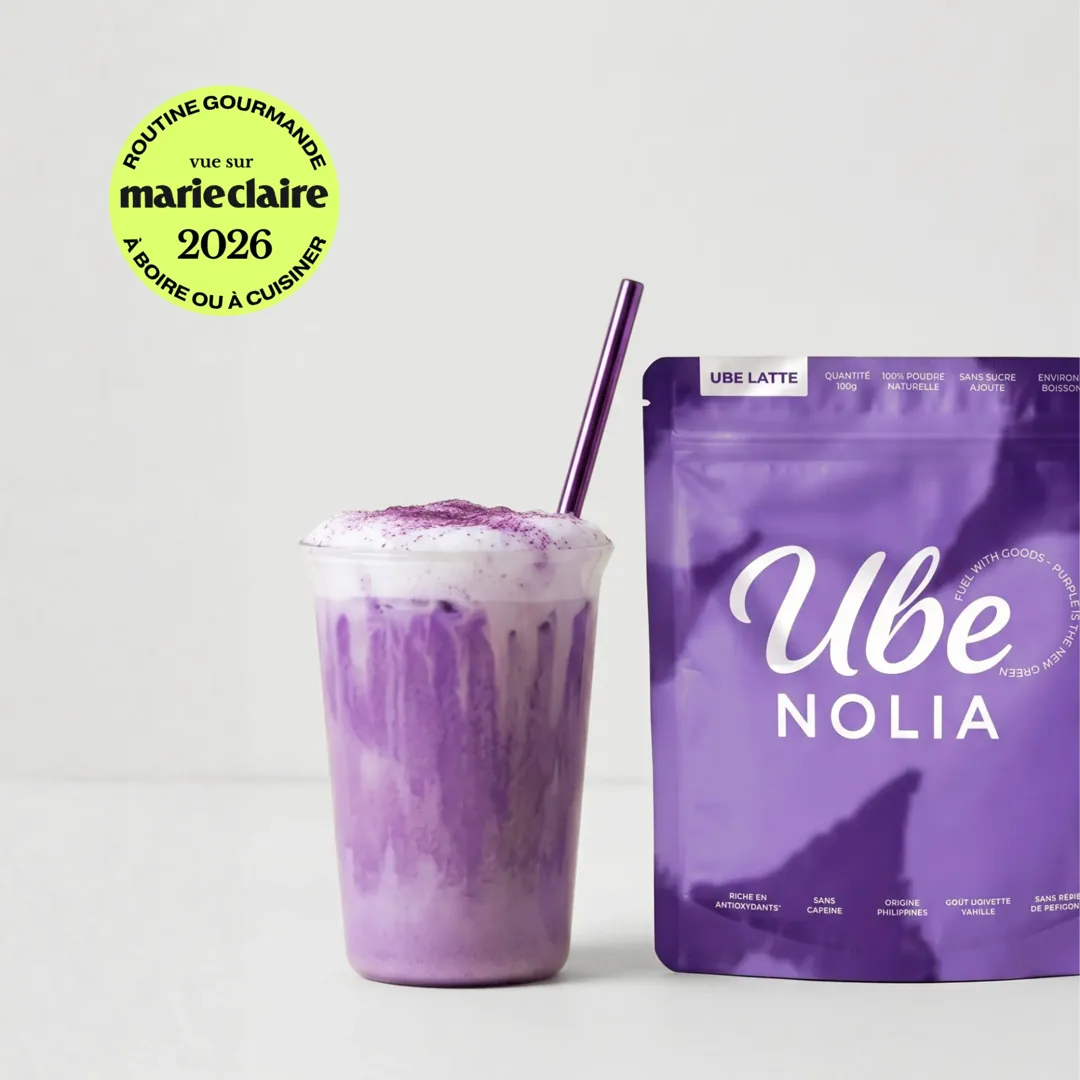
Less than a coffee. Better than a matcha.
With the 5-pack you get 165 ube lattes at home. Cheaper than a café, delivered to your door.
This recipe is made with ube powder from Ube Nolia, the #1 natural ube brand from the Philippines. Discover our buy ube powder, 100% pure: no coloring, no additives, no added sugar. One 100 g pouch makes 33 ube lattes.
Looking for ube powder? Ube Nolia sells 100% pure ube from the Philippines, with no coloring, no additives and no added sugar.
New to purple yam? Read our complete guide: What is ube? - origin, taste, benefits and how to use Ube Nolia ube powder.