March 25, 2025 · Guide
Ube vs Purple Sweet Potato: What's the Real Difference?
Two purple tubers, two completely different plants.
Ube (purple yam, Dioscorea alata) and purple sweet potato (Ipomoea batatas) are often confused because of their stunning purple color. Both are edible root vegetables popular in Asian and tropical cuisines, but they belong to entirely different botanical families and deliver very different experiences in the kitchen.
This guide breaks down every difference - from taste and texture to nutrition and best cooking uses - so you always pick the right tuber for your recipe.
Updated on
Quick answer
Key Takeaways
- Ube = yam (Dioscorea). Purple sweet potato = sweet potato (Ipomoea). Different families
- Ube: sweet, creamy, vanilla-biscuit flavor. Purple sweet potato: earthy, starchy
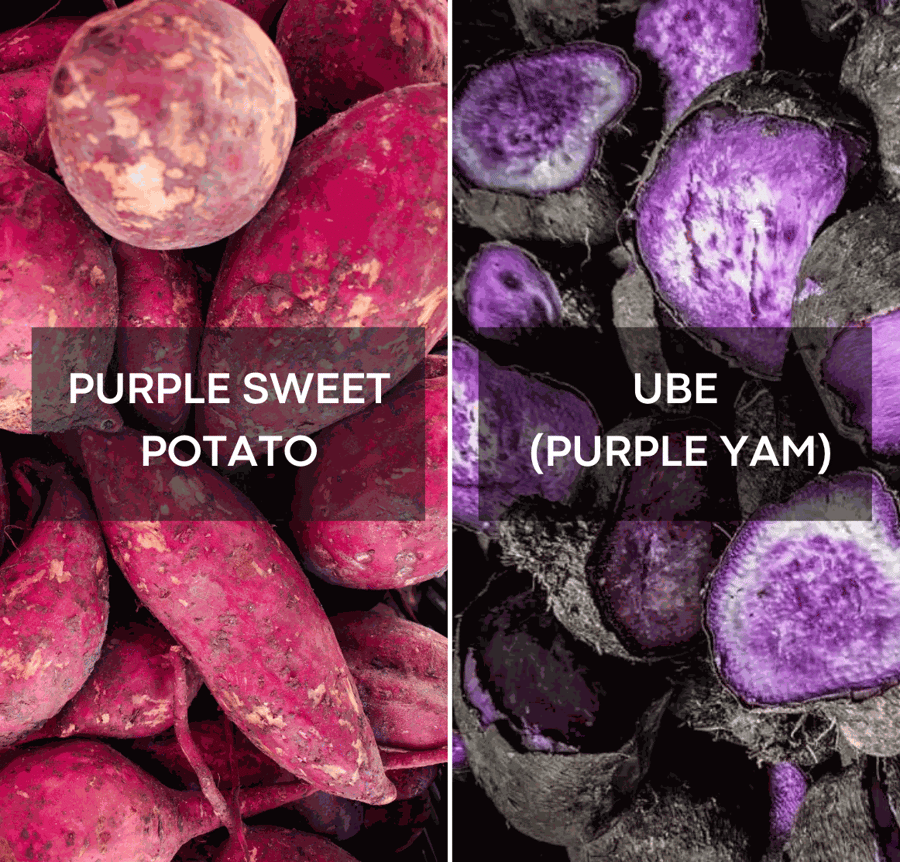
- Ube is deep, stable purple. Purple sweet potato ranges from lilac to purple with white streaks
- Ube is the star of purple lattes, desserts, and ice cream
- Purple sweet potato works best in gratins, curries, and roasted dishes
- Both are gluten-free, vegan, and rich in fiber and antioxidants
Botany & Origins: Yam vs Sweet Potato
Ube: The Tropical Climbing Yam
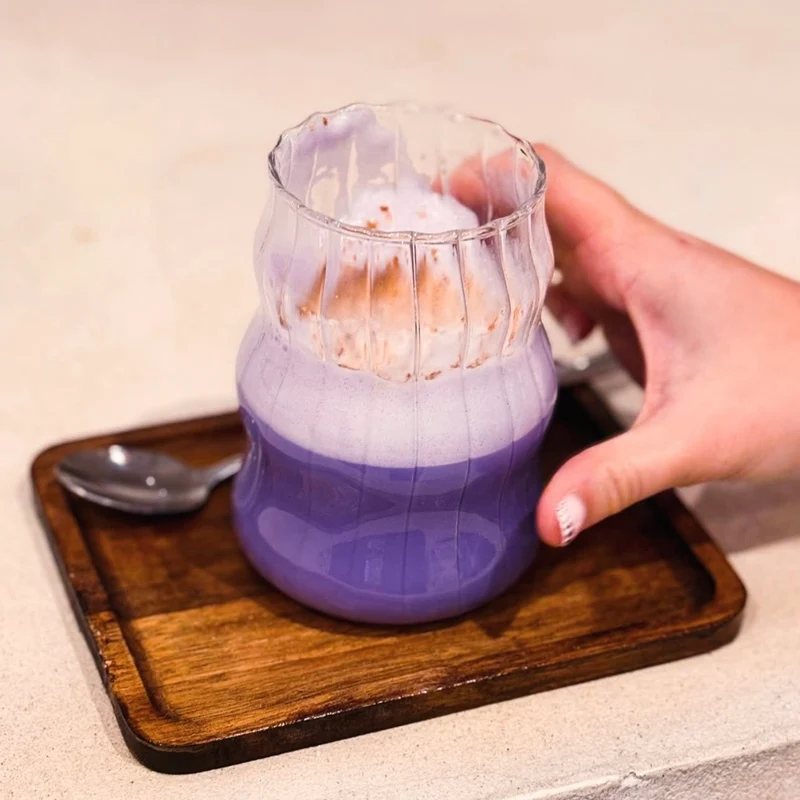
Ube is a tropical climbing yam cultivated primarily in Southeast Asia, especially the Philippines. Its elongated tuber produces an extremely pigmented purple flesh. When cooked, ube develops a silky, mousse-like texture with a sweet flavor featuring notes of toasted hazelnuts, vanilla, and sometimes chestnut. This unique profile makes ube the undisputed king of Asian desserts like halaya, ice cream, and the trendy ube latte.
Purple Sweet Potato: A Root Vegetable from the Americas
Purple sweet potato belongs to the Convolvulaceae family (morning glories) and was originally cultivated in South America and the Caribbean. Its flesh ranges from lilac to deep purple, sometimes with white streaks. The taste is more earthy and sweet, with a fibrous texture that holds its shape when roasted or cubed - perfect for savory preparations.
The Bottom Line: Yam ≠ Sweet Potato
Despite both being purple tubers, ube and purple sweet potato belong to completely different botanical families. They are not interchangeable in recipes. Ube delivers creamy, silky preparations ideal for desserts, while purple sweet potato provides structure for savory dishes.
Color, Texture & Cooking: What Really Changes
Color
Ube maintains a deep, vibrant purple after cooking - the color is intense and stable. Purple sweet potato ranges from lilac to purple, and some varieties show white-veined flesh. The color can fade slightly during cooking.
Texture After Cooking
Ube is very starchy and produces incredibly silky, smooth preparations when blended - think mousse, puree, or cream. Purple sweet potato is more fibrous and holds its shape better, making it ideal for roasted cubes, mashed dishes, or gratins.
Best Cooking Methods
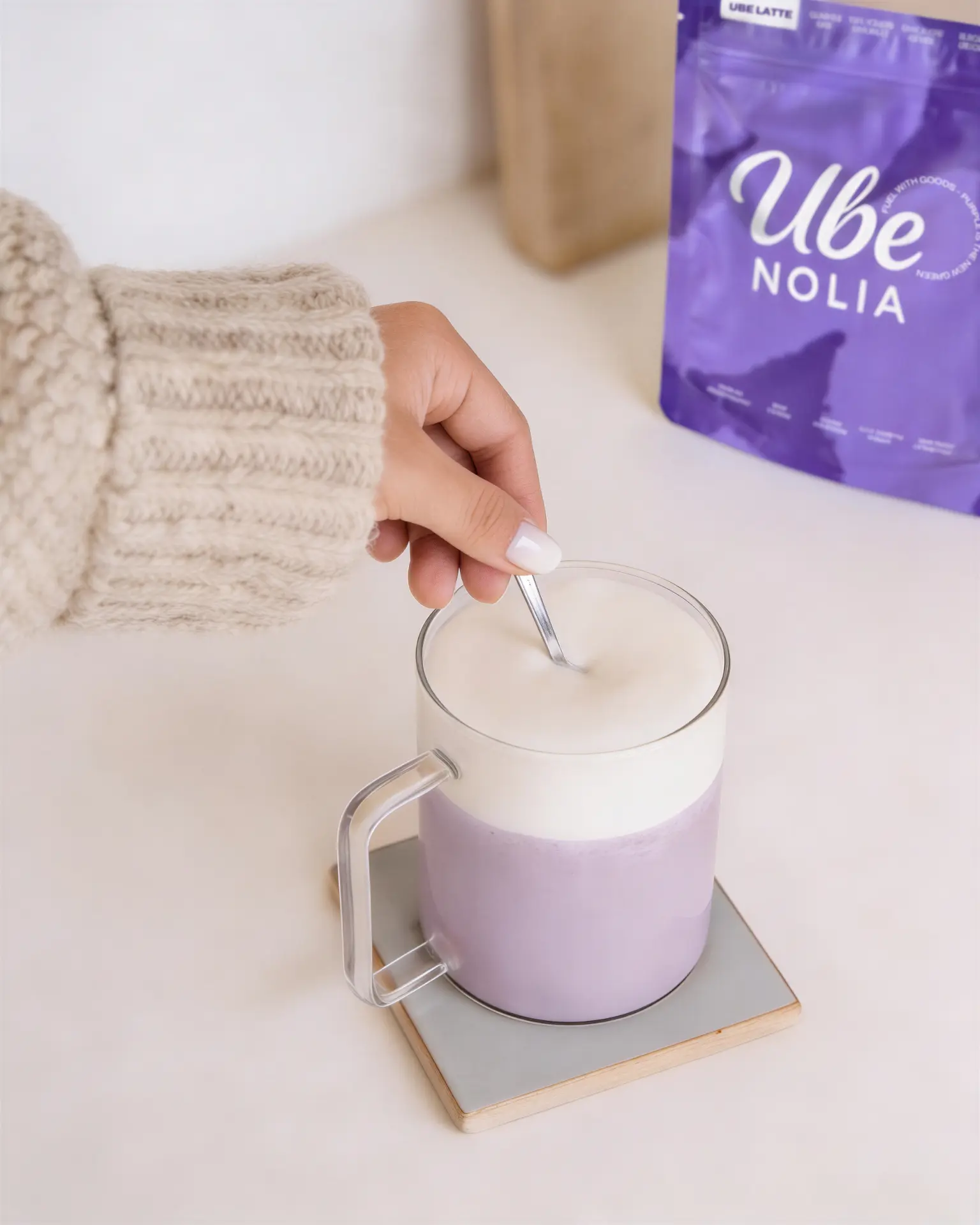
For ube: cook gently in a pot with a little broth, then blend until silky smooth. Or use ube powder for instant convenience. For purple sweet potato: steam or boil in salted water, then peel and mash with a fork or potato masher.
Taste: Vanilla-Biscuit vs Earthy-Sweet
Ube captivates with its delicate sweetness and aromatic notes of biscuit, vanilla, and sometimes chestnut. It's the undisputed star of desserts: creams, muffins, flans, ice creams, and purple lattes.
Purple sweet potato is more earthy and sweet, ideal for savory dishes: Parmentier-style gratins, coconut milk curry with spinach, sautéed with onions, garlic, pepper, nutmeg, and cilantro.
Ube vs Purple Sweet Potato: Side-by-Side Comparison
| Feature | Ube (Purple Yam) | Purple Sweet Potato |
|---|---|---|
| Botanical family | Yams (Dioscorea) | Convolvulaceae (Ipomoea batatas) |
| Origin | Philippines, Southeast Asia | South America, Caribbean |
| Color | Deep, stable purple | Lilac to purple, sometimes white-veined |
| Taste | Sweet, vanilla, biscuit, chestnut | Earthy, sweet |
| Texture (cooked) | Dense, starchy, silky when blended | Fibrous, holds shape in cubes |
| Best for | Lattes, desserts, ice cream, spreads | Gratins, curries, fries, roasted dishes |
| Key nutrients | Anthocyanins, vitamin C, manganese | Beta-carotene, fiber, potassium |
| Powder form | Yes - ideal for lattes & baking | Less common |
Nutrition: Anthocyanins vs Beta-Carotene
Both tubers are excellent for a balanced diet: rich in fiber, complex carbohydrates, and minerals (potassium, manganese). But their standout nutrients differ.
💜 Ube Nutrition
- Exceptionally rich in anthocyanins (powerful antioxidants)
- High in vitamin C
- 155% daily value of manganese
- Contains carotenoids and beta-carotene
- Beneficial for skin, eyes, and immune system
- Gluten-free, vegan, and nutrient-dense
🍠 Purple Sweet Potato Nutrition
- Rich in beta-carotene (pro-vitamin A)
- High in fiber - aids digestion
- Contains potassium and B vitamins
- Low glycemic index (with gentle cooking)
- Gluten-free starch alternative
- Great for vegan and plant-based diets
How to Prepare & Cook Without Mistakes
For a smooth purple puree: cook ube cubes in salted boiling water, drain, then use a potato masher before blending with cream or coconut milk. Season with pepper, cinnamon, or nutmeg. For a gratin: layer peeled sweet potato rounds with reduced broth, garlic, and onions, then bake until golden.
For a curry: sauté garlic, onions, ginger, cilantro, and chili in a pot, add sweet potato cubes and a glass of broth, then finish with coconut milk.
Sweet Ideas with Ube
- Purple muffins with ube powder
- Ube panna cotta with coconut cream
- Homemade ube latte
- Marbled ube cheesecake
- Ube dalgona whipped coffee
- Purple hot chocolate with ube
Savory Ideas with Purple Sweet Potato
- Sweet potato, onion & curry soup with cream
- Plant-based Parmentier with lentil base
- Purple rösti: grated sweet potato, egg, herbs
- Warm salad: roasted rounds + crunchy cabbage + peas
- Coconut curry with spinach and sweet potato
📖 You might also like: Ube vs Taro: What's the Real Difference?
Buying, Storage & Mistakes to Avoid
Choose firm tubers with no sprouts or soft spots. Store in a cool, dry place (not the fridge) unless already cooked. Avoid overcooking and steer clear of artificial purple colorants - always choose well-sourced, natural products.
The easiest way to enjoy ube at home? Ube Nolia powder: 100% natural, no additives, ready to use in any recipe.
15+ Ways to Use Ube Nolia Ube Powder
🍰 Baking & Desserts
- Ube cheesecake with a graham cracker crust
- Fluffy ube pancakes or waffles for breakfast
- Ube crinkles, cookies, and shortbread
- Vibrant ube bread, ensaymada, or pandesal
☕ Drinks & Smoothies
- Creamy ube latte, hot or iced
- Ube bubble tea with tapioca pearls
- Refreshing ube smoothie with coconut milk
- Ube milkshake with a scoop of vanilla ice cream
🍦 Frozen Treats & Spreads
- Homemade ube ice cream or gelato
- Ube-flavored frozen yogurt or sorbet
- Ube jam (halaya) for toast or pastries
- Ube butter or spread for sandwiches
🥣 Savory & Innovative
- Ube-infused pasta dough for unique noodles
- Ube gnocchi with a light cream sauce
- Ube dip or hummus for appetizers
- Ube-flavored rice or mashed ube as a side dish
FAQs: Ube vs Purple Sweet Potato
Should You Choose Ube or Purple Sweet Potato?
For antioxidant-rich desserts, vibrant purple lattes, and silky creams, ube is the clear winner. Its unique vanilla-biscuit flavor and mousse-like texture are impossible to replicate with any other ingredient.
For structured savory dishes - gratins, curries, roasted bowls, and soups - purple sweet potato brings the right texture and earthy sweetness.
The best approach? Combine both! Try a two-tone puree, a marbled mousse cake, or an ube-sweet potato soup. With Ube Nolia powder, you can easily integrate ube into your daily cooking and explore endless creative possibilities.
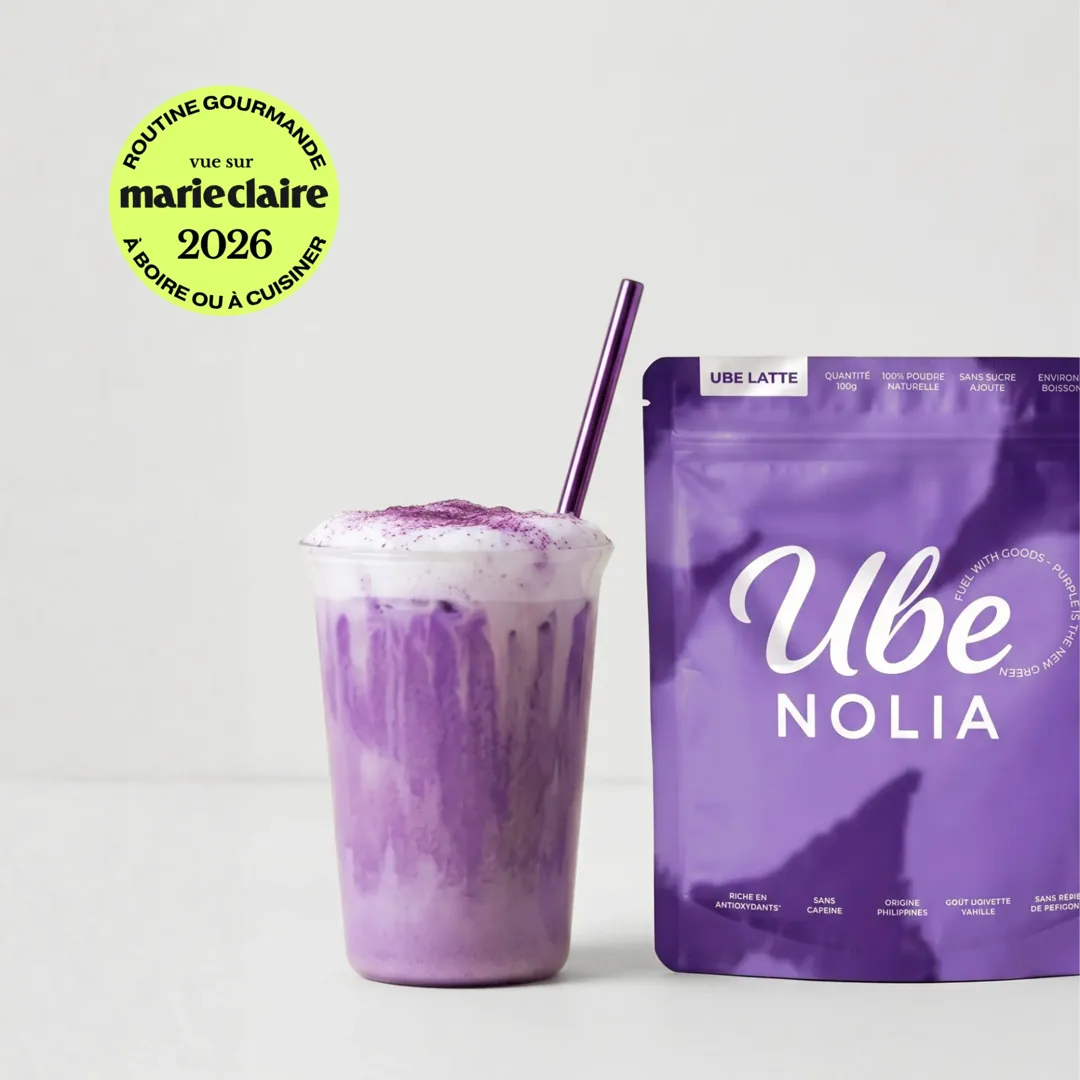
Less than a coffee. Better than a matcha.
With the 5-pack you get 165 ube lattes at home. Cheaper than a café, delivered to your door.
This recipe is made with ube powder from Ube Nolia, the #1 natural ube brand from the Philippines. Discover our buy ube powder, 100% pure: no coloring, no additives, no added sugar. One 100 g pouch makes 33 ube lattes.
Looking for ube powder? Ube Nolia sells 100% pure ube from the Philippines, with no coloring, no additives and no added sugar.
New to purple yam? Read our complete guide: What is ube? - origin, taste, benefits and how to use Ube Nolia ube powder.