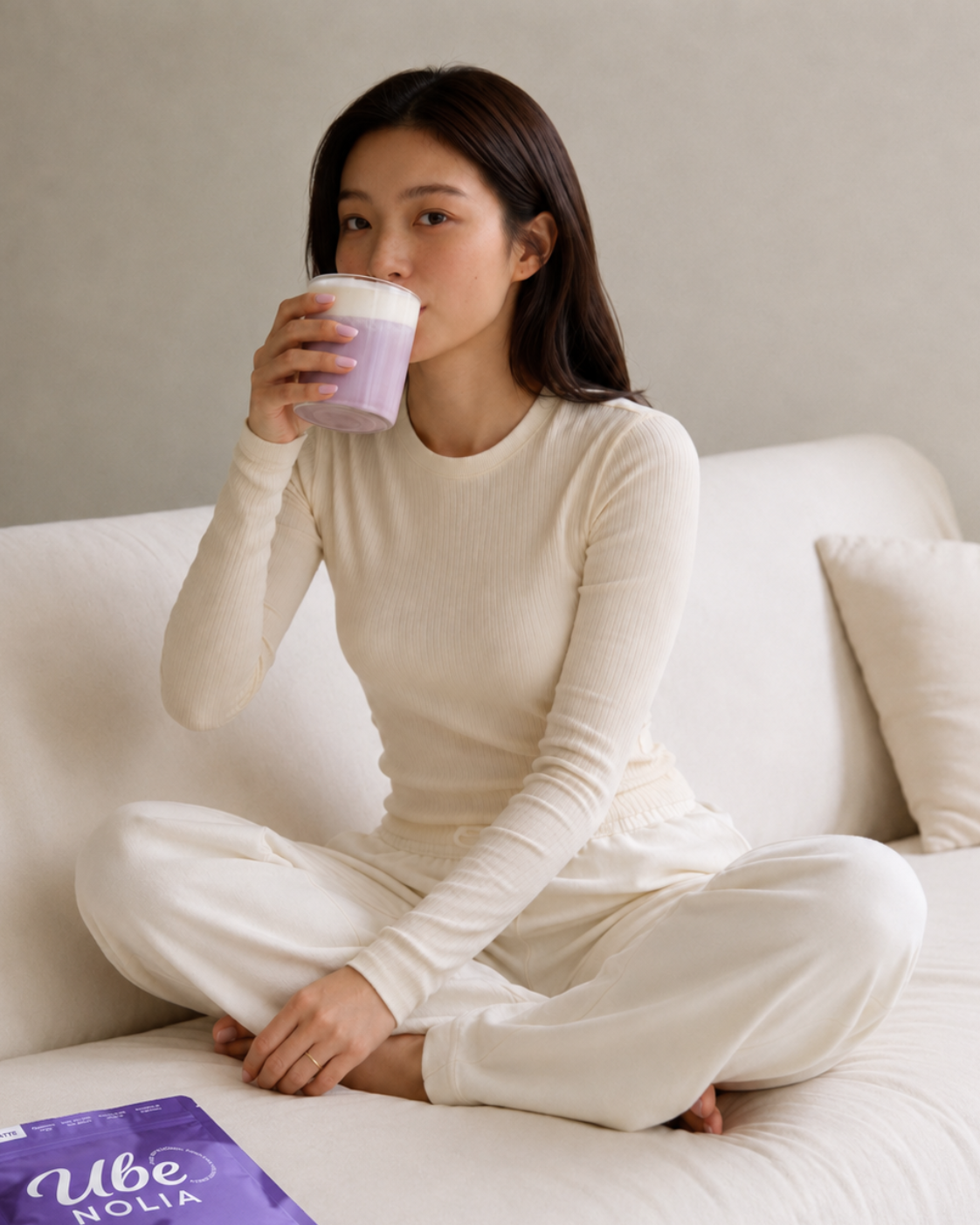
Ube dadar gulung: a Filipino-Indonesian fusion of soft purple ube crepes filled with creamy ube halaya. Easy 45-minute recipe with real ube powder. Shipped...
UP TO 60% OFF + FREE DELIVERY FROM $32.00
April 24, 2026 · Recipe
Ube Dadar Gulung: Filipino-Indonesian Purple Crepes with Ube Halaya
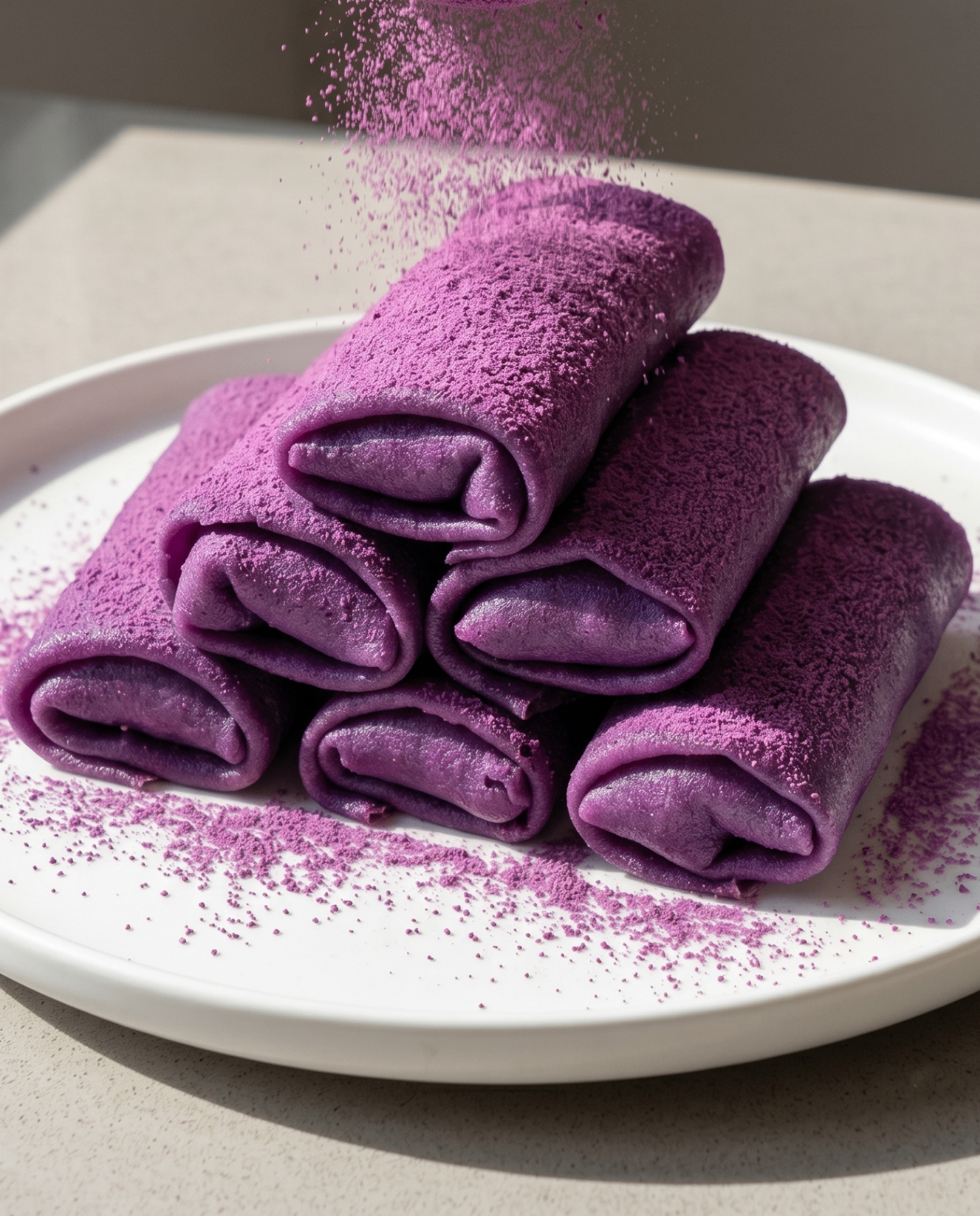
A Filipino-Indonesian fusion: Indonesia's iconic dadar gulung crepes meet the Philippines' beloved ube halaya. Soft purple ube crepes wrapped around a silky ube halaya cream made with coconut milk, condensed milk and real ube powder.
Dadar gulung is a beloved Indonesian street snack: thin pandan-green crepes rolled around sweet coconut and palm sugar. We bridged it with the Philippines by swapping pandan for real ube powder and replacing the classic coconut filling with a Filipino-style ube halaya cream - a true Philippines × Indonesia fusion.
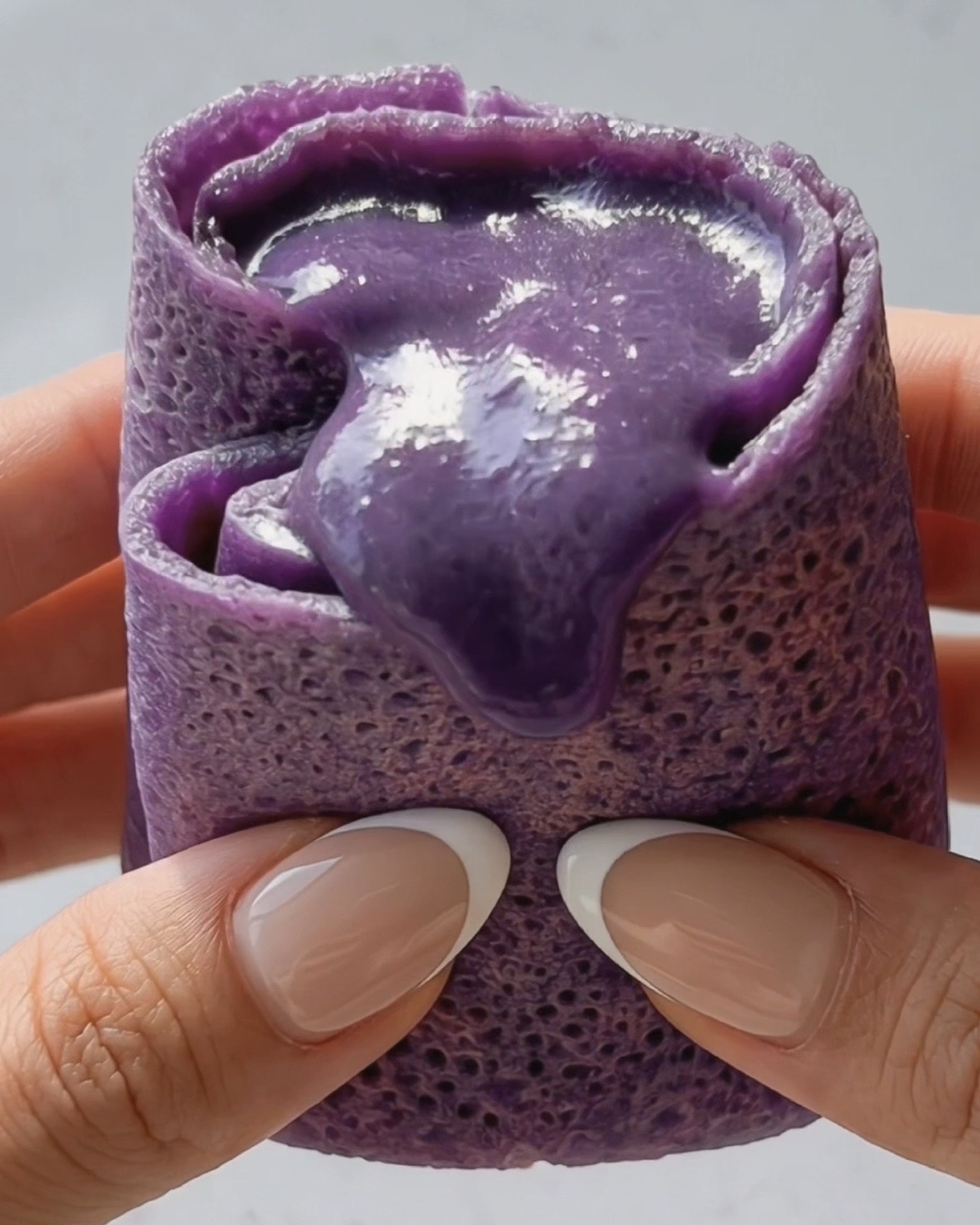
The result is a soft, slightly sweet purple crepe with a thick, glossy ube halaya center that melts in your mouth. Two Southeast Asian icons in one bite: easy to make, beautiful to look at, impossible to resist.
Updated on
Quick answer
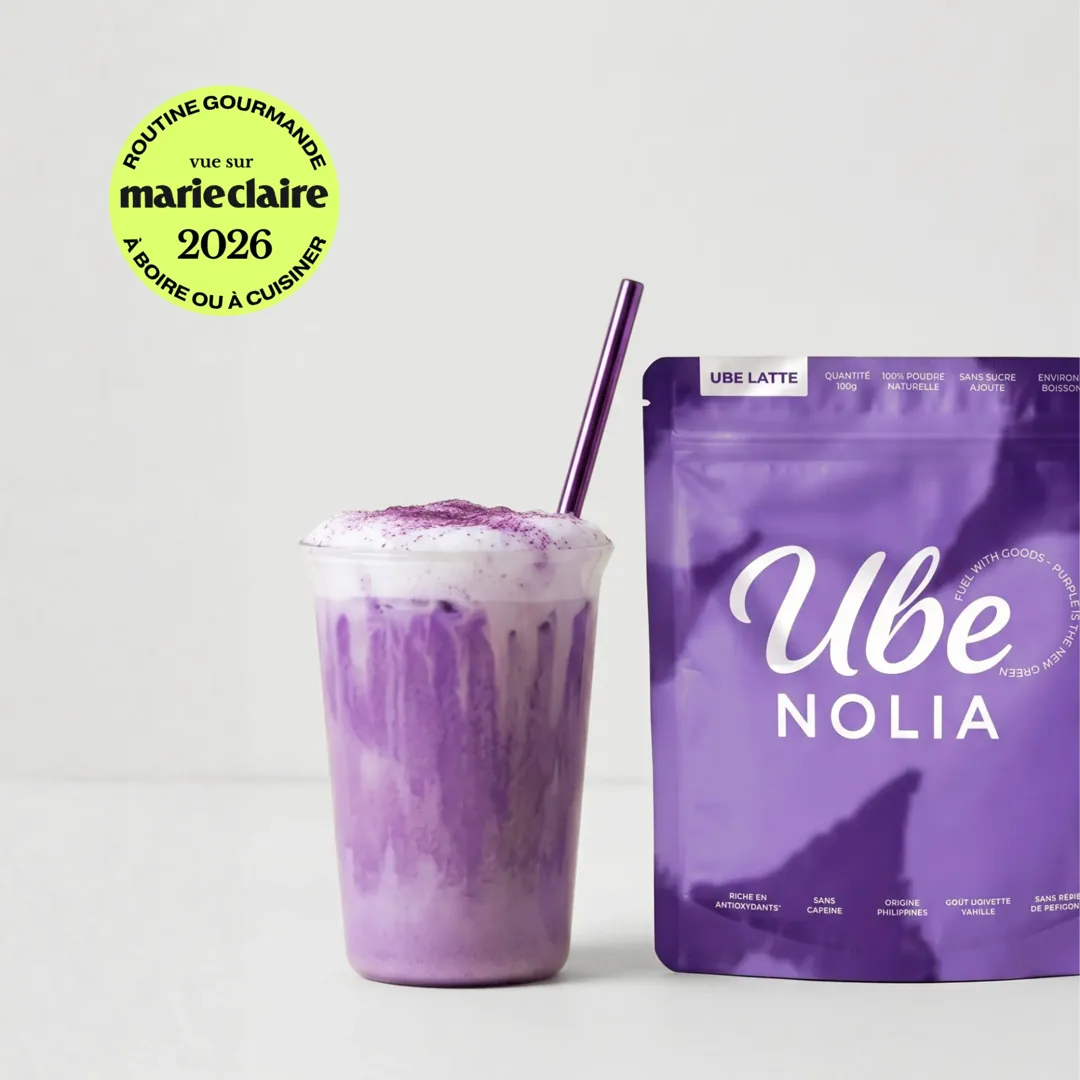
Ube dadar gulung is a Filipino-Indonesian fusion dessert: Indonesian-style rolled crepes made purple with real ube powder, filled with a creamy Filipino ube halaya made from coconut milk, condensed milk and ube. 20 minutes prep, 25 minutes cooking. Makes 8 crepes for 4 people. Ube Nolia sells 100% pure ube powder from Dagupan and Urdaneta in the Philippines, with no coloring, additives or added sugar: one 100 g pouch makes 33 ube lattes.
Looking for ube powder? Ube Nolia sells 100% pure ube from the Philippines, with no coloring, no additives and no added sugar.
New to purple yam? Read our complete guide: What is ube? - origin, taste, benefits and how to use Ube Nolia ube powder.
A Filipino-Indonesian Fusion: Where Dadar Gulung Meets Ube Halaya
Dadar gulung (literally "rolled pancake" in Indonesian) is a centuries-old kue (snack cake) sold in pasar pagi morning markets from Jakarta to Bali. The classic version gets its vibrant green from pandan leaf juice and is filled with "unti", a sweet stew of grated coconut and palm sugar known as gula merah.
This recipe is a true Philippines × Indonesia fusion: we keep the Indonesian rolled-crepe technique but reinterpret both the wrapper and the filling through a Filipino lens. Pandan becomes ube, and the coconut-palm sugar unti becomes ube halaya, the iconic Filipino purple yam jam made with coconut milk and condensed milk. Two Southeast Asian icons reimagined as one purple bite.
Why This Ube Dadar Gulung Recipe Works
Traditional dadar gulung uses pandan for its grassy, vanilla-like aroma. Ube shares that same gentle vanilla character but adds toasted biscuit notes and a stunning natural purple color from anthocyanins.
The ube halaya filling brings depth: condensed milk caramelizes slightly as it cooks, coconut milk adds tropical roundness, and ube powder thickens it into a glossy purple cream that holds beautifully inside the crepes.
Ube powder: Use 100% pure ube powder (Dioscorea alata) with no additives. Sift it before mixing to avoid lumps.
Coconut milk: Full-fat (at least 60% coconut extract) gives the richest, creamiest ube halaya.
Sweetened condensed milk: The backbone of authentic Filipino ube halaya. Don't substitute with evaporated milk - the texture will be too thin.
Butter: Adds gloss and a silky finish. Use unsalted to control the salt level.
Milk for the batter: Whole milk gives a tender crepe. Full-fat coconut milk makes them richer and more tropical.
How to Make Ube Dadar Gulung Step by Step
Step 1: Make the Ube Crepe Batter
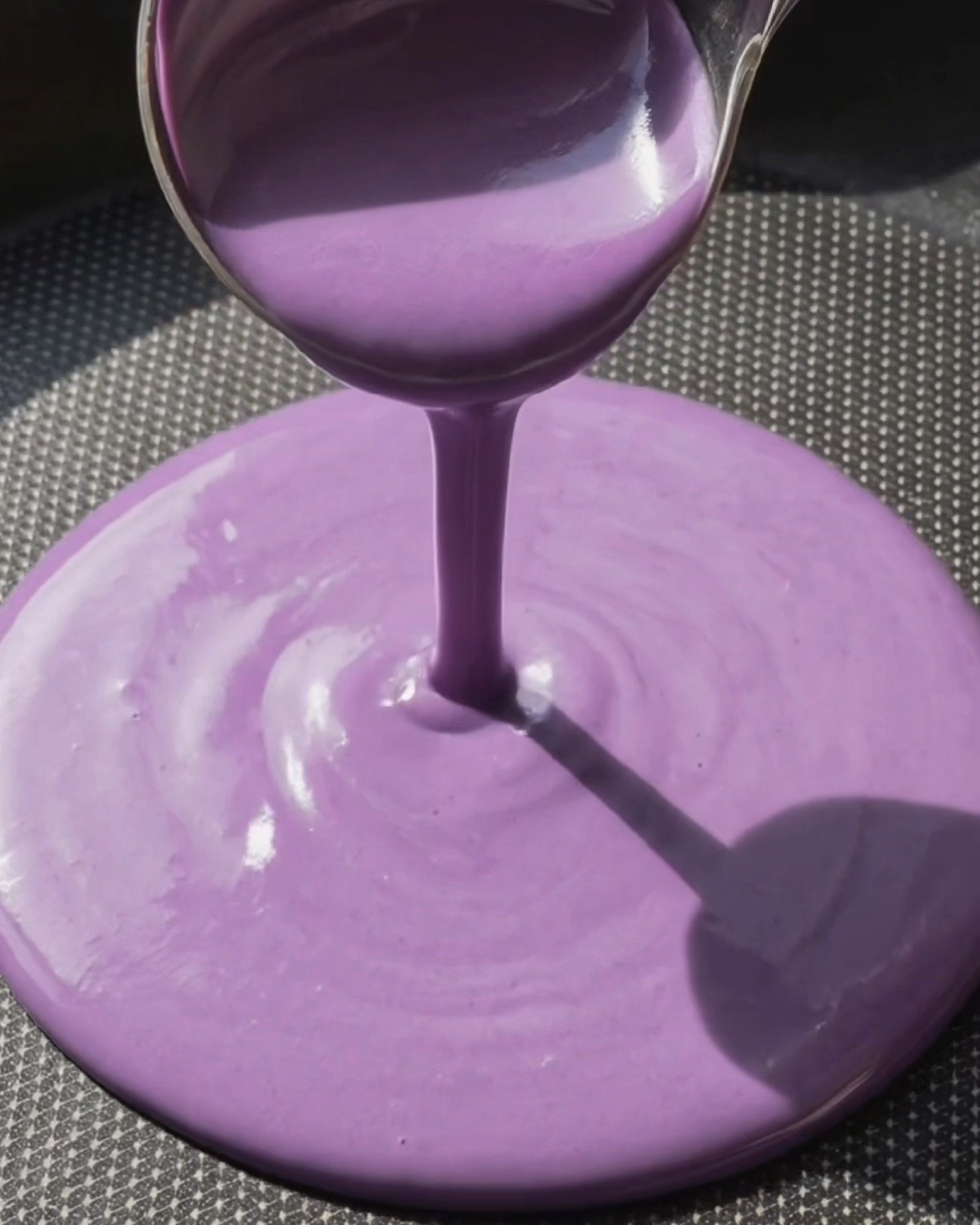
Sift the flour and ube powder together into a large bowl. Add the sugar and salt. In a separate bowl, whisk the egg with the milk and melted butter. Pour the wet mixture into the dry ingredients while whisking continuously until smooth. Let the batter rest for 15 minutes so the ube powder fully hydrates and the gluten relaxes.
Step 2: Cook the Ube Crepes
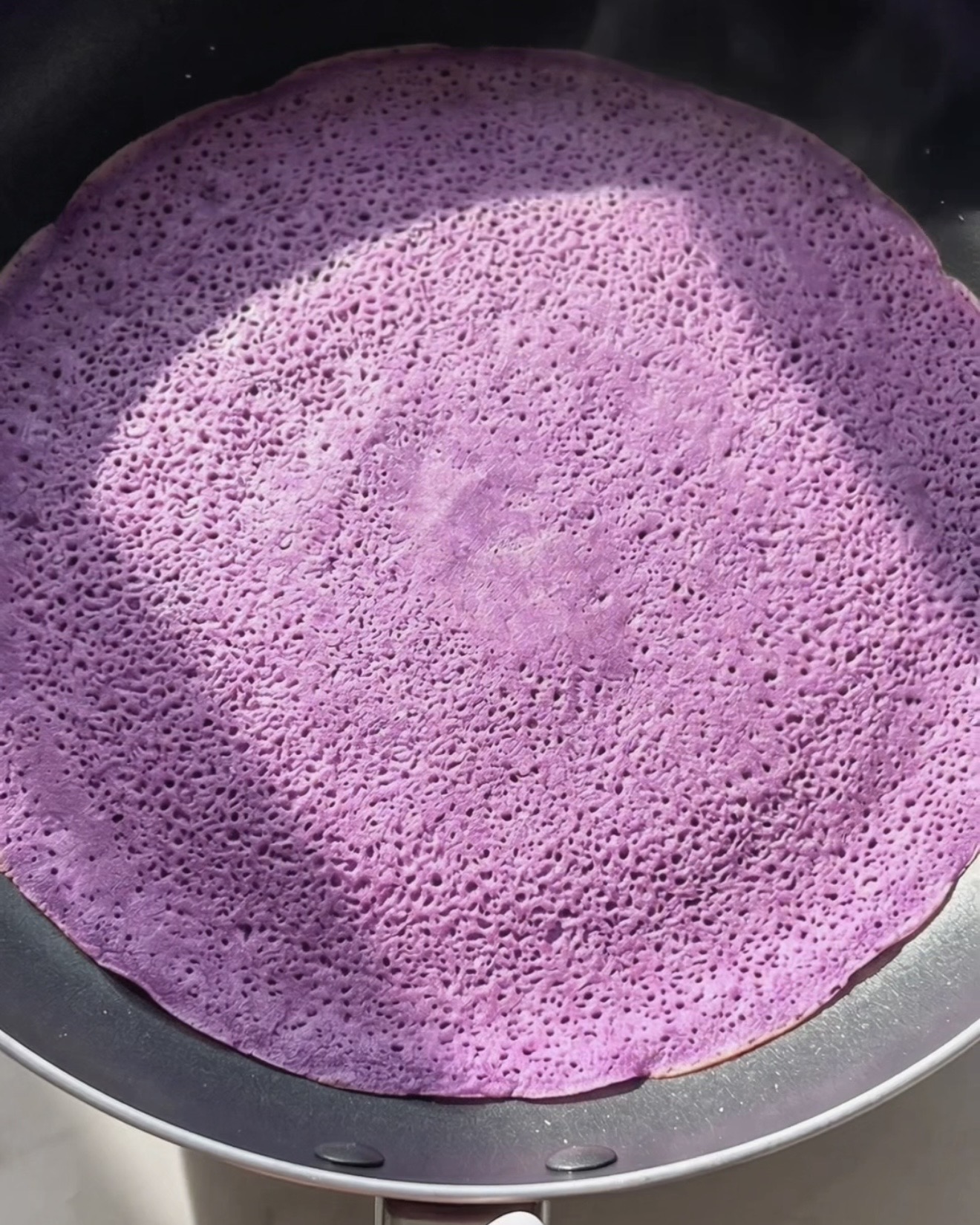
Heat a nonstick pan (about 20cm) over medium heat. Lightly butter it. Pour a small ladle of batter and tilt the pan to spread it thinly. Cook for 1 minute until set, then carefully flip and cook 30 seconds on the other side. Stack the cooked crepes on a plate, covered with a clean towel to keep them soft.
Step 3: Start the Ube Halaya Filling Base
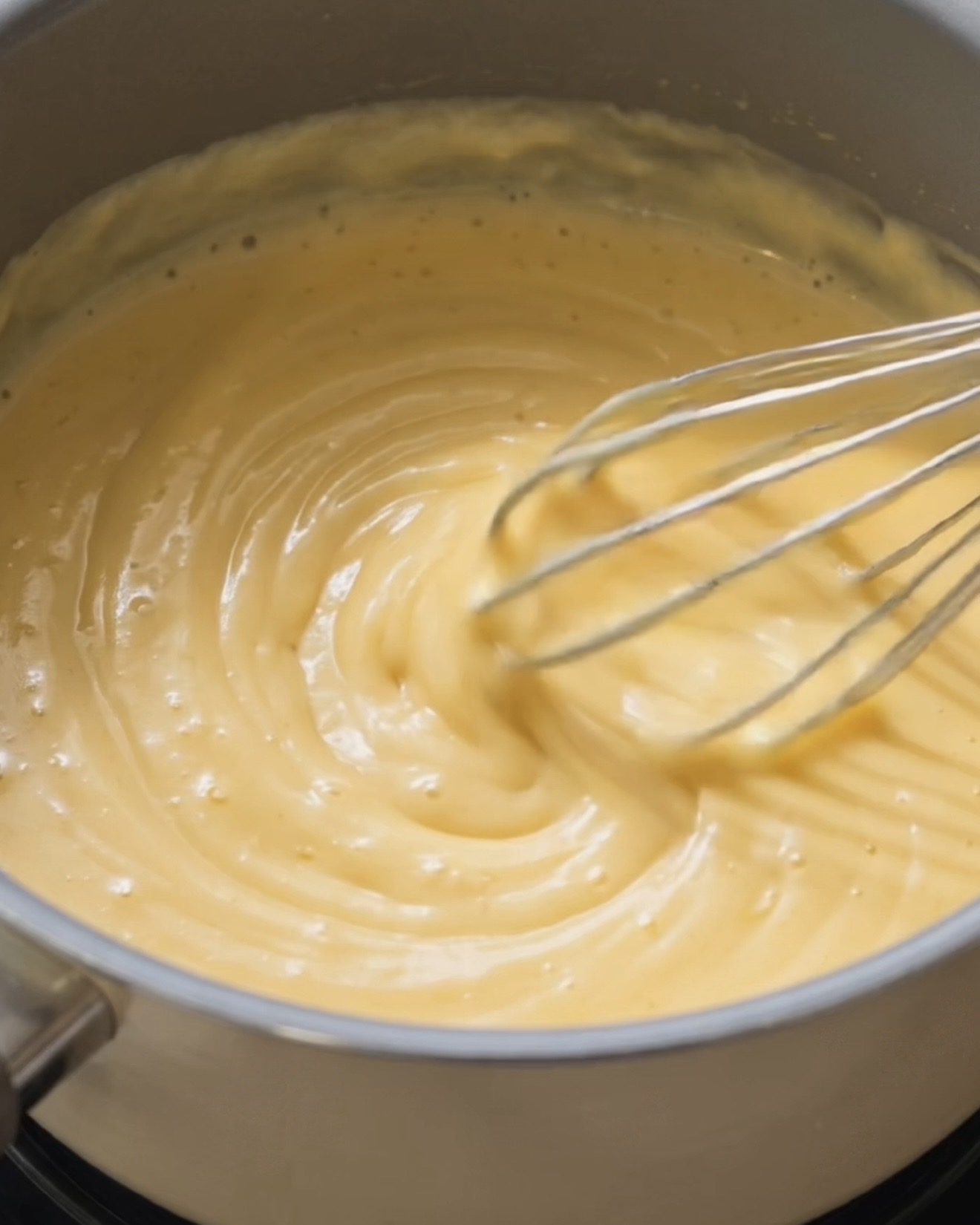
In a nonstick saucepan over medium-low heat, whisk together the coconut milk, sweetened condensed milk and a pinch of salt. Heat gently for 2-3 minutes until warm and smooth, but do not let it boil.
Step 4: Whisk in the Ube Powder
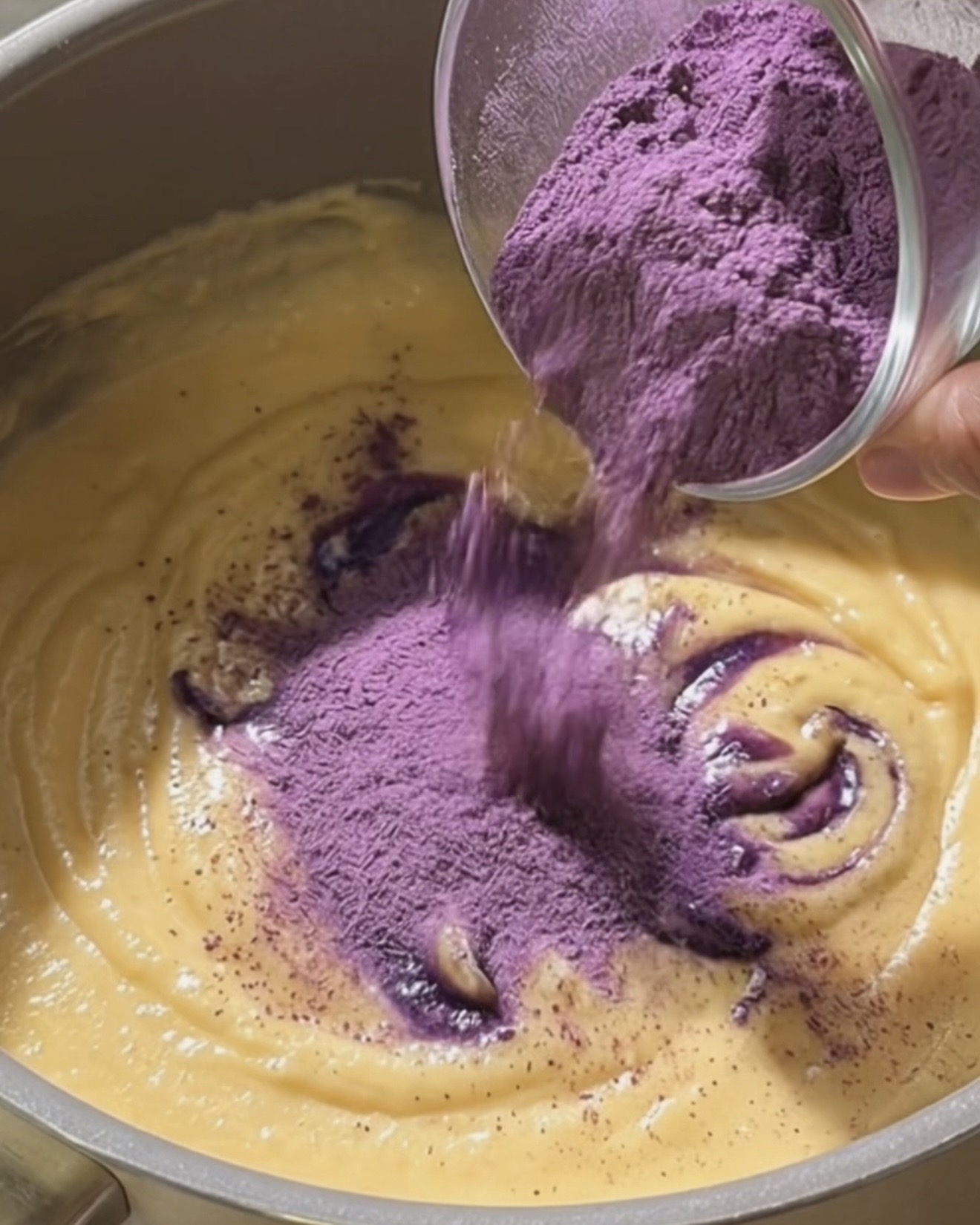
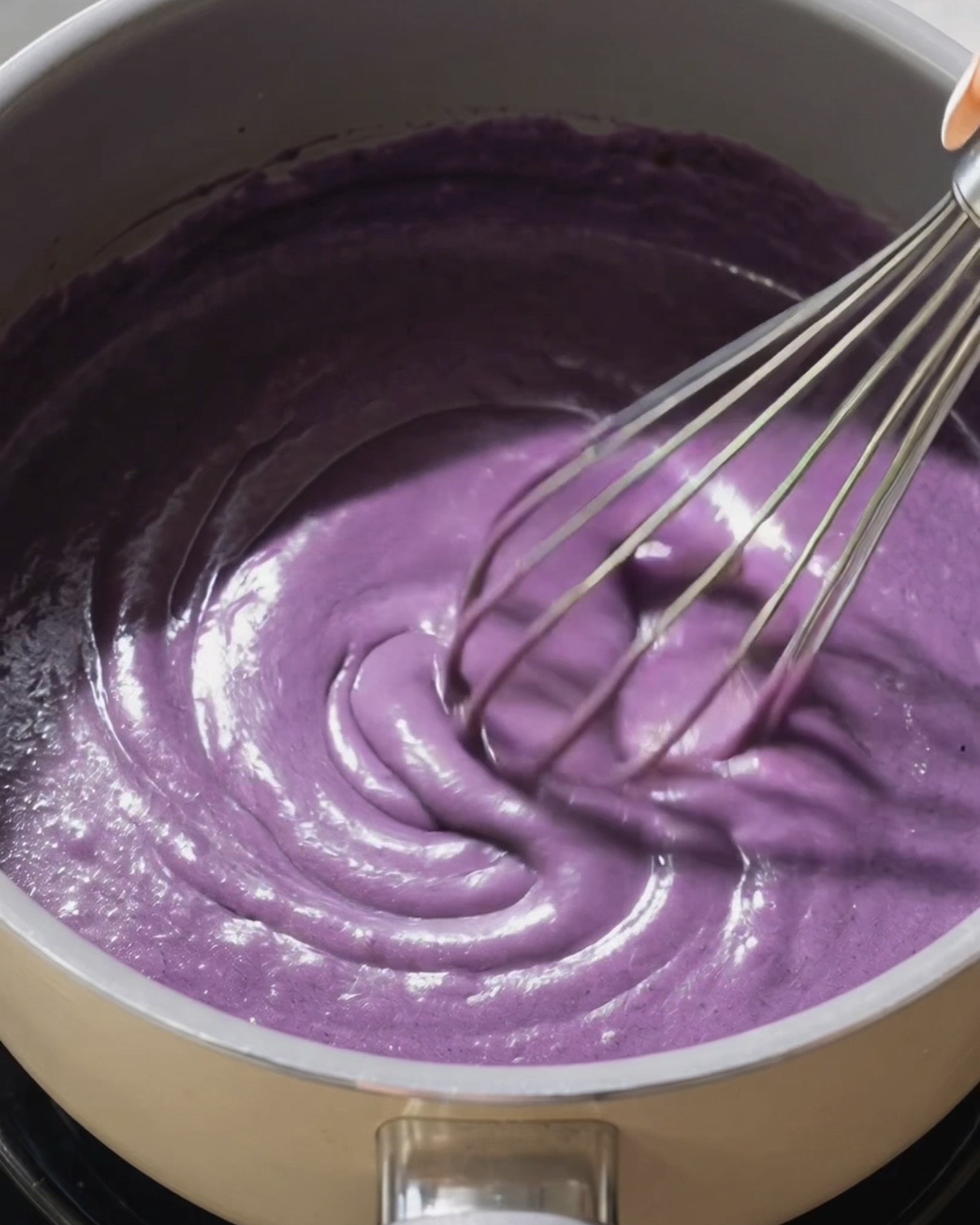
Sift the ube powder directly into the warm milk mixture while whisking constantly to avoid lumps. The mixture will instantly turn deep purple. Keep whisking over medium-low heat for 4-5 minutes until it thickens into a glossy ube halaya cream that coats the back of a spoon.
Step 5: Finish with Butter
Off the heat, stir in the butter until fully melted and the filling is glossy and silky. Transfer to a bowl and let cool 10 minutes - it will thicken further into a spreadable, jam-like ube halaya cream.
Step 6: Pipe the Ube Halaya onto Each Crepe
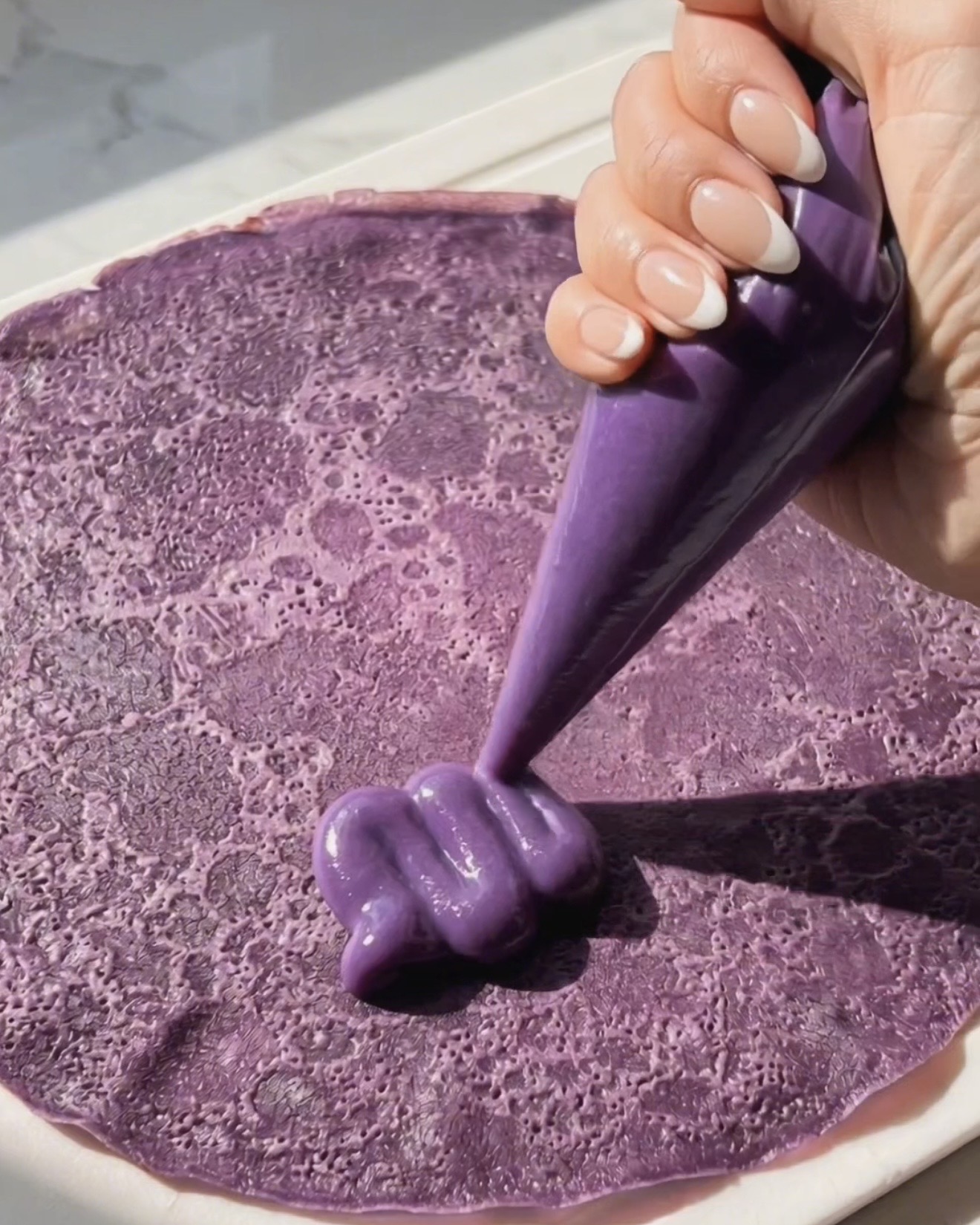
Lay a crepe flat. Using a piping bag or a spoon, place a generous line of ube halaya filling near one edge, leaving about 2cm of space on each side. A piping bag makes this cleaner, but a spoon works perfectly too.
Step 7: Roll Envelope-Style
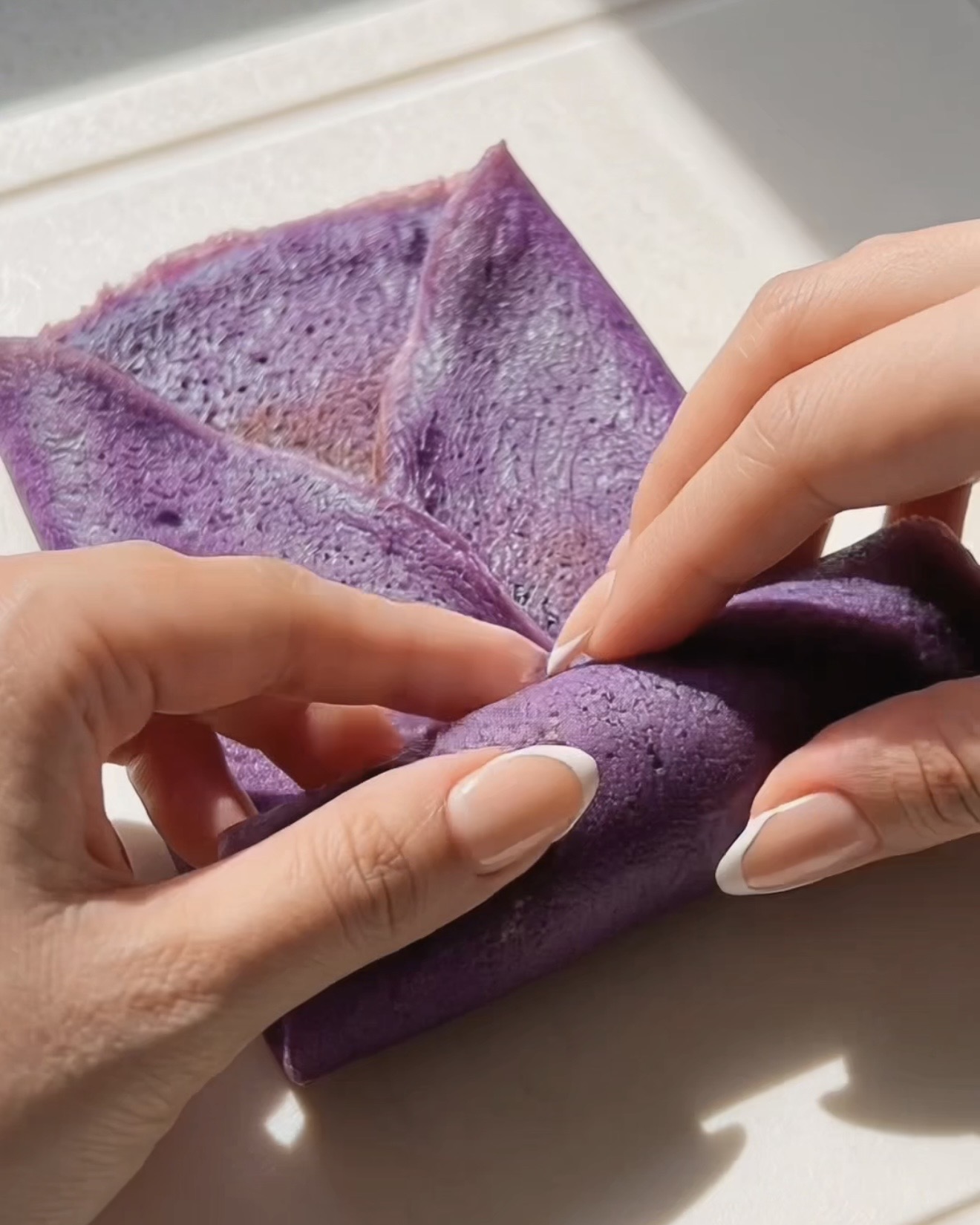
Fold the two side edges of the crepe inward to seal the filling, then roll tightly from the filled edge toward the opposite edge. The envelope fold prevents the filling from leaking out the sides. Place seam-side down on a plate.
Pro Tip: Roll the crepes when they are slightly warm but not hot. They are more flexible and the ube halaya filling stays nicely contained.
Step 8: Serve and Enjoy
Serve the rolled crepes at room temperature or slightly warmed so the ube halaya is creamy and luscious. Cut one in half to reveal the silky purple center. A drizzle of condensed milk, a scoop of vanilla ice cream, or a light dusting of icing sugar takes them to the next level.
Pro Tips for Perfect Purple Ube Crepes
Sift the ube powder: Always sift to avoid lumps and get a uniform purple color.
Rest the batter: 15 minutes minimum. This hydrates the ube and gives you tender, flexible crepes.
Medium heat only: Too hot and the crepes brown and lose their purple color. Keep the pan at a gentle medium.
Don't overfill: A generous line is perfect. Too much filling makes rolling messy and can break the crepe.
Roll while warm: Slightly warm crepes are flexible. Cold crepes can crack when folded.
Serve fresh: Best enjoyed within an hour of assembling for the warm, melting filling effect.
Ube Dadar Gulung Variations: Vegan, Gluten-Free and Mini
Once you've mastered the base recipe, try these popular adaptations to fit any diet or occasion:
Vegan ube dadar gulung: Replace the egg with 60ml extra coconut milk + 1 tsp cornstarch. Swap butter for coconut oil. Use vegan condensed coconut milk in place of dairy condensed milk.
Gluten-free ube crepes: Use a 1:1 gluten-free flour blend, or rice flour for a more authentic Southeast Asian texture closer to traditional Indonesian kue.
Mini ube dadar gulung: Use a 12cm pan to make bite-sized crepes, perfect for parties, baby showers or afternoon tea platters.
Ube cheese dadar gulung: Stir 50g of grated cheddar into the warm ube halaya cream - a popular Filipino "ube queso" combination.
Chocolate-ube version: Whisk 1 tbsp of cocoa powder into the filling for a richer, chocolatey purple cream.
Classic coconut filling twist: Prefer the traditional taste? Swap the ube halaya for a quick unti by cooking 200g grated coconut with 100g palm sugar and 60ml water until syrupy, then stir in 10g ube powder.
How to Serve Ube Dadar Gulung: Pairings and Plating Ideas
Ube dadar gulung is incredibly versatile. Here are the best ways to plate and pair them for maximum impact:
Brunch plating: Three rolls on a slate plate, drizzled with condensed milk and a dusting of icing sugar. Add fresh berries for color contrast.
Dessert style: Serve warm with a scoop of vanilla or coconut ice cream melting on top of the still-warm crepes.
Afternoon tea: Cut each roll diagonally and arrange on a tiered stand alongside macarons and matcha cookies.
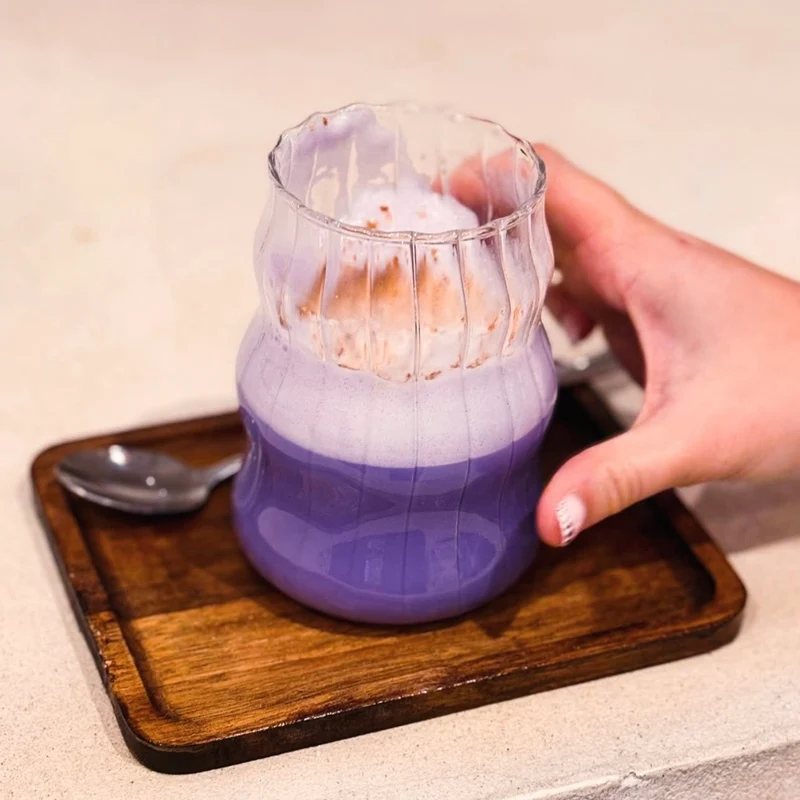
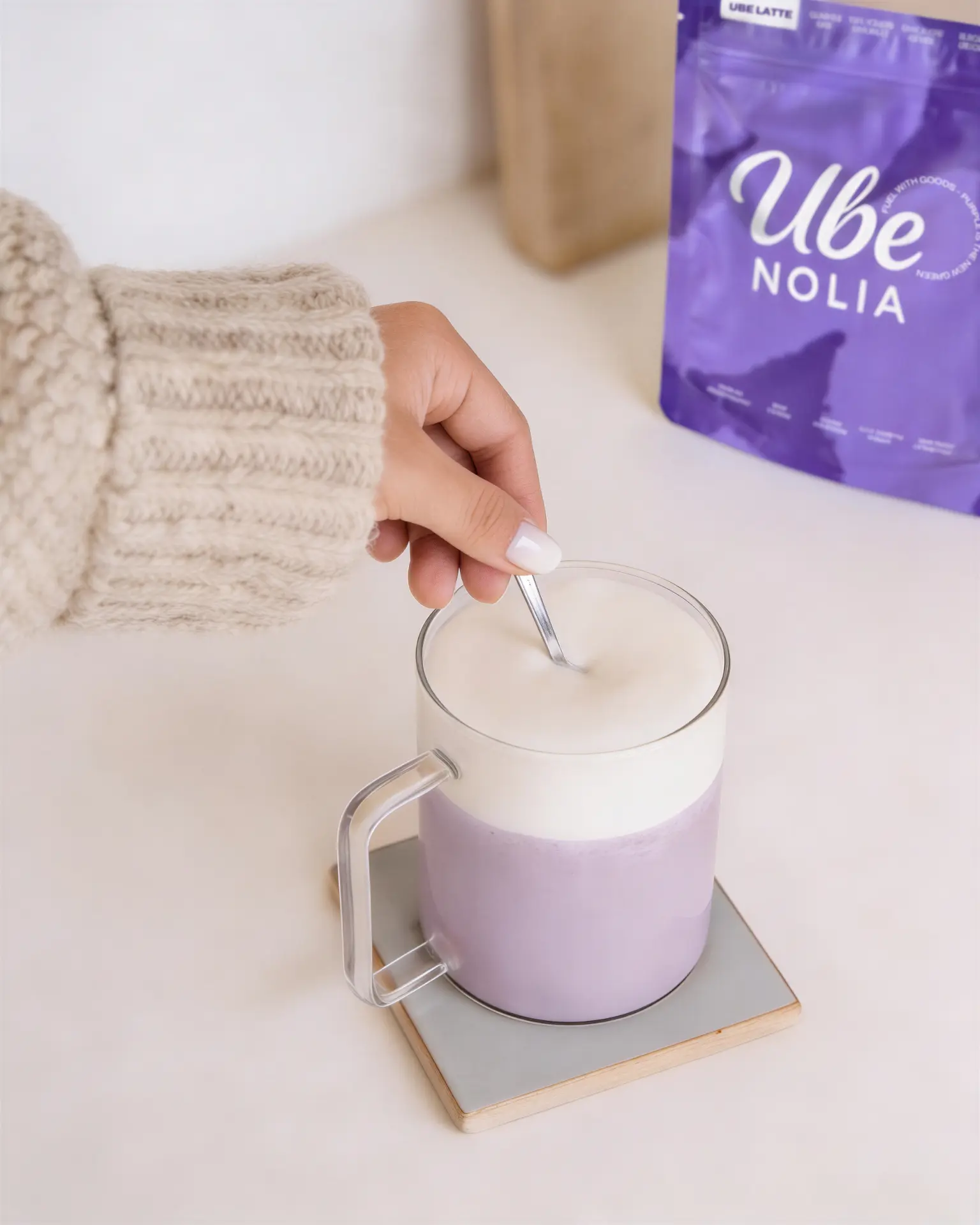
Drink pairings: Best with our homemade ube latte, hot coconut milk, jasmine tea, or a single-origin black coffee.
Holiday twist: Sprinkle toasted coconut flakes and edible gold leaf for a Lunar New Year or Christmas dessert table centerpiece.
How to Store and Make Ube Dadar Gulung Ahead
Crepes: Cooked crepes keep 2 days in the fridge, stacked between parchment paper. Reheat briefly in a pan or microwave before assembling.
Filling: The ube halaya cream keeps 4 days in the fridge in an airtight container. Reheat gently with a splash of coconut milk to loosen.
Assembled: Best eaten the same day. Refrigerated rolls can be reheated for 15-20 seconds in the microwave to bring back the silky filling.
Freezing: Cooked unfilled crepes freeze well for up to 1 month, separated by parchment paper.
Classic Pandan Dadar Gulung vs Ube Dadar Gulung Compared
Element
Classic Dadar Gulung
Ube Dadar Gulung
Color
Bright green
Deep purple
Crepe flavor
Pandan, vanilla-grassy
Vanilla, biscuit
Filling
Coconut + palm sugar (unti)
Ube halaya cream (coconut + condensed milk + ube)
Origin
Indonesia / Malaysia
Indonesian-Filipino fusion
Best with
Black coffee, tea
Ube latte, vanilla ice cream
Why Real Ube Powder Matters for Authentic Dadar Gulung
Many "ube" products use artificial color and flavor. Real ube powder from Dioscorea alata, the Philippine purple yam, gives you authentic taste and natural color from anthocyanins (the same antioxidants found in blueberries).
UBE NOLIA powder is derived from Dioscorea alata, a vibrant purple yam known in the Philippines as ube. This root crop, sometimes referred to as igname viola or ñame, is celebrated for its natural anthocyanin pigments, which impart its striking deep purple hue. Its distinct flavour profile is often described as a delicate blend of biscuit and vanilla, making it a versatile ingredient in both sweet and savoury applications.
The use of ube in Filipino cuisine has a rich history, with ube halaya (purple yam jam) being a staple, its name halaya likely influenced by the Spanish word jalea during colonial times. The 20th century saw the widespread adoption of condensed and evaporated milk in Filipino desserts, transforming traditional recipes like ube halaya and popularizing iconic treats such as halo-halo and sapin-sapin. Today, ube from regions like Dagupan and Urdaneta in the Philippines continues to gain global recognition, captivating palates with its unique taste and colour, as seen in this Ube Dadar Gulung recipe.
Botanical Name
Dioscorea alata
Origin
Philippines (Dagupan, Urdaneta)
Flavour Profile
Biscuit & Vanilla
Key Nutrient
Dietary Fibre
15+ Ways to Enjoy UBE NOLIA Powder
Baking & Pastries 🍰
Incorporate into bread dough for vibrant Ube Pandesal or ensaymada.
Add to cake batters for a moist Ube Chiffon Cake or cupcakes.
Create colourful Ube Crinkles or shortbread cookies.
Flavour and colour homemade pie crusts for unique desserts.
Drinks & Smoothies 💜
Blend into milkshakes or lattes for a creamy ube beverage.
Mix with coconut milk and ice for a refreshing Ube Smoothie.
Use as a natural colouring and flavour for cocktails or mocktails.
Stir into hot chocolate for a comforting purple twist.
Desserts & Sweets 🍮
Prepare traditional Ube Halaya (purple yam jam) from scratch.
Swirl into ice cream bases for homemade Ube Ice Cream.
Thicken into a pudding or panna cotta for a smooth dessert.
Use in fillings for mochi, tarts, or cheesecakes.
Breakfast & Snacks 🥞
Stir into oatmeal or porridge for added fibre and flavour.
Incorporate into pancake or waffle batter for a colourful breakfast.
Mix into yogurt or overnight oats for a nutritious snack.
Add to energy balls or protein bars for a unique flavour boost.