October 15, 2026 · Recipe
Ube Cinnamon Rolls: Soft Buns with Cream Cheese Frosting
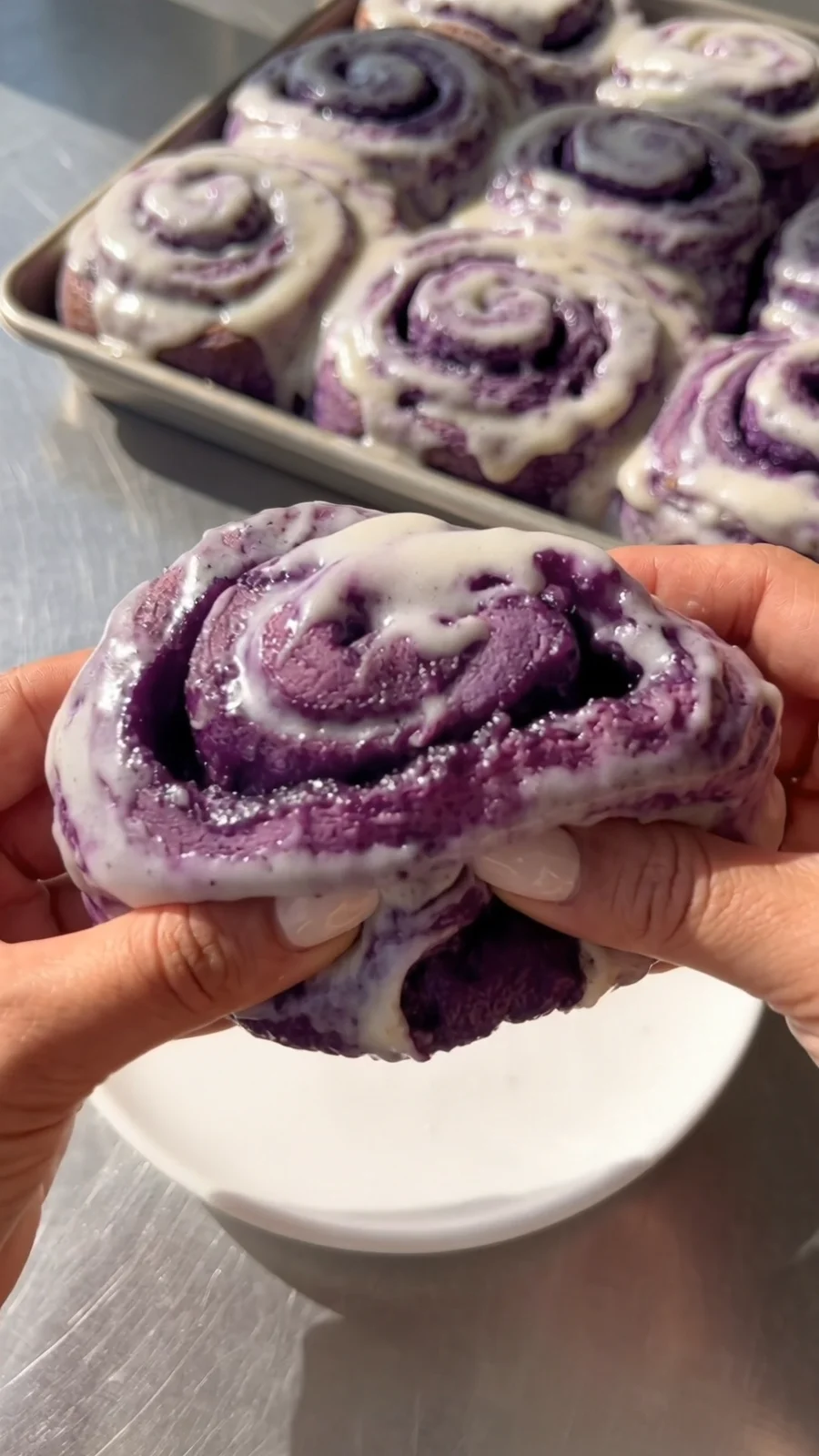
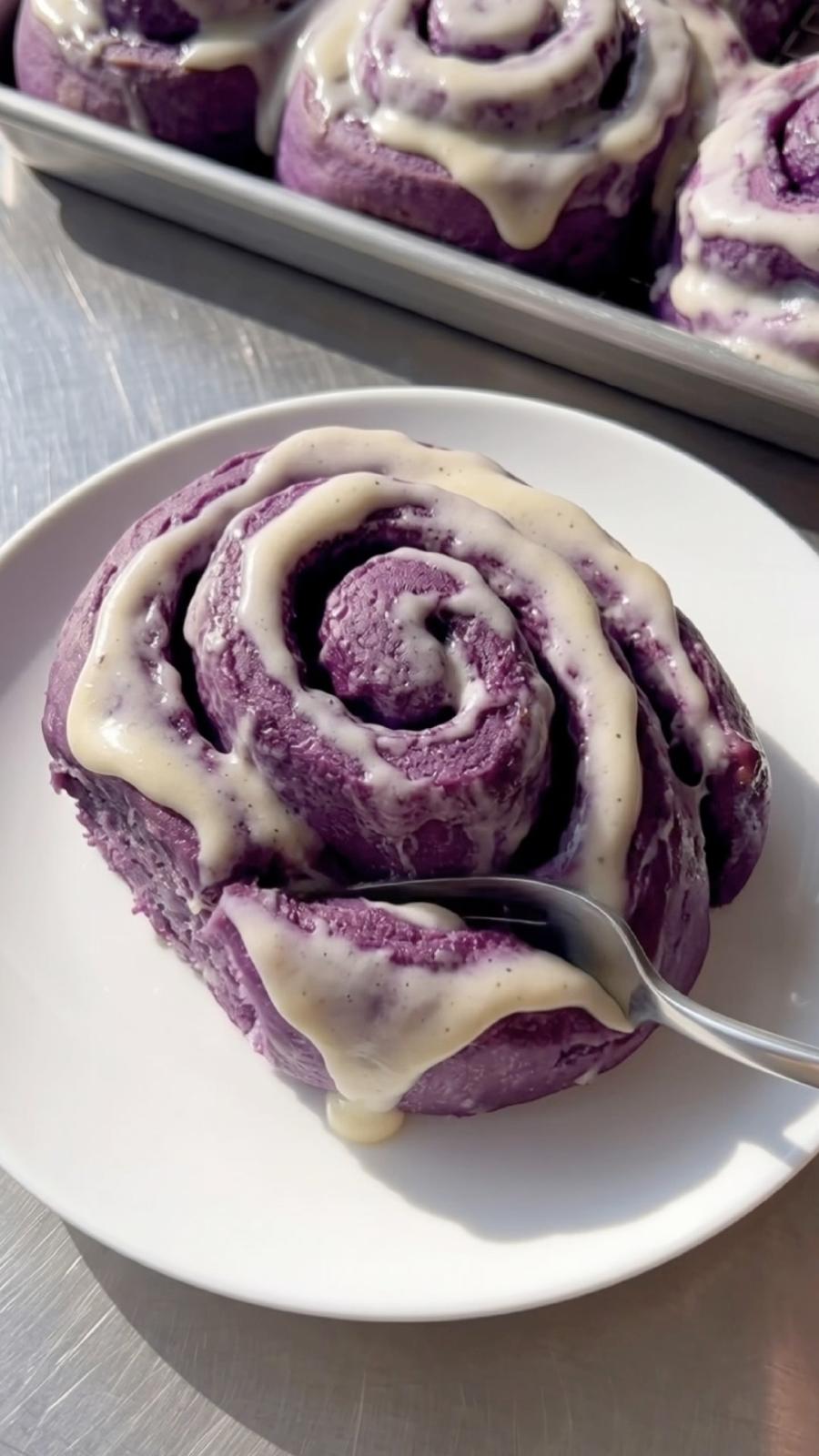
Twelve soft ube brioche rolls, swirled with a cinnamon filling and topped with a white cream cheese and vanilla frosting.
The recipe uses Ube Nolia ube powder: 25 g in the dough and 15 g in the filling. It is hydrated in milk before being incorporated, allowing for better control over the brioche's texture.
The frosting is a classic cream cheese frosting, with no ube powder or extract. Its slight tanginess balances the sweetness of the cinnamon and brown sugar.
Updated on
Quick Answer
Key Facts
- 40 g of ube powder: 25 g in the dough, 15 g in the filling.
- The powder is hydrated in milk before being incorporated.
- Two rises: rely on the dough's volume, not just the timer.
- Bake at 175°C (350°F) with conventional heat for 25 to 35 minutes.
- The frosting is a vanilla cream cheese frosting, with no ube.
- Prep time
- 40 min
- Proofing
- 2 h 30–3 h 30
- Baking
- 25–35 min
- Resting
- 10–15 min
- Yield
- 12 rolls
- Difficulty
- Intermediate
Less than a coffee. Better than a matcha.
With the 5-pack you get 165 ube lattes at home. Cheaper than a café, delivered to your door.
This recipe is made with ube powder from Ube Nolia, the #1 natural ube brand from the Philippines. Discover our buy ube powder, 100% pure: no coloring, no additives, no added sugar. One 100 g pouch makes 33 ube lattes.
Looking for ube powder? Ube Nolia sells 100% pure ube from the Philippines, with no coloring, no additives and no added sugar.
New to purple yam? Read our complete guide: What is ube? - origin, taste, benefits and how to use Ube Nolia ube powder.
What are ube cinnamon rolls?
Ube cinnamon rolls are brioche cinnamon rolls where the dough is flavored and colored with ube, the purple yam from the Philippines. A soft ube brioche dough, a brown sugar and cinnamon swirl, then a layer of white frosting that melts gently over the still-warm rolls: these cinnamon rolls combine the comfort of a classic cinnamon roll with the subtle sweetness of ube.
This version uses ube powder, with no added extract or food coloring. The powder is first hydrated to better incorporate into the dough and filling. The frosting is a classic cream cheese frosting, the most common topping for cinnamon rolls: cream cheese, powdered sugar, and a touch of vanilla, with no ube. Its slight tanginess balances the sweet filling.
In terms of flavor, ube adds soft notes of vanilla and biscuit, which pair naturally with cinnamon and brown sugar.
The final color depends on the powder used and the baking process; it may be subtler than versions made with a colored extract. The texture of the dough, rather than a specific shade, is the main guide during preparation.
Ingredients and Substitutions
For 12 cinnamon rolls
For the ube brioche dough
- 25 g Ube Nolia ube powder.
- 270 g whole milk, plus 10 to 20 g extra only if the dough is too firm.
- 68 g sugar.
- 7 g active dry yeast.
- 2 large eggs (about 100 g without shells), at room temperature.
- 530 g all-purpose or bread flour.
- 30 g cornstarch.
- 7 g fine salt.
- 115 g soft unsalted butter, not melted.
For the ube and cinnamon filling
- 15 g Ube Nolia ube powder.
- 90 g whole milk.
- 30 g soft unsalted butter.
- 74 g brown sugar.
- 8 g ground cinnamon.
The powder and milk are used to prepare a small, thickened ube base. Unlike an extract, the powder adds dry matter, so it cannot be substituted gram for gram in the original recipe.
For the cream poured before baking
- 80 g heavy cream.
- 6 g brown sugar.
- 2 g ground cinnamon.
For the cream cheese frosting
- 225 g full-fat block cream cheese, at room temperature.
- 60 g sifted powdered sugar, or a little more to taste.
- 1 teaspoon vanilla extract.
No ube powder or extract in the frosting. It should remain white and creamy.
Ingredient Notes and Substitutions
- Ube powder: Do not replace it gram for gram with an extract, as extract does not provide the same dry matter.
- Flour: Use all-purpose or bread flour and only add more milk if the dough feels too firm.
- Yeast: This recipe uses active dry yeast, which needs to be rehydrated in lukewarm milk.
- Butter: It should be soft, not melted, to be incorporated gradually during kneading.
- Cream cheese: Choose a full-fat, firm, block-style cream cheese. A very moist, spreadable cream cheese will make the frosting runnier.
- Dairy-free: Plant-based alternatives may be tried, but this adaptation has not been tested.
Step by step: the ube brioche dough
1. Hydrate the ube and activate the yeast
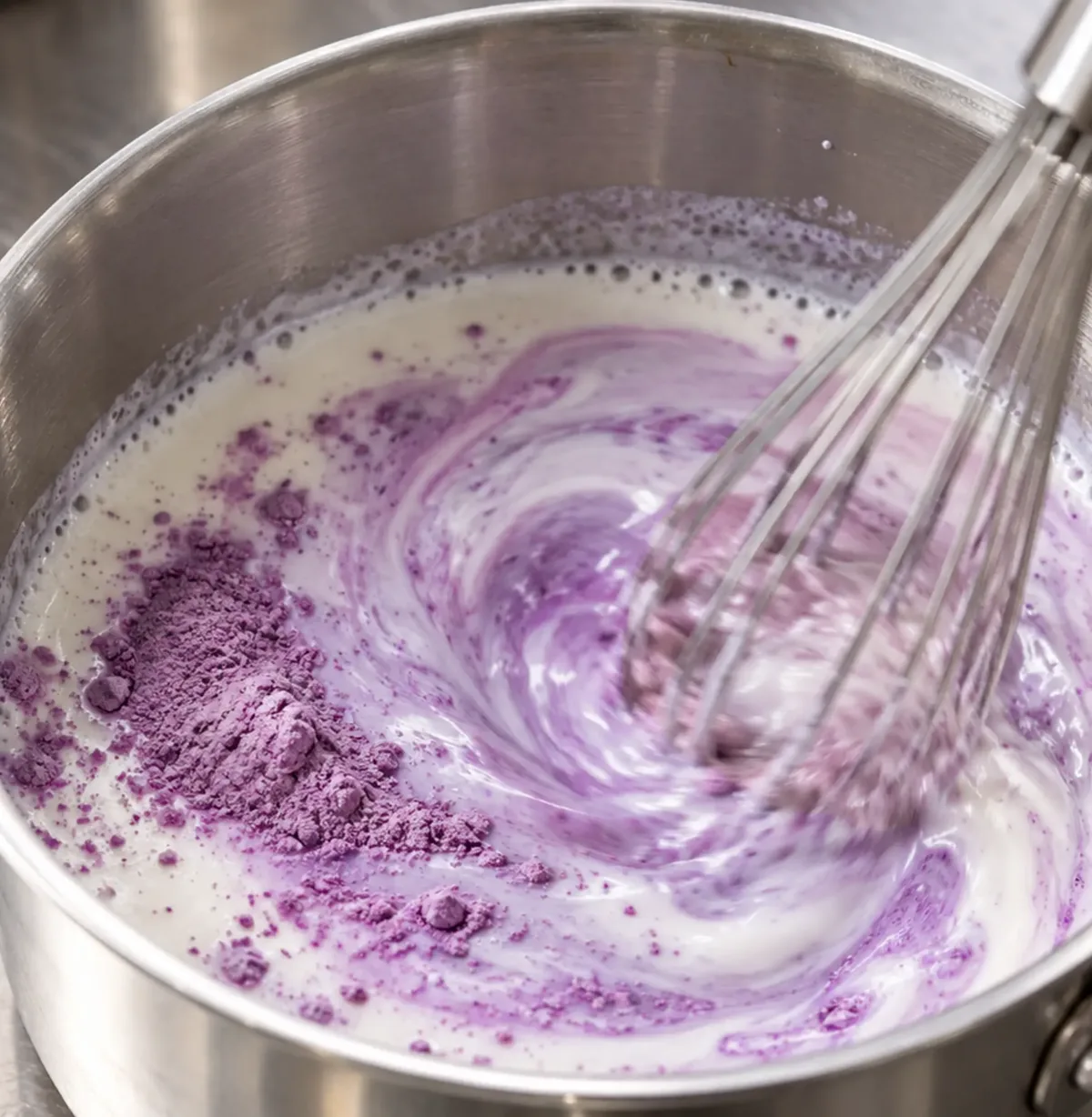
Take 100 g of the 270 g of milk intended for the dough. In a small saucepan, dissolve the 25 g of ube powder in this milk. Heat gently while stirring for a few minutes, until you have a smooth, slightly thickened mixture. Let it cool to lukewarm.
Warm the remaining 170 g of milk to about 35–38°C (95–100°F). Add the yeast and a teaspoon of sugar taken from the 68 g. Let it rest for 5 to 10 minutes, until the surface becomes foamy. Neither the milk nor the ube mixture should be hot when you combine them with the yeast.
2. Knead the brioche dough
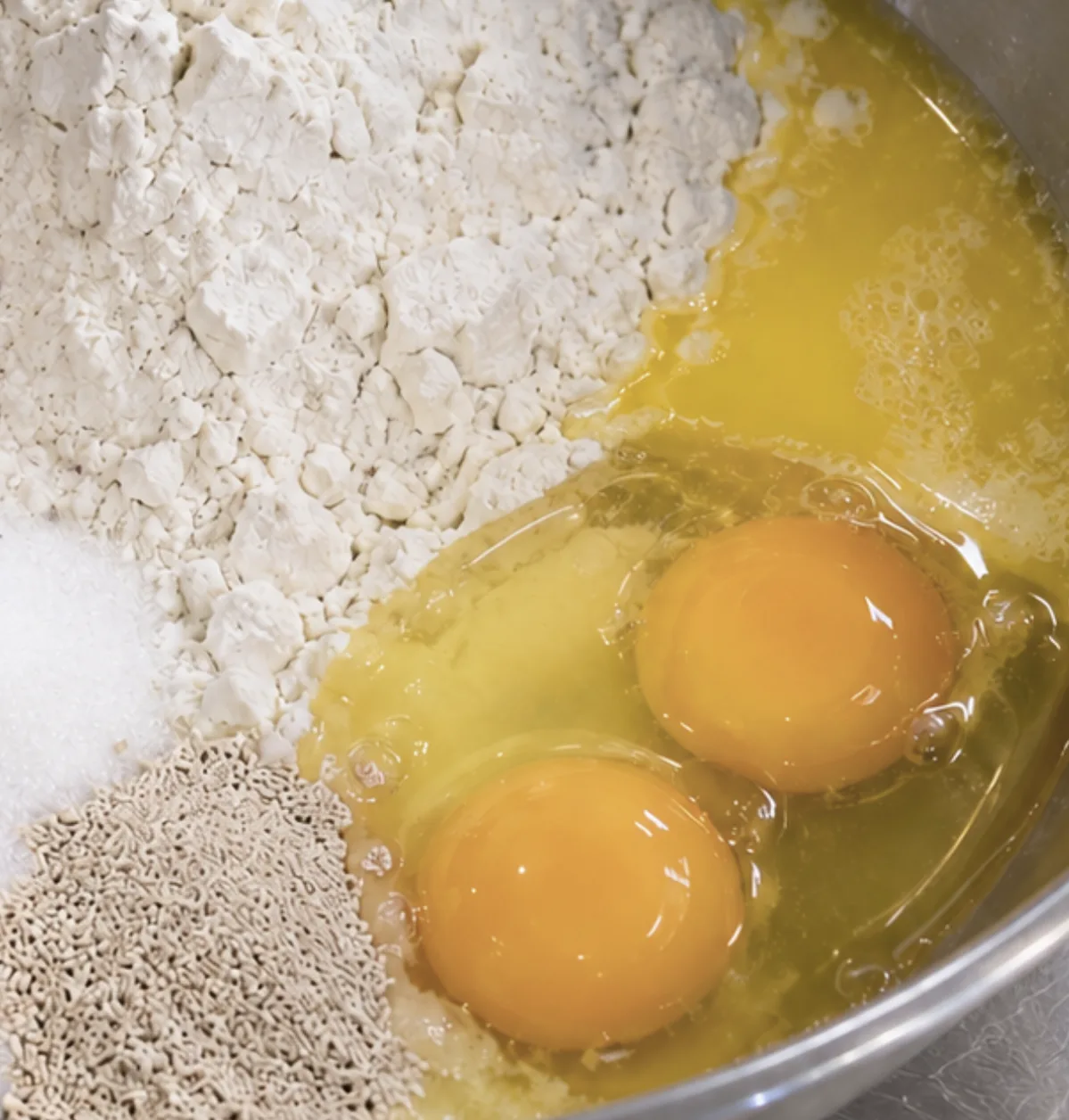
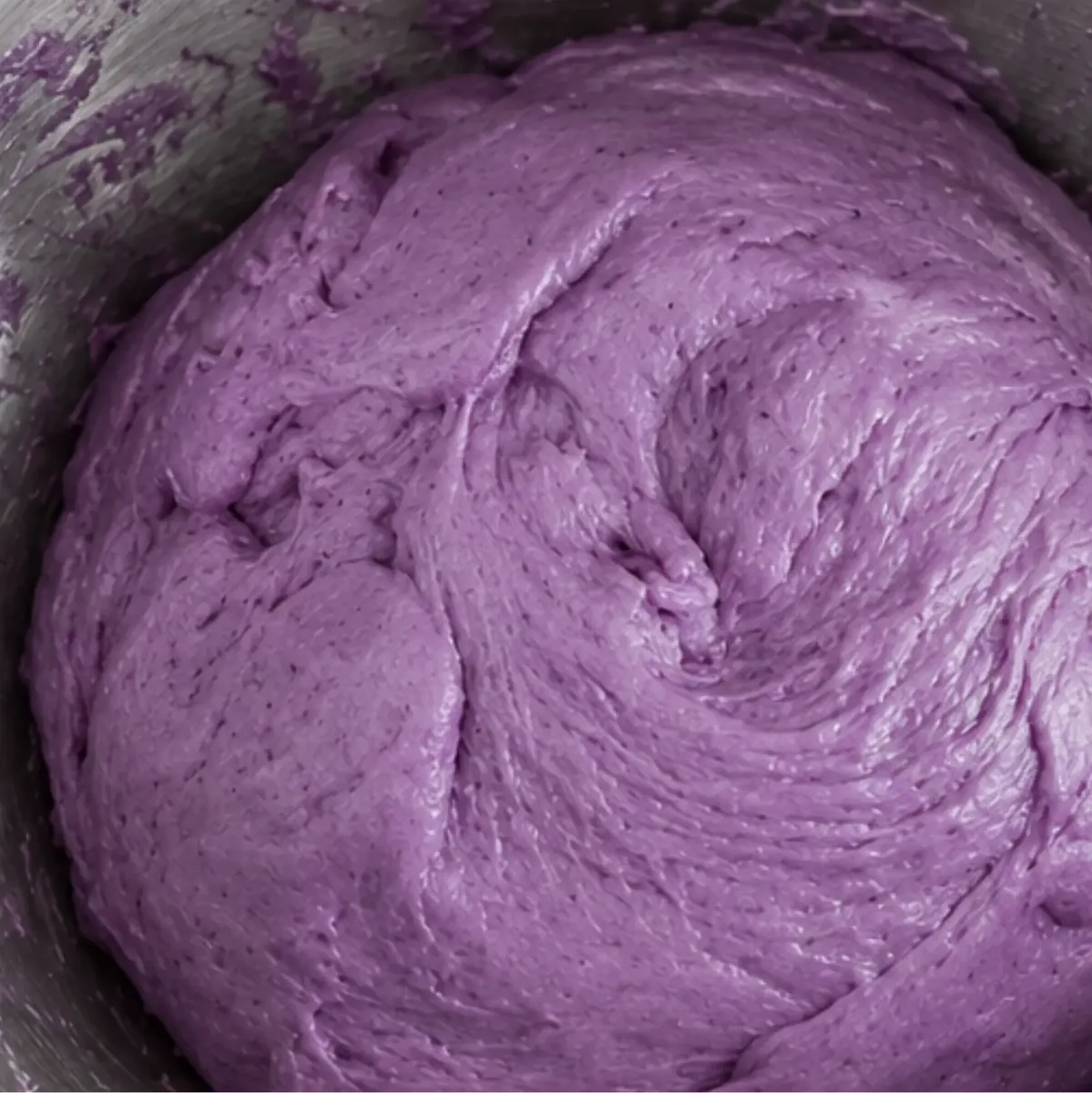
In the bowl of a stand mixer, combine the flour, cornstarch, the rest of the sugar, and the salt. Add the eggs, the lukewarm ube mixture, and the milk with the yeast. Knead on low speed until the dough comes together.
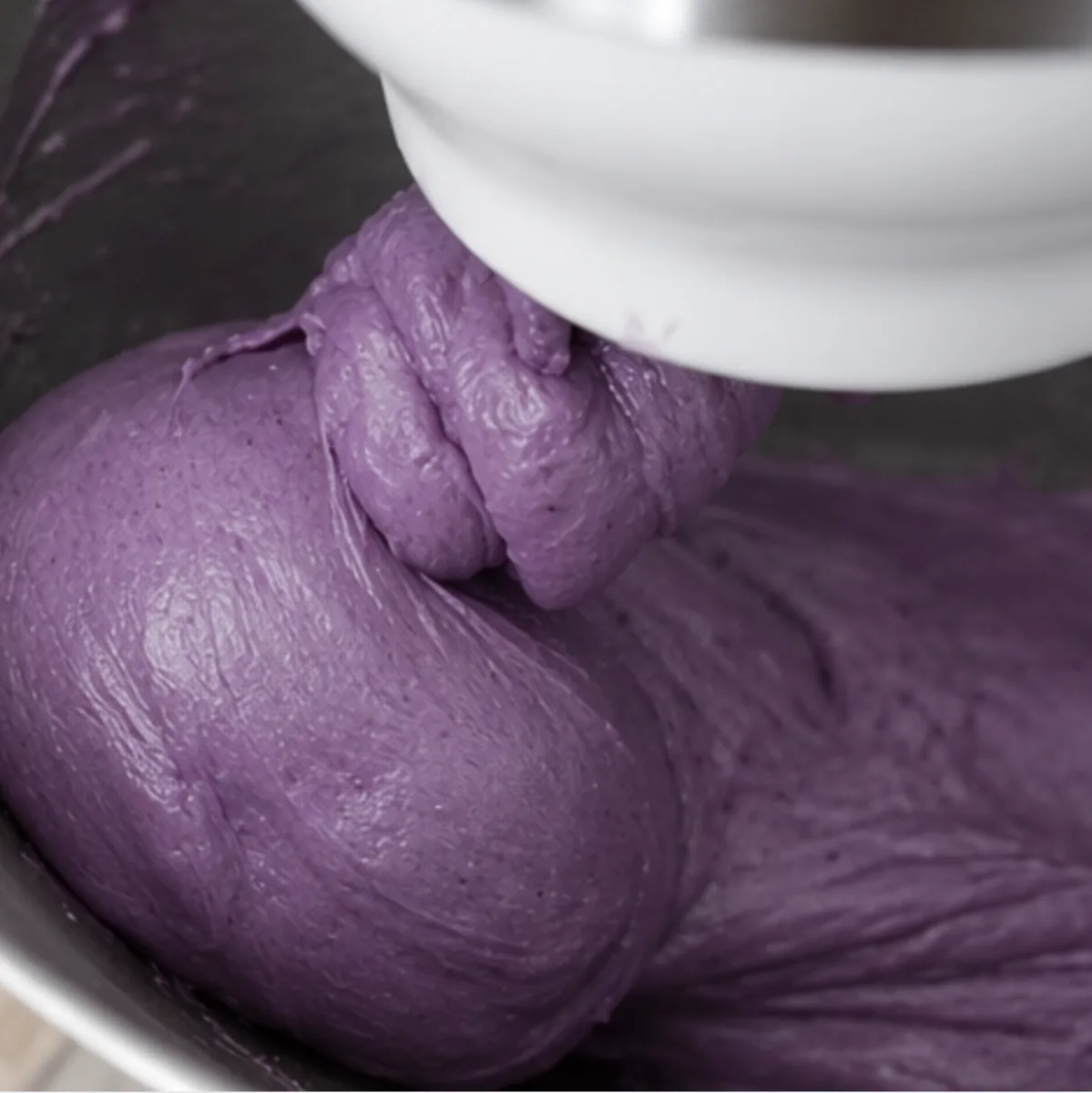
Incorporate the soft butter in several additions, letting each piece mix in before adding the next. Continue to knead for about 10 to 15 minutes, until you get a soft and elastic dough.
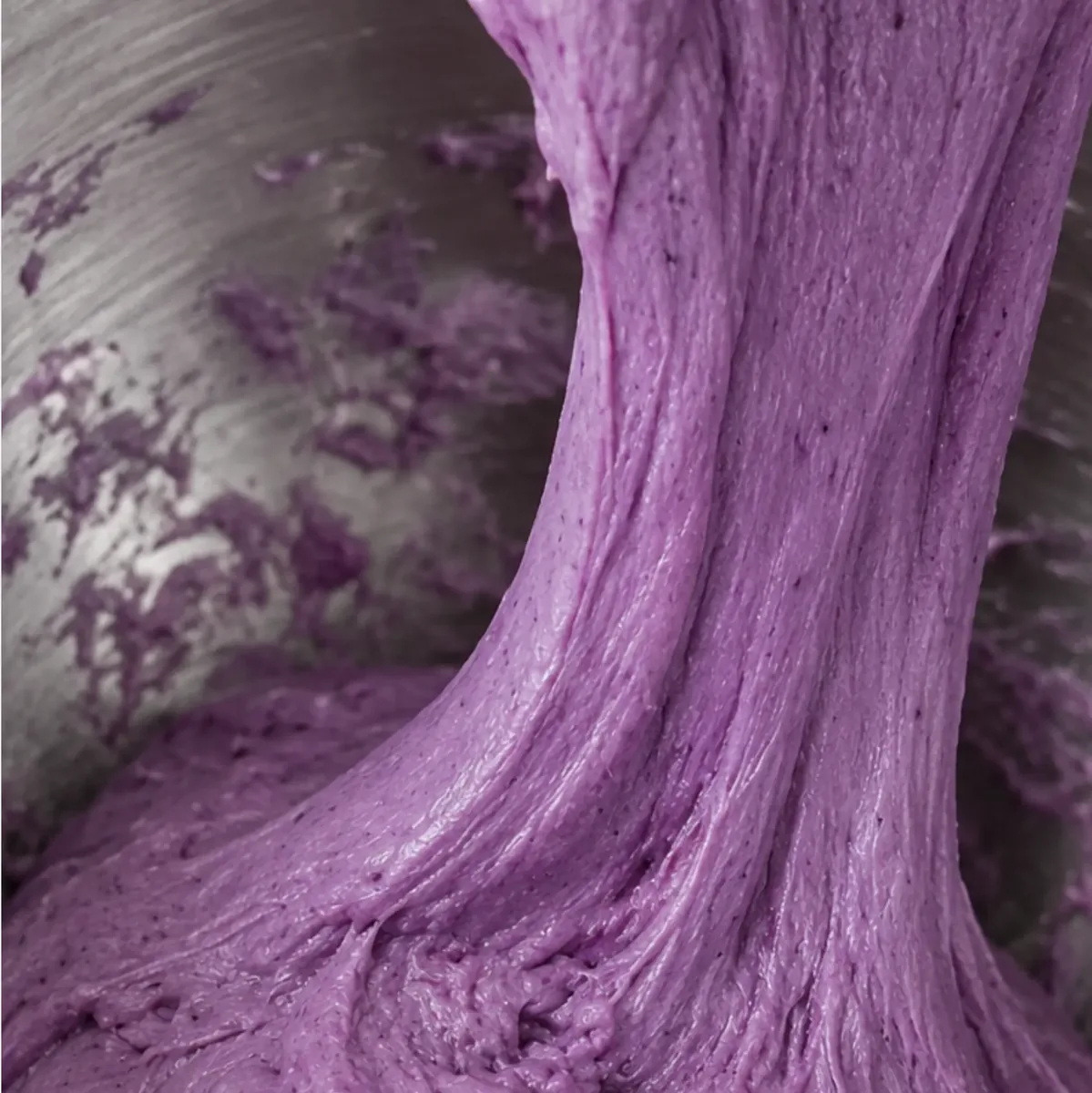
It should remain slightly sticky, but not runny. If it seems dry or tears immediately when you stretch it, add a little of the extra milk, 5 g at a time. Avoid adding too much flour, as a dough that is too firm will result in drier rolls.
To check if it’s properly kneaded, gently stretch a small piece between your fingers. It should form a thin membrane before tearing (the windowpane test). The ube may make this membrane less transparent than in a plain brioche.
Step by step: filling, shaping, and proofing
3. Let the dough rise and prepare the filling
Place the dough in a lightly buttered bowl and cover. Let it rise in a warm, draft-free place for about 1.5 to 2 hours, until it has doubled in volume. Rely on its volume rather than just the timer.
Meanwhile, dissolve the 15 g of ube powder for the filling in the 90 g of milk. Heat gently while stirring to obtain a thick, spreadable paste. Let it cool completely, then mix it with the soft butter, brown sugar, and cinnamon.
The filling should be spreadable without being runny. If the ube base is too liquid, thicken it further over low heat before cooling; do not add extra milk.
4. Shape the 12 rolls
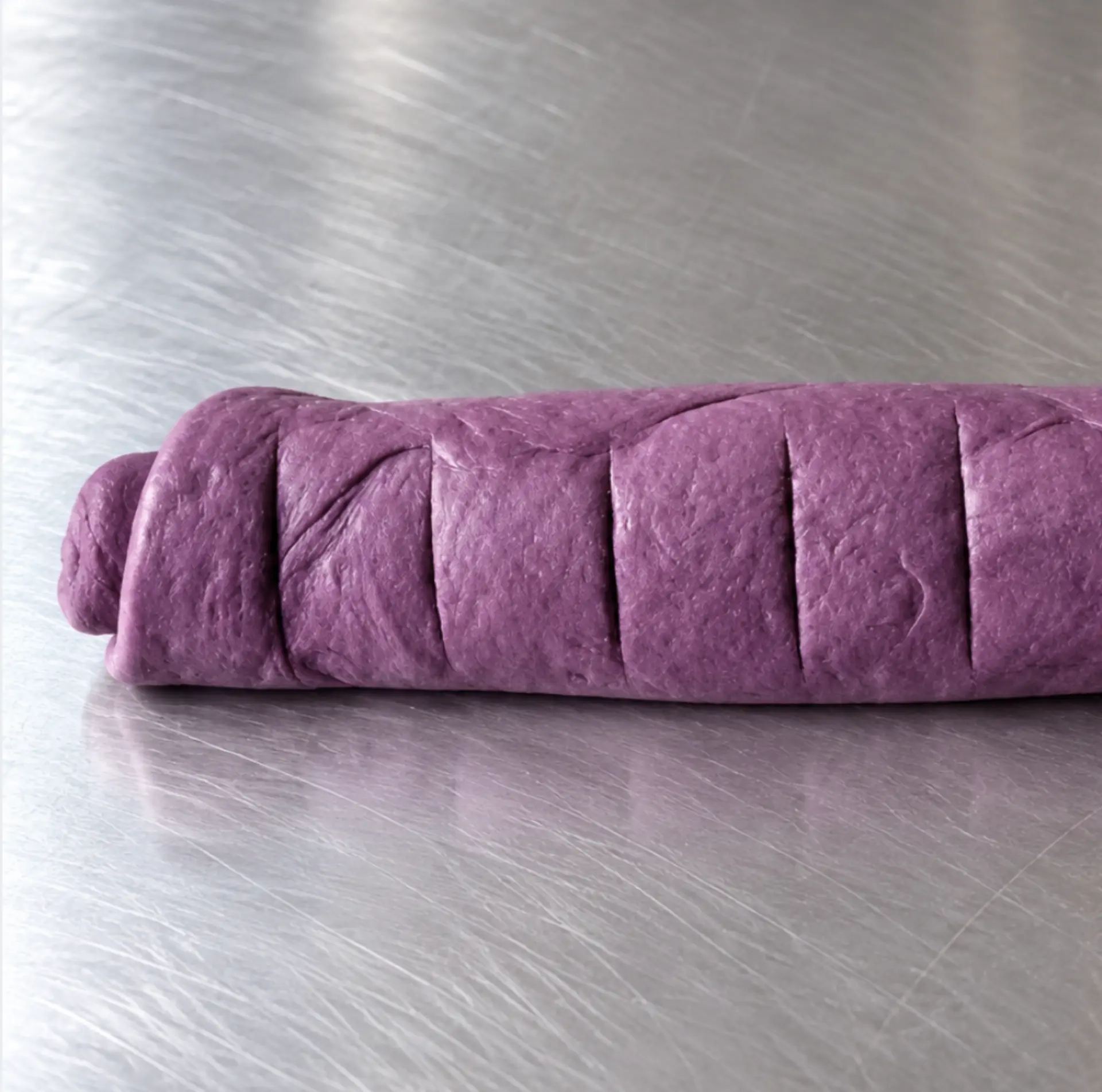
Butter a baking dish of about 23 × 33 cm (9 × 13 inches). On a lightly floured work surface, roll out the dough into a rectangle of about 45 × 30 cm.
Spread the filling over the entire surface. Cut 12 strips that are 3.75 cm wide: each strip will be about 30 cm long. Roll each one up on itself without tightening too much, then arrange the rolls in three rows of four in the baking dish.
This method helps keep the spirals uniform without squashing a large log when slicing it.
5. Do the second rise
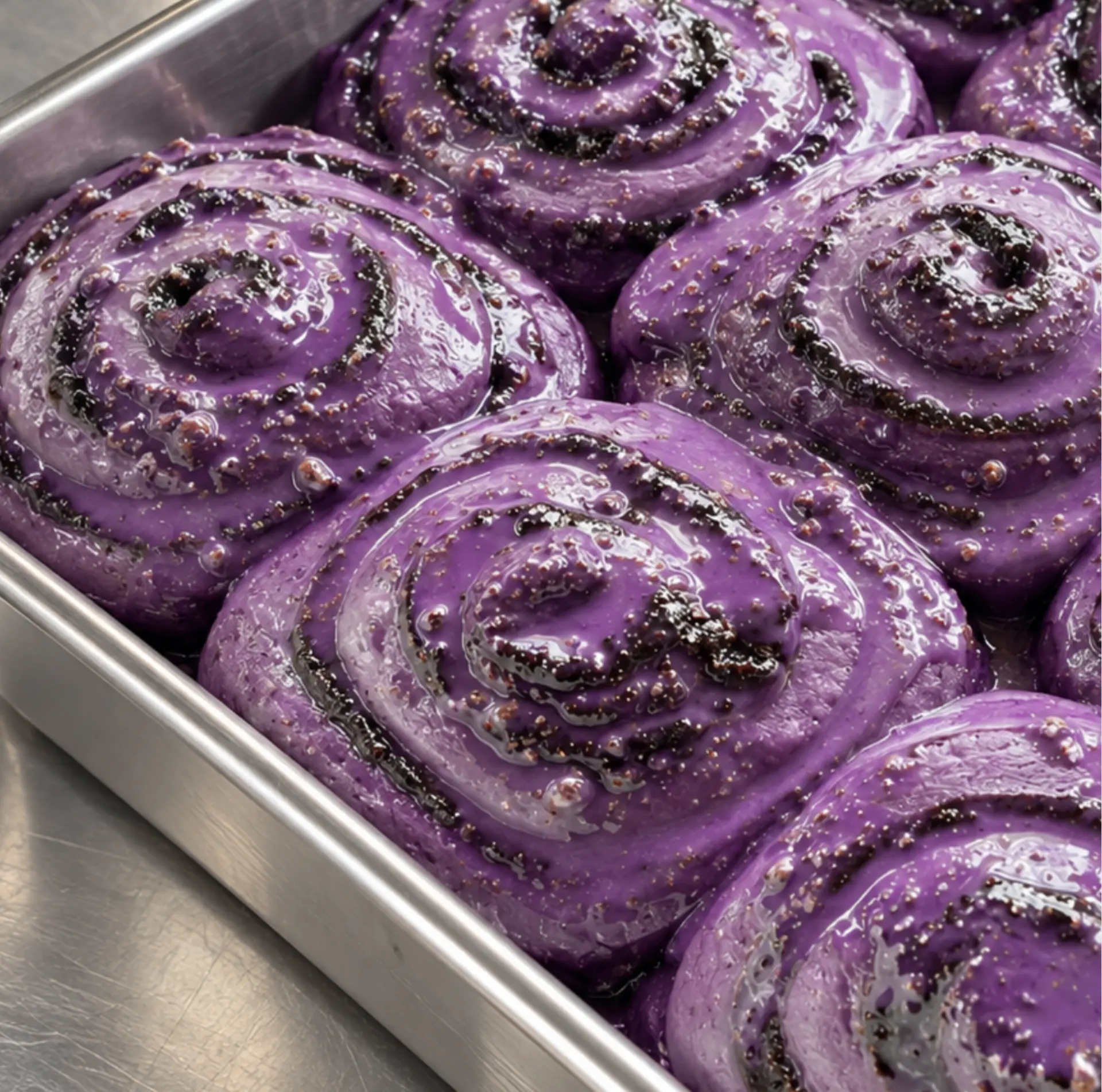
Cover the dish and let rise for about 1 to 1.5 hours. The rolls should be puffy and almost touching. Towards the end of the rise, preheat the oven to 175°C (350°F) with conventional heat (no fan).
Mix the heavy cream, the 6 g of brown sugar, and the 2 g of cinnamon. Gently pour this mixture between the rolls and over their surface just before baking. This adds moisture and creates a thin layer of sauce at the bottom of the dish.
Step by step: baking and cream cheese frosting
6. Bake the rolls
Bake for 25 to 35 minutes. The edges should be lightly golden and the center should no longer be doughy. If the tops brown too quickly, cover loosely with a sheet of aluminum foil and continue baking.
Using a thermometer, an internal temperature of about 90–93°C (195–200°F) in the center of a roll is a good indicator of doneness; avoid measuring the temperature of the filling. Let the rolls rest for 10 to 15 minutes.
7. Add the cream cheese frosting
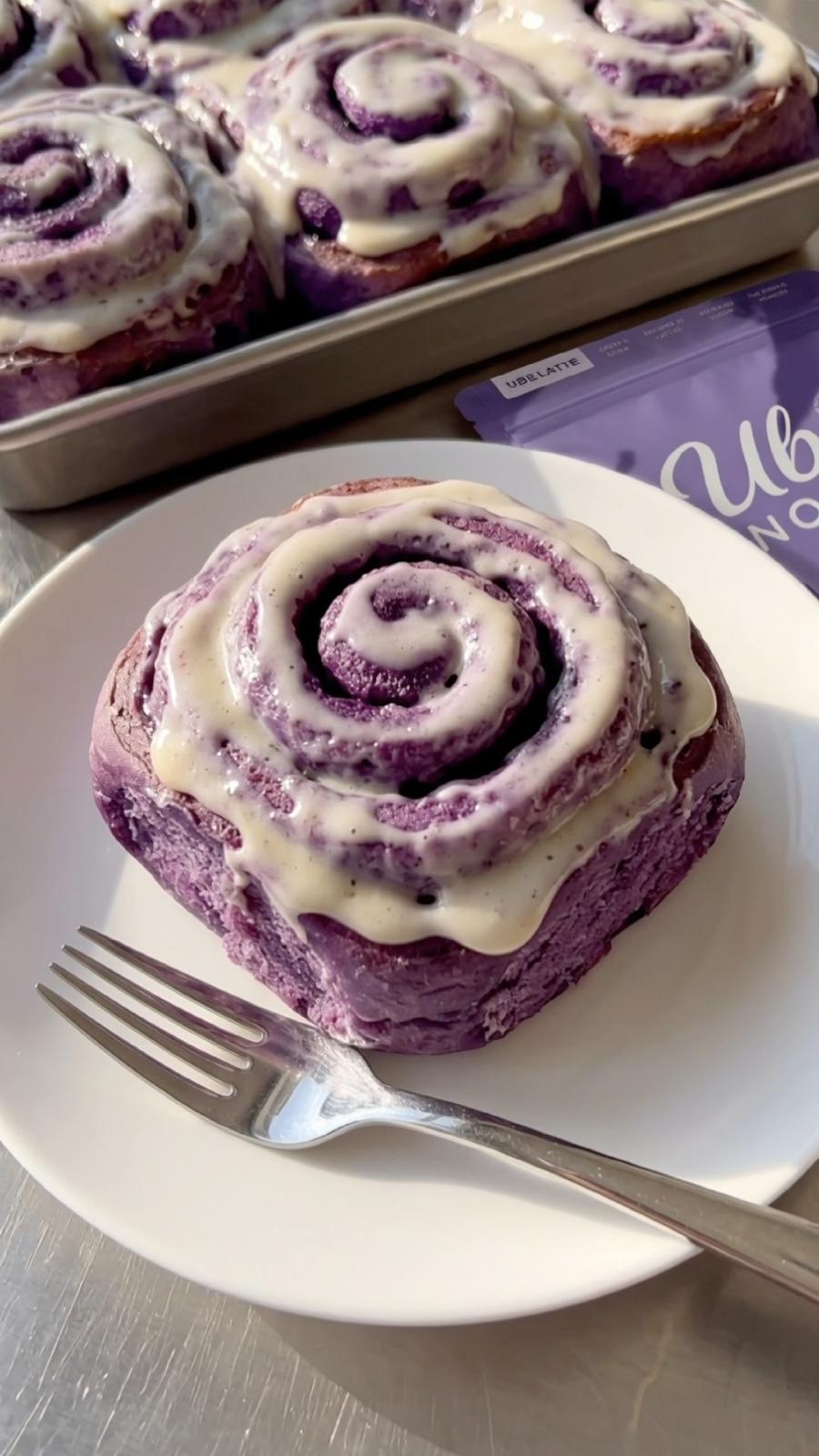
Using a spatula or a mixer on low speed, beat the cream cheese just enough to soften it. Add the sifted powdered sugar and vanilla, then mix briefly until you have a smooth cream.
Spread the frosting over the rolls while they are still warm, but not hot. It should soften slightly without disappearing into the brioche. Serve warm to enjoy the soft spirals and melted filling.
Tips for fluffy cinnamon rolls
Hydrate the powder before incorporating it. Adding dry powder instead of an extract can alter the dough's consistency. The milk-based paste helps it distribute evenly and gives you better control over the texture.
Don’t add too much flour to your work surface. Use just enough flour to roll out and lift the dough. A dough scraper or spatula can help you handle it without drying it out.
Wait for a proper rise. A cool kitchen will slow down the yeast. Rolls that are still compact when they go into the oven will remain denser after baking.
Keep the frosting simple. Plain cream cheese and vanilla allow the cinnamon and ube to shine. A full-fat, firm, unsalted cream cheese will give a more consistent result than a very moist, spreadable type.
Troubleshooting ube cinnamon rolls
| Problem | Possible Cause | Solution |
|---|---|---|
| The dough isn't rising | Inactive yeast or liquids were too hot | Check that the yeast is foamy and let the ube mixture cool to lukewarm. |
| The rolls are dense | Insufficient proofing or dough is too firm | Wait for the dough to double in volume and adjust the milk gradually. |
| The filling is runny | Ube base is too liquid or still warm | Thicken it over low heat, then let it cool completely before spreading. |
| The tops are browning too fast | Oven heat is too intense on the surface | Cover loosely with aluminum foil and check the center for doneness. |
| The frosting is melting away | The rolls are still too hot | Let them rest for 10 to 15 minutes before spreading the frosting. |
Storage and making ahead
Yes. After shaping the rolls, cover the dish tightly and place it in the refrigerator for 8 to 12 hours. The next day, let the rolls come back to room temperature and finish their rise until puffy. This can take 1 to 2 hours, or even longer if the room is cool. Add the cream just before baking.
Once cooled, store the frosted rolls in an airtight container in the refrigerator for up to 3 days. Reheat a single portion for a few seconds in the microwave to restore a softer texture.
You can also freeze the rolls, preferably without frosting, for up to 3 months. Thaw them in the refrigerator, reheat gently, and add the frosting before serving.
Why use ube powder?
Ube powder adds dry matter, flavor, and natural color to the brioche. It cannot be replaced gram for gram with an extract, as you also need to account for the milk and the dough's texture.
- Hydration: Dissolve the powder in milk before incorporating it.
- Flavor: The ube complements the cinnamon and vanilla without needing a purple frosting.
- Color: The shade varies depending on the powder and the baking process; don't try to darken it by randomly adding more powder.
More ube recipes to try
To extend your delicious break, pair your cinnamon roll with a homemade ube latte. You can also discover our ube halaya recipe, or try these ube and white chocolate cookies.