23 October 2026 · Recipe
Halloween ube cake: from red velvet to black cake
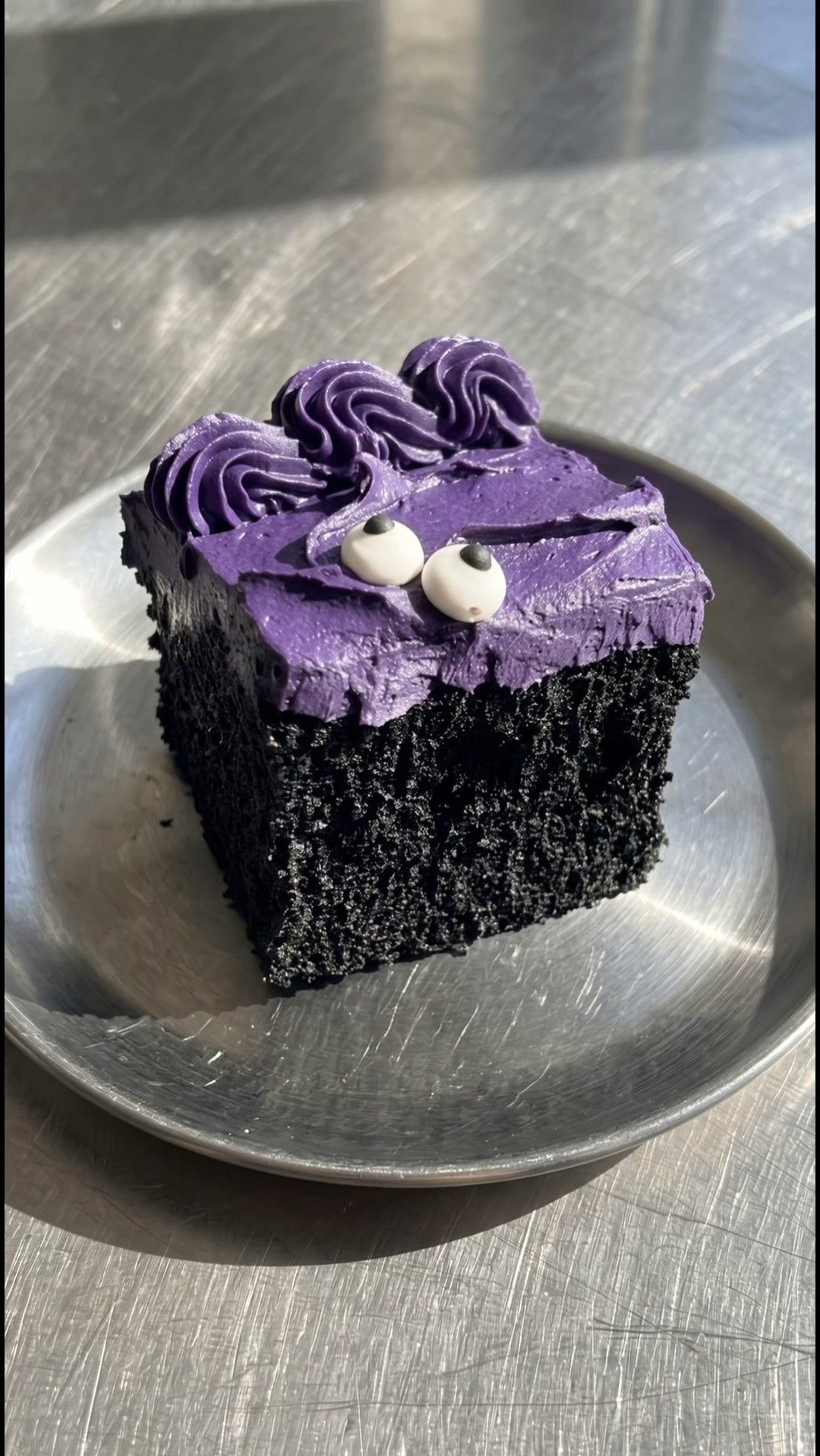
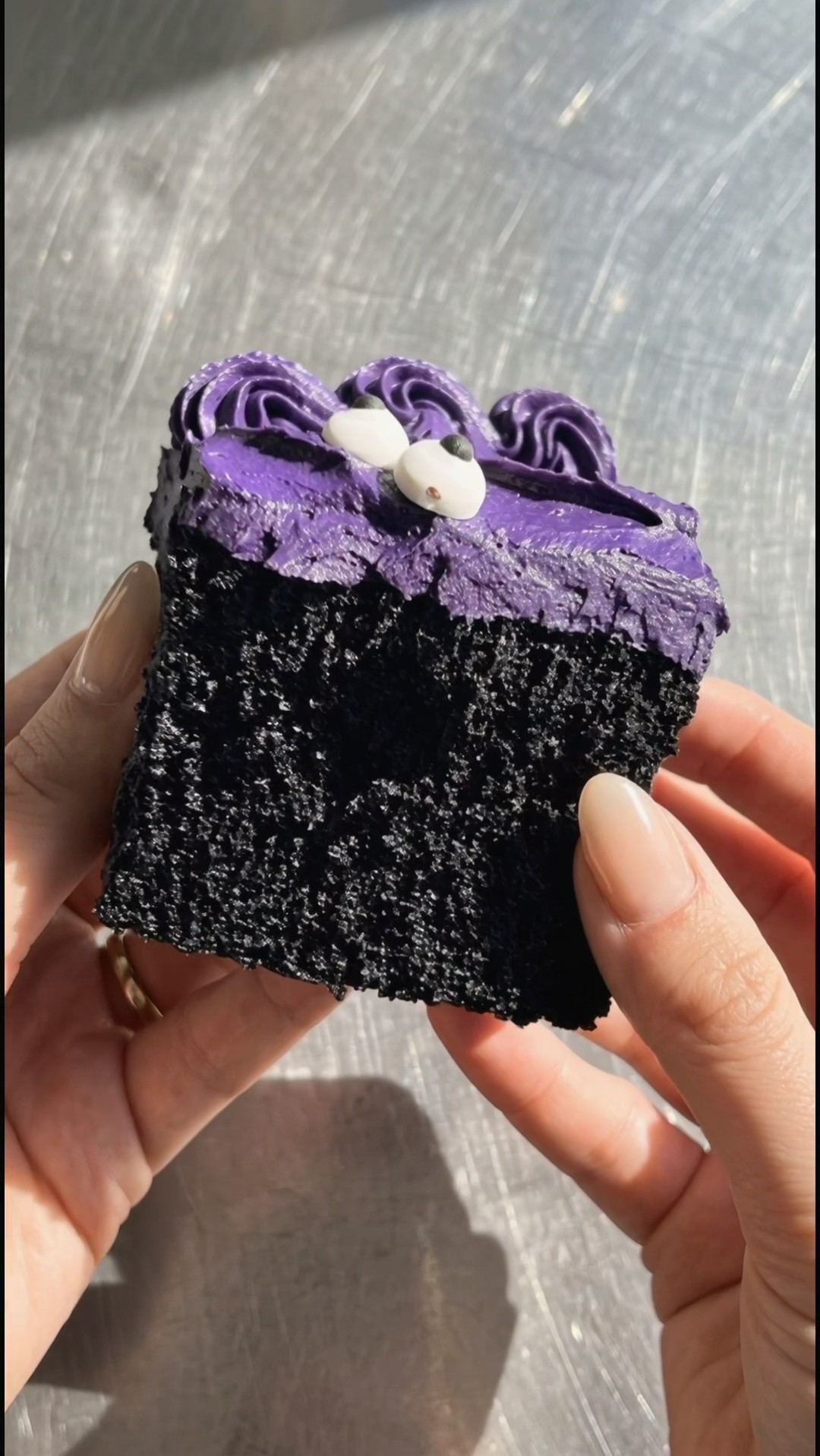
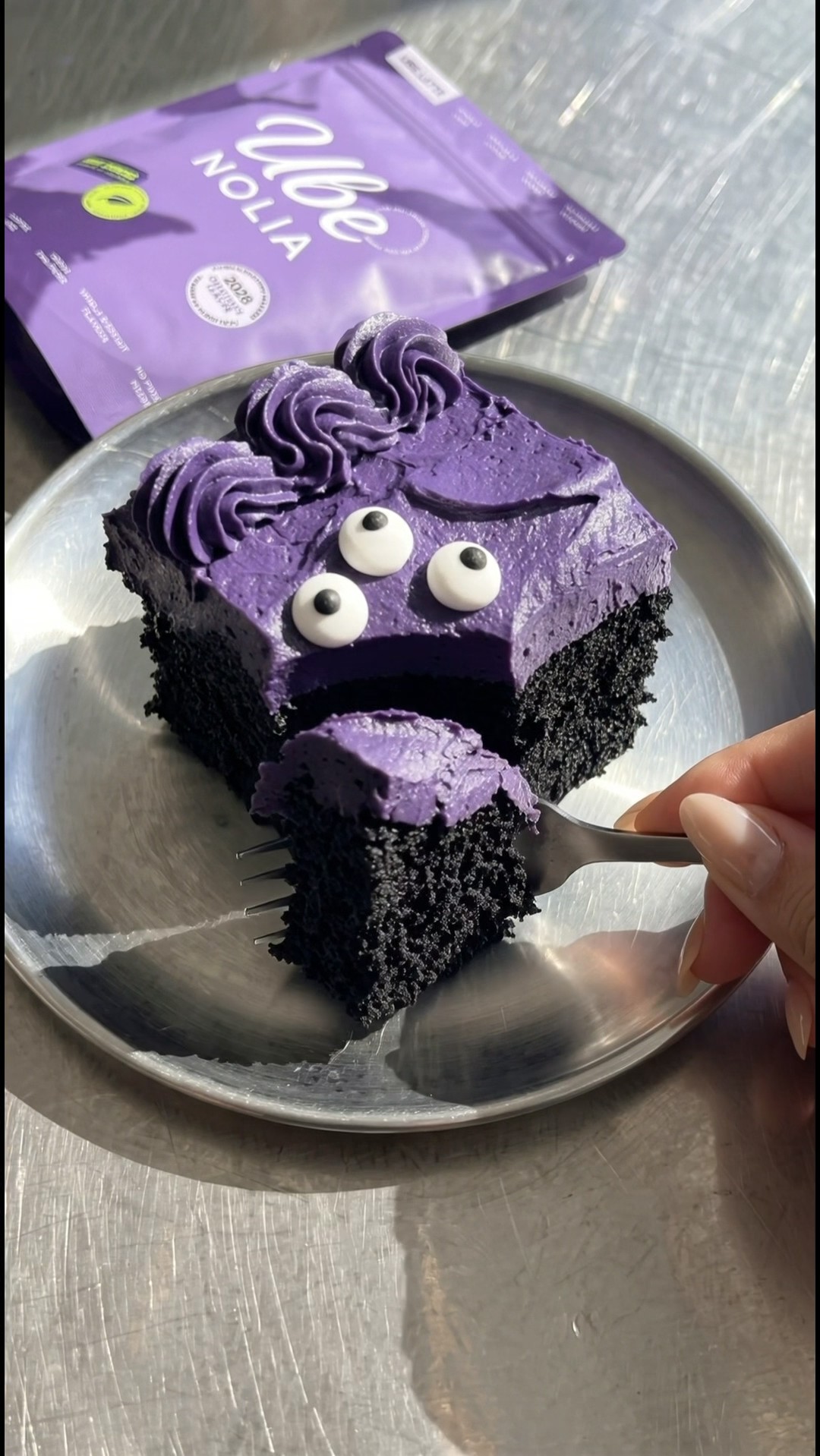
A jet-black base, a generous purple frosting layer, and quirky little eyes peering in every direction: this Halloween cake leans into fun, playful monster vibes. Beneath the decor lies an ultra-soft, melt-in-your-mouth crumb paired with thick, creamy white chocolate–ube frosting.
The sheet cake format baked in a baking dish is the easiest option for a party: everything happens in one pan, the frosting stays neatly in place, and it easily serves a crowd.
Our Ube Nolia ube powder gives the frosting its distinct flavor and vibrant purple color.
Updated on
Quick Summary
Key Takeaways
- Single layer, baked in a pan like brownies
- Purple white chocolate and ube frosting
- Decorated with a piped border and fondant monster eyes
- Prep time
- 25 min
- Cook time
- 30-35 min
- Chilling
- 1 h
- Total time
- 2 h
- Yield
- 12 squares
- Difficulty
- Easy
Less than a coffee. Better than a matcha.
With the 5-pack you get 165 ube lattes at home. Cheaper than a café, delivered to your door.
This recipe is made with ube powder from Ube Nolia, the #1 natural ube brand from the Philippines. Discover our buy ube powder, 100% pure: no coloring, no additives, no added sugar. One 100 g pouch makes 33 ube lattes.
Looking for ube powder? Ube Nolia sells 100% pure ube from the Philippines, with no coloring, no additives and no added sugar.
New to purple yam? Read our complete guide: What is ube? - origin, taste, benefits and how to use Ube Nolia ube powder.
Red velvet vs black velvet: what changes?
Black velvet follows the same logic as red velvet: cocoa, buttermilk, vinegar, and batter mixed just until combined. Dutch-processed black cocoa gives it a significantly darker shade than standard cocoa; regular brown cocoa will not yield the same jet-black hue.
Here, the base is not stacked in tiers: it bakes in a single layer in a rectangular baking pan, topped directly with purple ube frosting.
From red velvet to a black cocoa cake
This recipe takes the idea of red velvet and gives it a Halloween makeover. Instead of red crumb, the goal is a black cocoa base; instead of stacked layers, one generous layer stays in a rectangular pan. Black velvet describes that adaptation: a dark cake with a tender crumb, not a dense brownie. A darker cocoa does not remove the need to check doneness. Color and a moist texture are separate goals, so do not keep baking just to make the cake look darker.
Black cocoa cake is not Caribbean fruit cake
Black cake here means our black Halloween cocoa cake. It is not Caribbean black cake made with soaked fruit. This version has a cocoa batter and a purple ube topping. That distinction matters when choosing a recipe: for a Halloween variation on red velvet, look for black velvet; for a traditional fruit cake, this is a different dessert. The ube belongs in the white chocolate frosting rather than in the black cake batter.
Ingredients for the black cake and ube frosting
Red velvet-inspired black velvet base
- Black cocoa powder (heavily Dutch-processed)
- All-purpose flour, sugar, salt, and baking soda
- Neutral oil, buttermilk, white vinegar
- Eggs and vanilla extract
Ube and white chocolate frosting
- White chocolate
- Ube Nolia ube powder
- A creamy base sturdy enough for piping
Halloween fondant decorations
- White fondant
- Black fondant for the pupils
Ingredient Notes and Substitutions
- Cocoa: heavily Dutch-processed black cocoa is essential for a truly black crumb; regular cocoa powder results in a brown cake.
- Buttermilk: provides acidity to tenderize the crumb; milk mixed with a splash of vinegar can substitute.
- Oil: choose a neutral oil (sunflower, canola) so it doesn't overpower the cocoa or ube flavor.
- Ube powder: do not substitute with liquid flavoring extract, which lacks both the true color and body needed for the frosting.
- White chocolate: use high-quality baking chocolate, which melts much more smoothly than snacking candy bars.
Which black cocoa should you choose?
Choose cocoa specifically labeled black cocoa, rather than assuming that any unsweetened baking cocoa will look the same. Dark brown cocoa is not identical to black cocoa. Because black cocoa is heavily alkalized, casual substitutions may also change the batter balance. Keep the acidic ingredients specified for the base, and avoid changing the cocoa, buttermilk and baking soda all at once. Extra baking time is not a way to correct a brown crumb.
Which pan works for this Halloween cake?
- A straight-sided rectangular baking pan or dish, like for brownies
- Parchment paper, offset spatula, piping bag with a star tip
- Large chef's knife and cake server
The cake stays in the pan from start to finish: baking, frosting, decorating, and slicing.
How to bake the black cocoa black velvet base
- Line the rectangular pan with parchment paper and preheat the oven.
- Whisk the dry ingredients together in a large mixing bowl.
- In a separate bowl, whisk together the neutral oil, buttermilk, vinegar, room-temperature eggs, and vanilla extract.
- Gently fold the wet ingredients into the dry ingredients, stopping as soon as the batter comes together to keep the crumb tender.
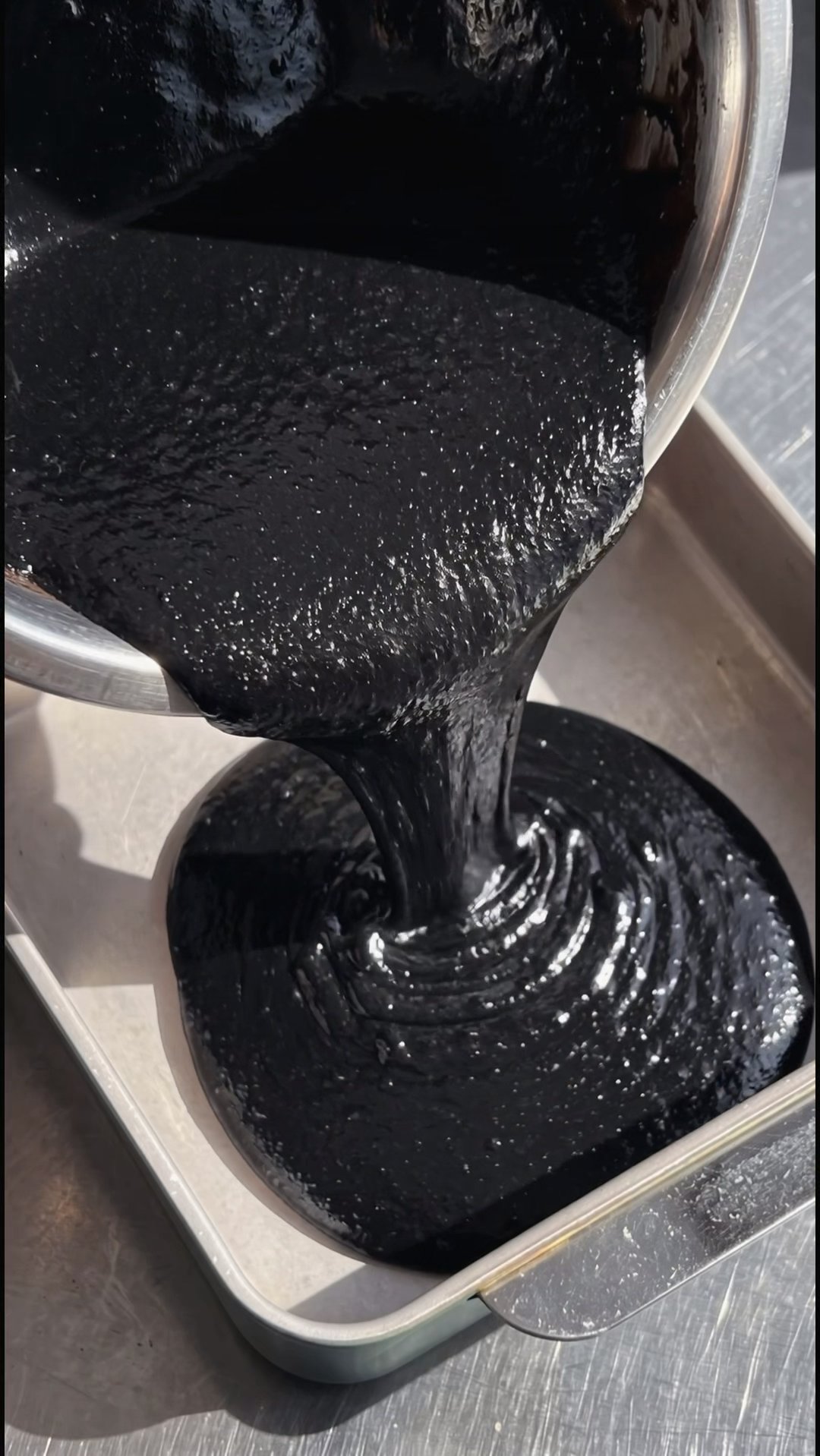
- Pour all the batter into the pan, spread into an even layer, and bake until a toothpick inserted in the center comes out clean or with a few moist crumbs.
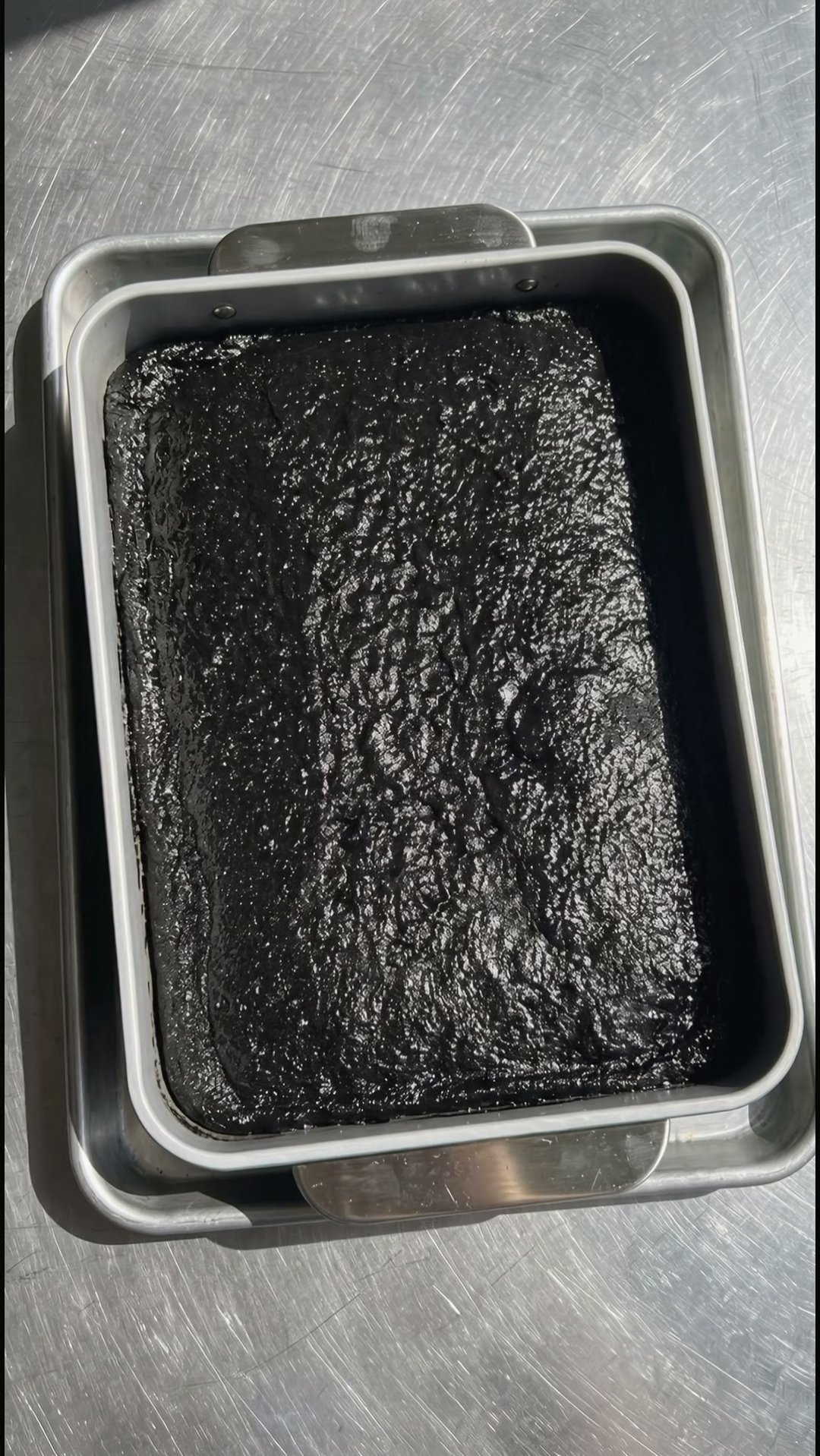
- Let it cool completely in the pan without unmolding: the frosting goes right on top.
The pan and square portions resemble brownies, but the cake texture should remain tender. Spread the batter evenly so the edges do not dry while the center stays raw. Check the center for doneness and cool the whole cake before frosting: a cool surface does not always mean a cool center. Leave it in the pan, which supports the delicate crumb during spreading and makes serving easier.
Purple ube and white chocolate frosting: spread and pipe
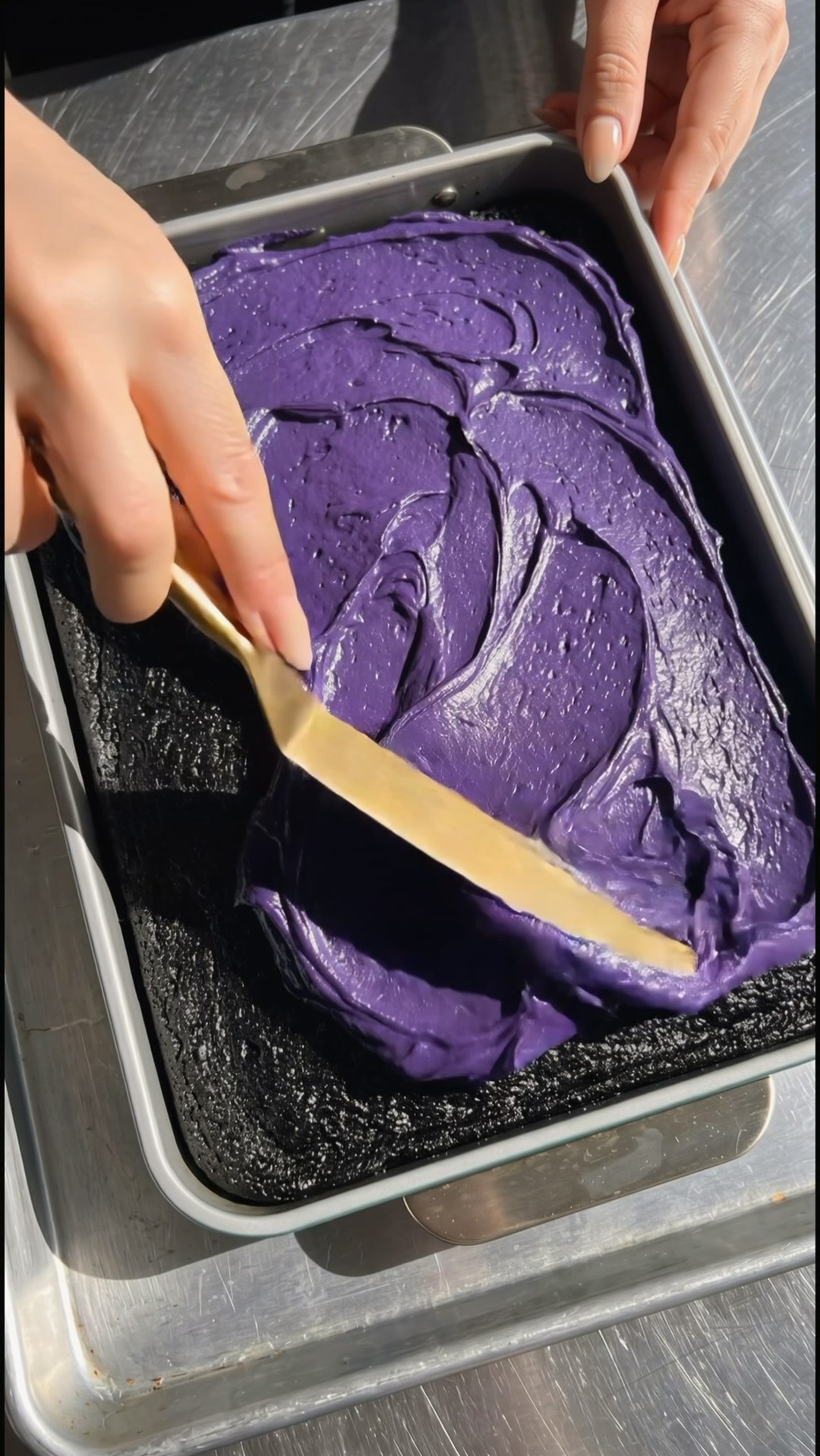
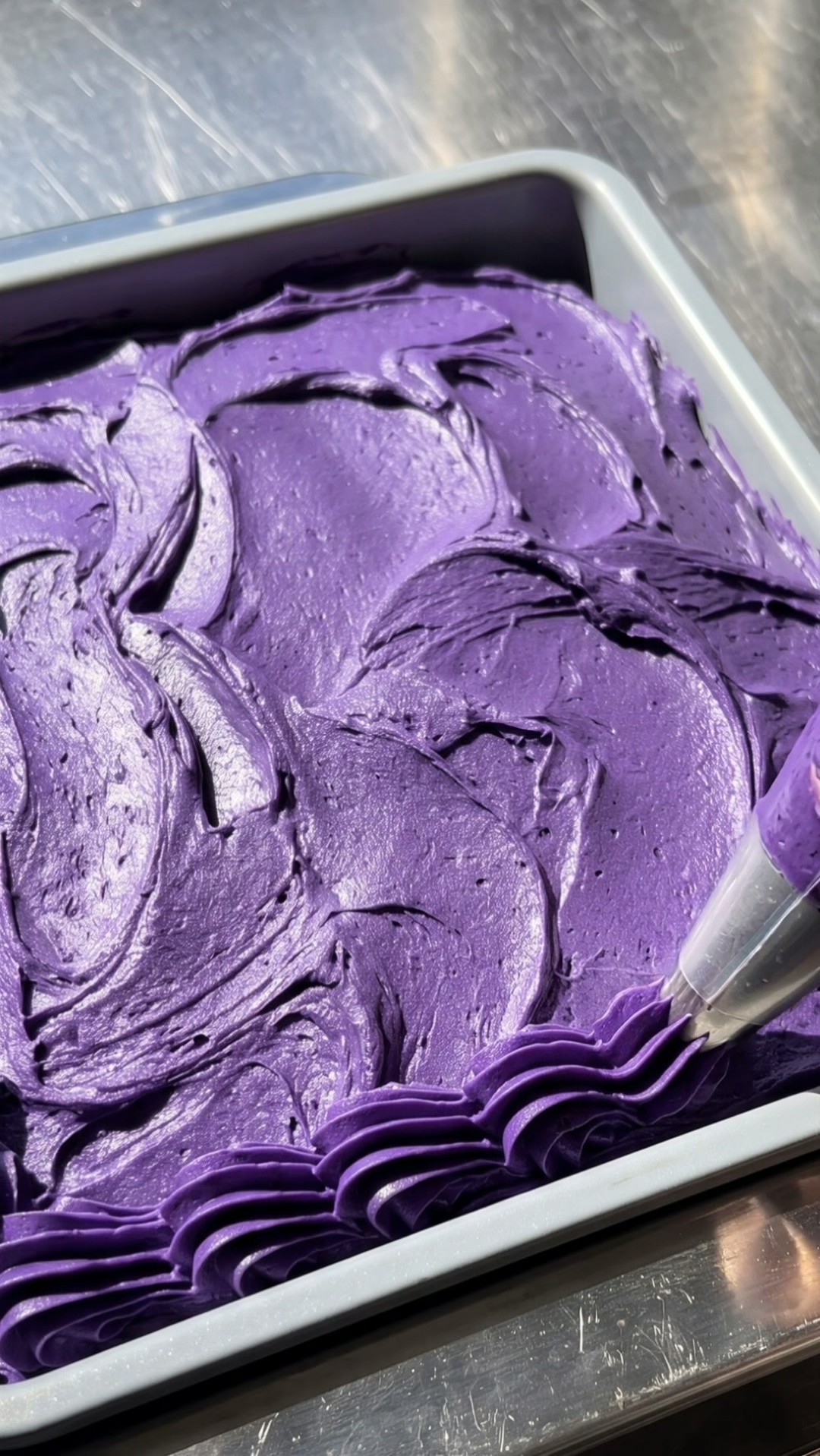
The frosting should be thick, creamy, and spreadable without tearing the delicate crumb or running. Reserve a portion for piping.
Spread the purple frosting over the cooled cake base right in the pan using an offset spatula, leaving gentle swirls. Fill a piping bag fitted with a star tip and pipe a decorative border around the edges.
Ube frosting that holds a piped swirl
The ube frosting provides both the purple contrast and a creamy layer over the black crumb. Test a small spoonful before covering the whole cake: an offset-spatula mark should remain visible, and a piped swirl should keep its ridges. Runny frosting cannot hold the border; very stiff frosting can lift crumbs. White chocolate and ube powder are part of the topping, but its texture also depends on the chosen creamy base and its temperature.
Halloween cake decorations: fondant monster eyes
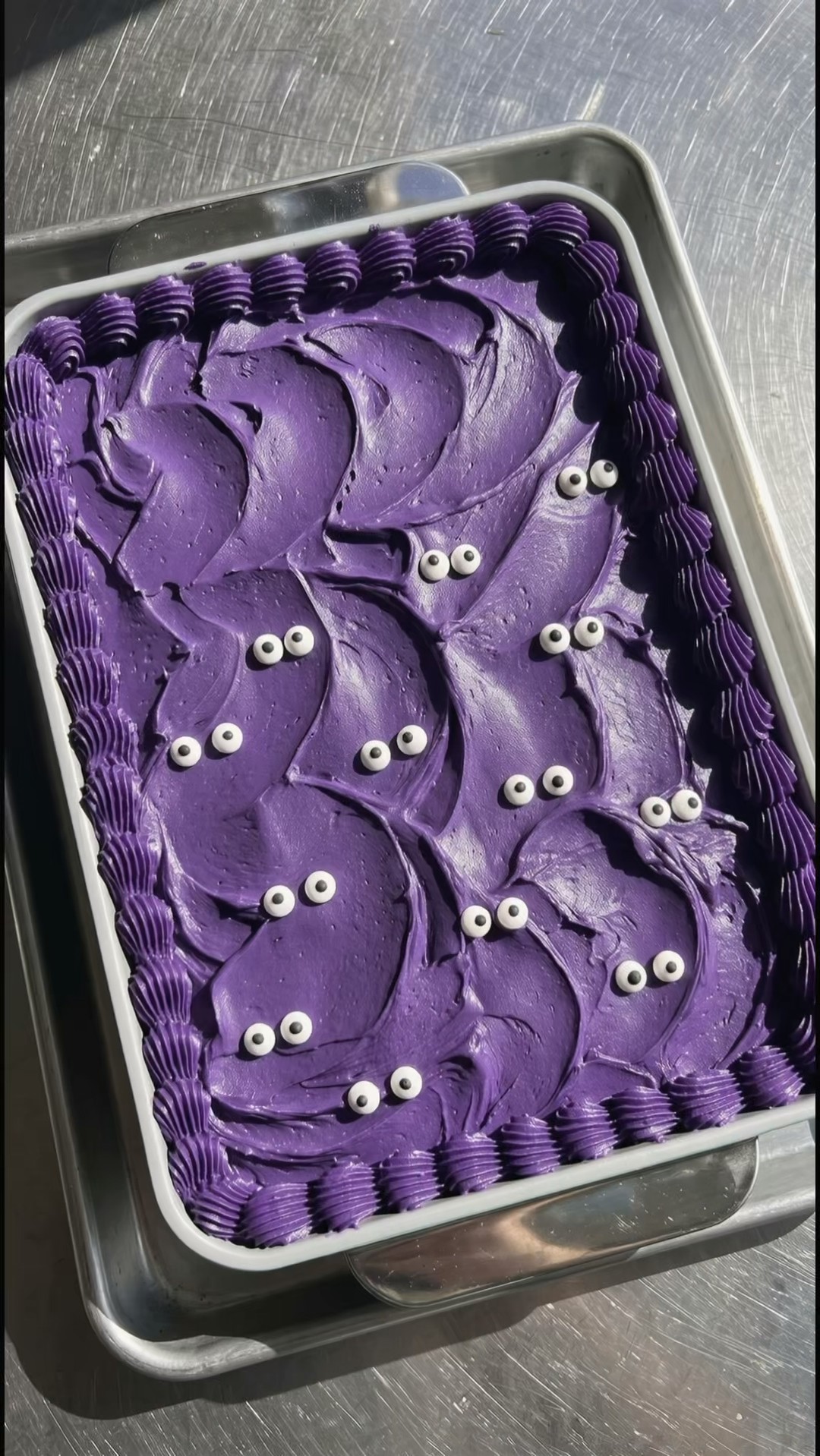
Roll out small round or oval shapes from white fondant, press tiny black fondant pupils onto each, then scatter them across the purple surface. Varying their sizes and gaze directions gives the monster a playful, quirky expression rather than a terrifying one.
Add the eyes shortly before serving: fondant softens when left on moist frosting and inside the refrigerator.
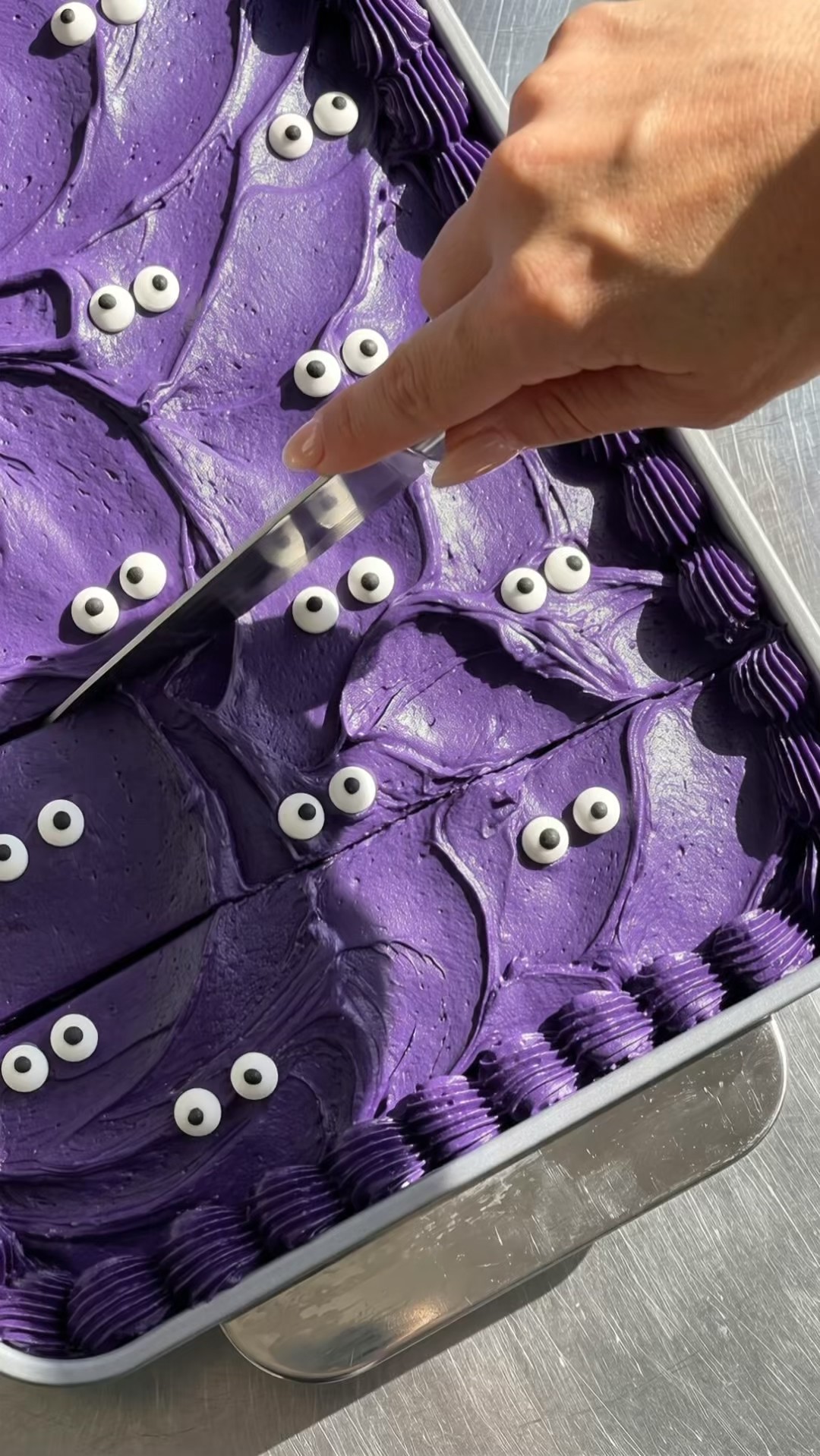
Plan the squares before placing the Halloween eyes. Add one or two eyes within each future portion, rather than along the cutting lines, so every guest gets a little monster. The piped border frames the pan without any stacking. Wipe the knife between cuts to avoid dragging black crumbs through the purple frosting and to keep the two layers distinct.
Slice the black cake with ube frosting into squares
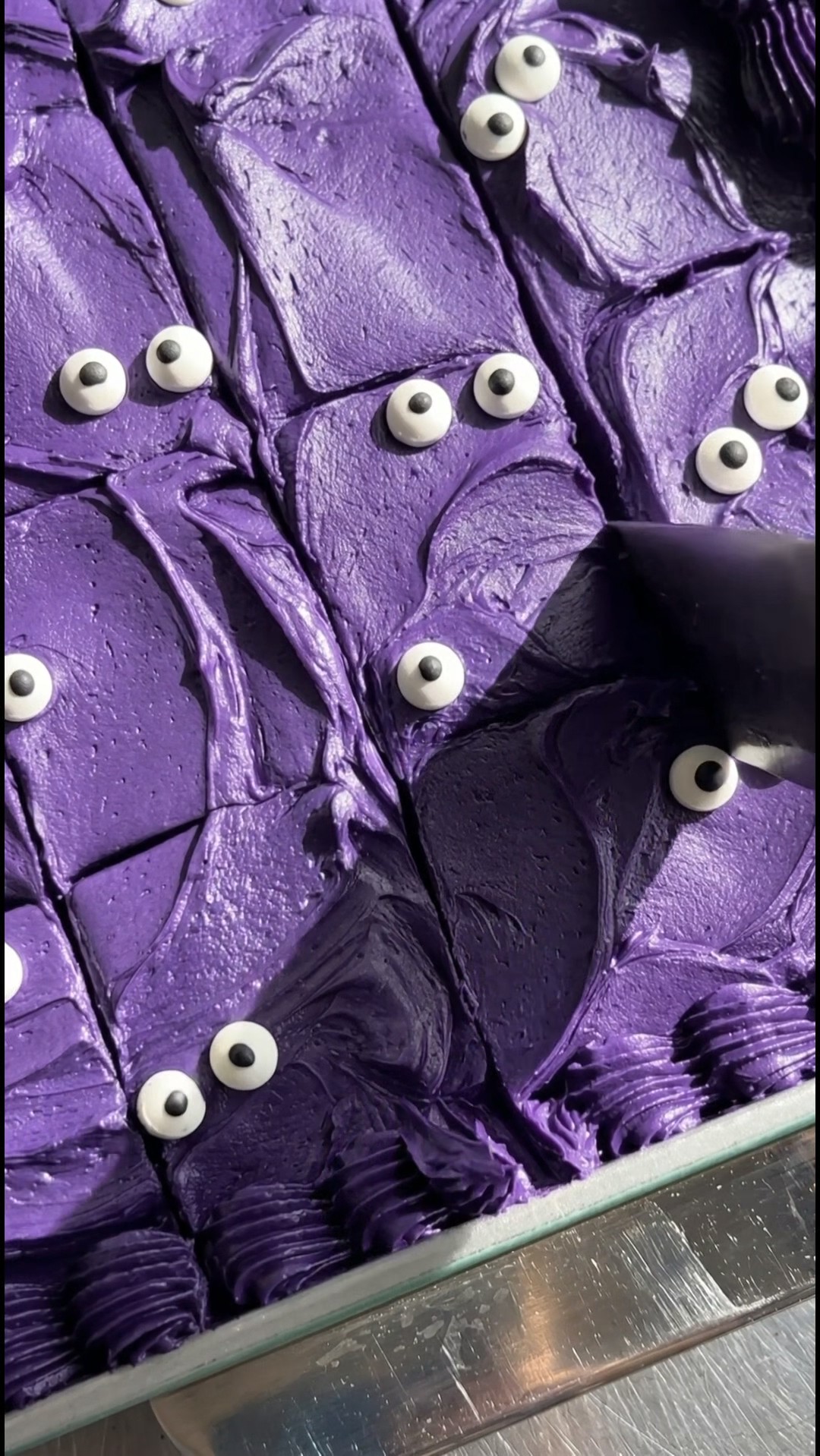
Just like brownies, cut the cake into neat squares directly in the pan using a large knife wiped clean between cuts. Slide a cake server underneath each slice to lift it without disturbing the frosting.
Ube and white chocolate: frosting flavor and color
Ube is a purple yam native to the Philippines (Dioscorea alata). Its powder lends the frosting an all-natural purple hue and subtle, comforting notes of vanilla and sweet pastry, which complement white chocolate wonderfully.
Paired with the pitch-black cocoa base, this purple tint provides the ultimate Halloween contrast without artificial food coloring—the color comes straight from real ube.
How to keep black velvet cake moist
- Weigh your flour and cocoa powder instead of packing them into measuring cups.
- Use wet ingredients at room temperature.
- Do not overmix the batter after incorporating the dry ingredients.
- Keep an eye on baking time: overbaking dries out the cake.
- Wait until the base is completely cool before frosting.
Dry black cake, brown crumb or runny frosting: fixes
| Issue | Probable Cause | Solution |
|---|---|---|
| Cake is brown, not black | Standard cocoa used instead of black cocoa | Use heavily Dutch-processed black cocoa powder |
| Dry crumb | Overbaking or packed flour | Weigh your flour and pull the cake as soon as a toothpick comes out without wet batter |
| Dense crumb | Overmixing after adding flour | Mix gently just until the batter is homogeneous |
| Runny frosting | Cake still warm or frosting too soft | Allow cake to cool completely and chill frosting briefly to firm up |
| Fondant eyes getting soggy | Added too early or stored in the fridge | Place fondant eyes on the cake right before serving |
Make-ahead and storage for your Halloween cake
- Store the cake covered right in its pan to keep the crumb moist.
- You can bake the base ahead of time and frost once completely cooled.
- Keep the fondant eyes stored separately in a dry place away from moisture, adding them at the last minute.
For a party, divide the work into stages: bake the base, let it cool, spread the frosting and add the eyes near serving time. Cover without pressing on the piped border. Storage depends on the final frosting composition: refrigerate when its perishable ingredients require it. A precise shelf life cannot be inferred from white chocolate alone; it must match the actual cream used.