March 7, 2026 · Nutrition
Ube Powder Benefits
Anthocyanins, antioxidants, fiber & vitamins: what makes purple yam powder nutritious
Updated on
Quick answer
Key Takeaways
- ✅ Rich in anthocyanins, the antioxidant pigments that give ube its purple color
- ✅ Good source of dietary fiber for digestive health
- ✅ Contains potassium, vitamin A, vitamin C
- ✅ Naturally gluten-free, vegan, caffeine-free, no added sugar
- ✅ Low-temp drying preserves nutrients vs. high-heat processing
- ✅ A food, not a supplement: enjoy it in <a href="/eu/blog/how-to-make-ube-latte" class="underline text-primary font-medium">lattes</a>, baking & desserts
Note: This article discusses the nutritional properties of ube (purple yam) based on its natural composition. We do not make medical claims. Ube is a food ingredient, not a supplement or medication. For specific health concerns, consult a healthcare professional.
1. Anthocyanins: The Power Behind the Purple
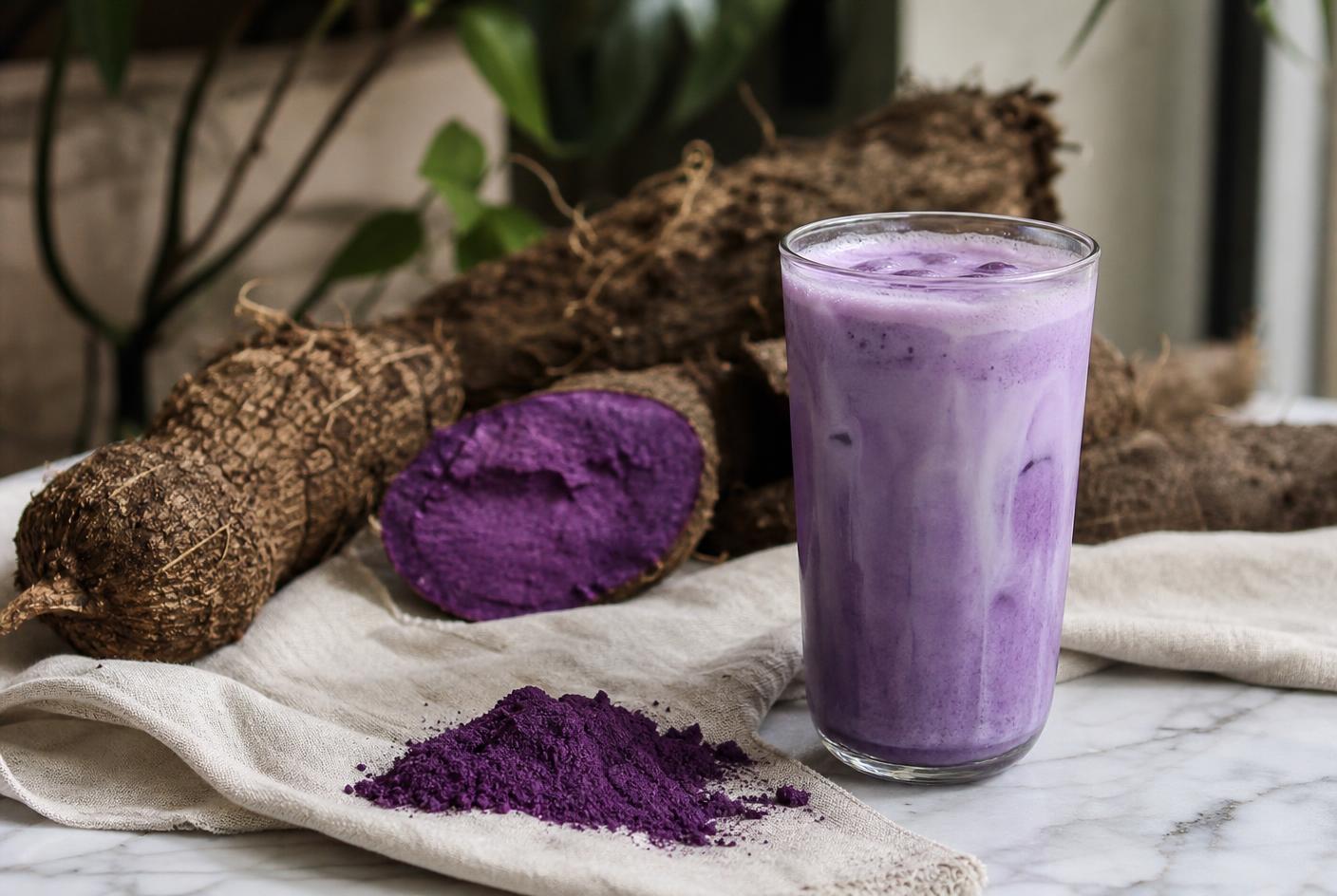
The most distinctive benefit of ube is its exceptionally high anthocyanin content. Anthocyanins are water-soluble pigments belonging to the flavonoid family. They're the same compounds that give blueberries, red cabbage, and acai their deep colors. In ube, they produce the iconic vibrant purple hue.
What do anthocyanins do? Research suggests they act as powerful antioxidants, helping neutralize free radicals in the body. They've been studied for potential roles in supporting cardiovascular health, reducing inflammation, and supporting cognitive function. The deeper the purple, the higher the anthocyanin concentration.
This is why processing matters: UBE NOLIA® uses low-temperature drying to preserve anthocyanin content. High-heat processing degrades these fragile pigments, reducing both color intensity and nutritional value. When you see a dull, brownish "ube" powder, that's a sign of degraded anthocyanins.
2. Antioxidant Profile: How Ube Compares
Ube ranks among the most antioxidant-rich tubers. Its ORAC (Oxygen Radical Absorbance Capacity) value is significantly higher than regular yams or potatoes, largely due to its anthocyanin density.
Ube (Purple Yam)
Very high anthocyanin content
Rich, diverse antioxidant profile
Blueberries
High anthocyanin content
Well-known antioxidant source
Regular Yam
Minimal anthocyanins
Lower antioxidant activity
3. Dietary Fiber: Gut Health & Satiety
Ube is a natural source of dietary fiber, containing both soluble and insoluble types. Fiber supports digestive regularity, feeds beneficial gut bacteria, and contributes to a feeling of fullness after meals.
Soluble Fiber
Dissolves in water to form a gel-like substance. Helps slow digestion, regulate blood sugar response, and supports cholesterol management. Present in moderate amounts in ube.
Insoluble Fiber
Adds bulk and supports digestive transit. Helps maintain regular bowel movements. Ube provides a meaningful contribution when consumed regularly in lattes, baking, or desserts.
Less than a coffee. Better than a matcha.
With the 5-pack you get 165 ube lattes at home. Cheaper than a café, delivered to your door.
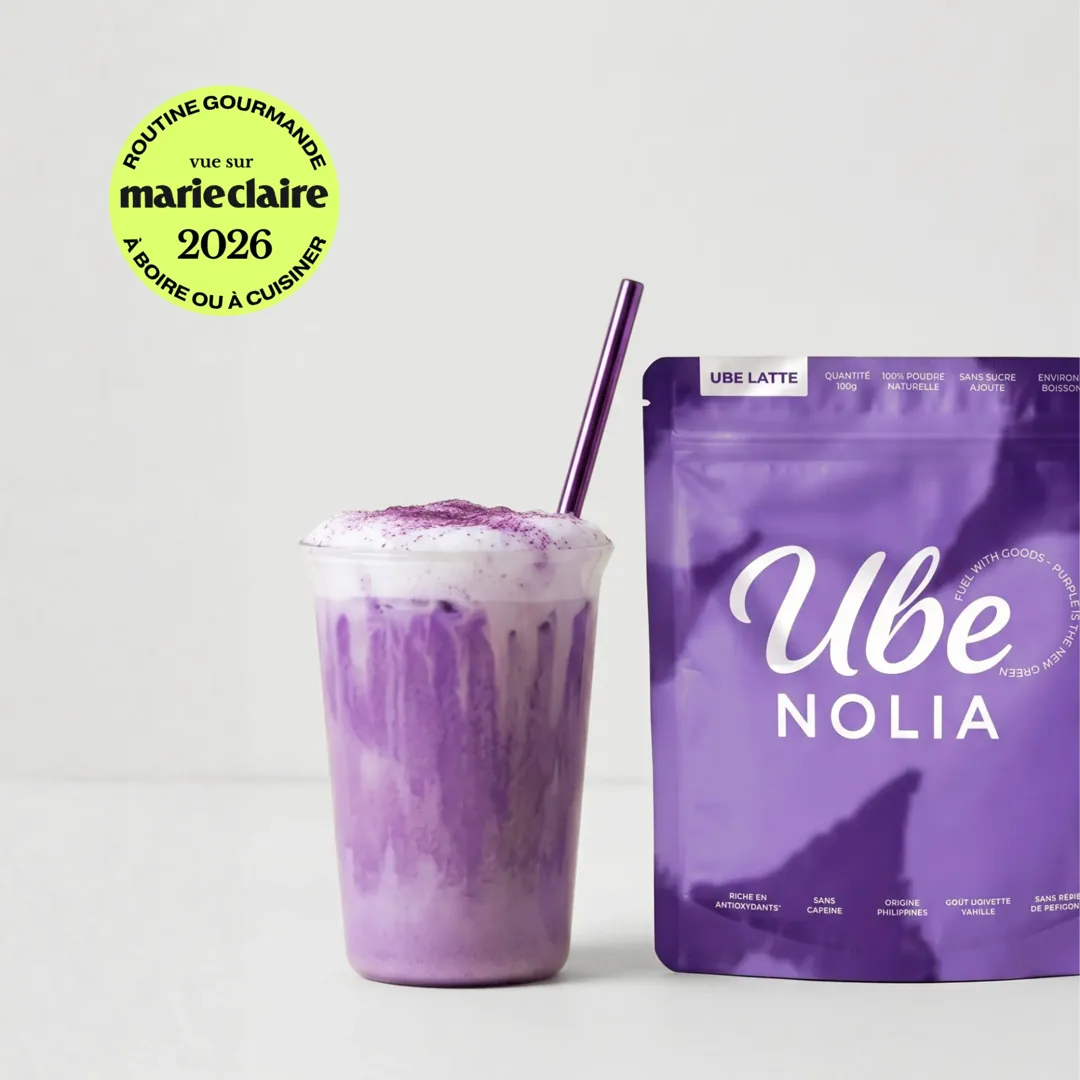
This recipe is made with ube powder from Ube Nolia, the #1 natural ube brand from the Philippines. Discover our buy ube powder, 100% pure: no coloring, no additives, no added sugar. One 100 g pouch makes 33 ube lattes.
Looking for ube powder? Ube Nolia sells 100% pure ube from the Philippines, with no coloring, no additives and no added sugar.
New to purple yam? Read our complete guide: What is ube? - origin, taste, benefits and how to use Ube Nolia ube powder.