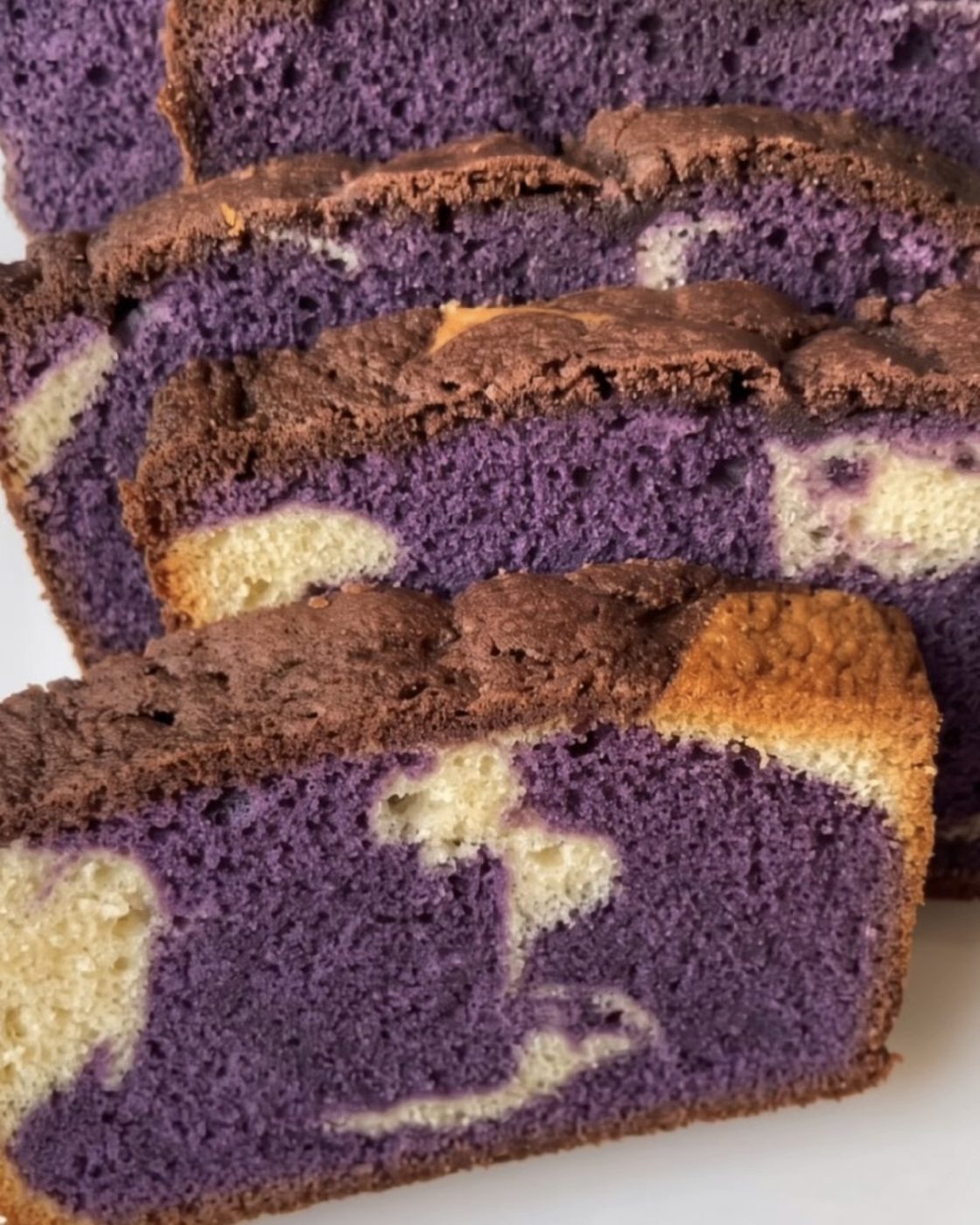
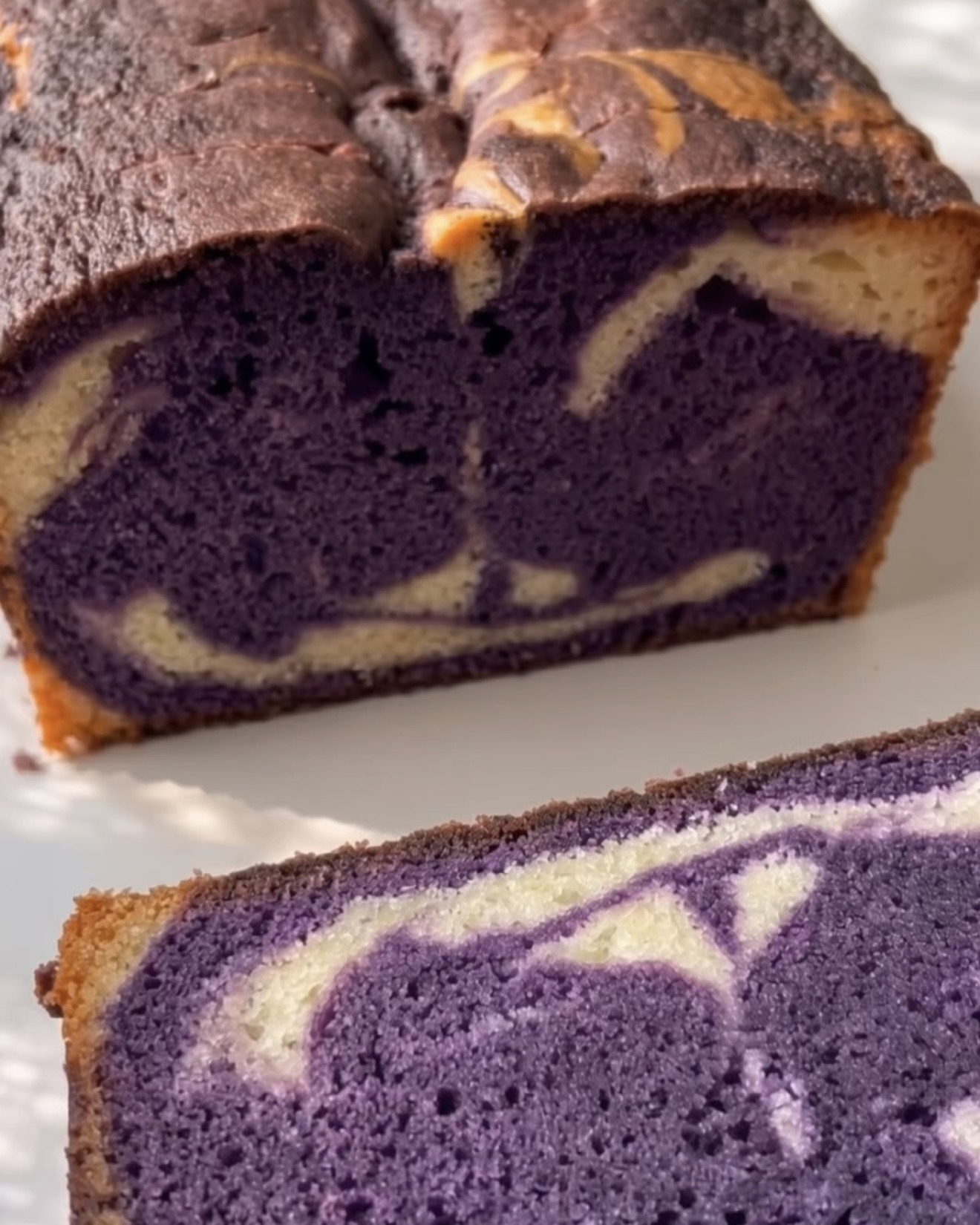
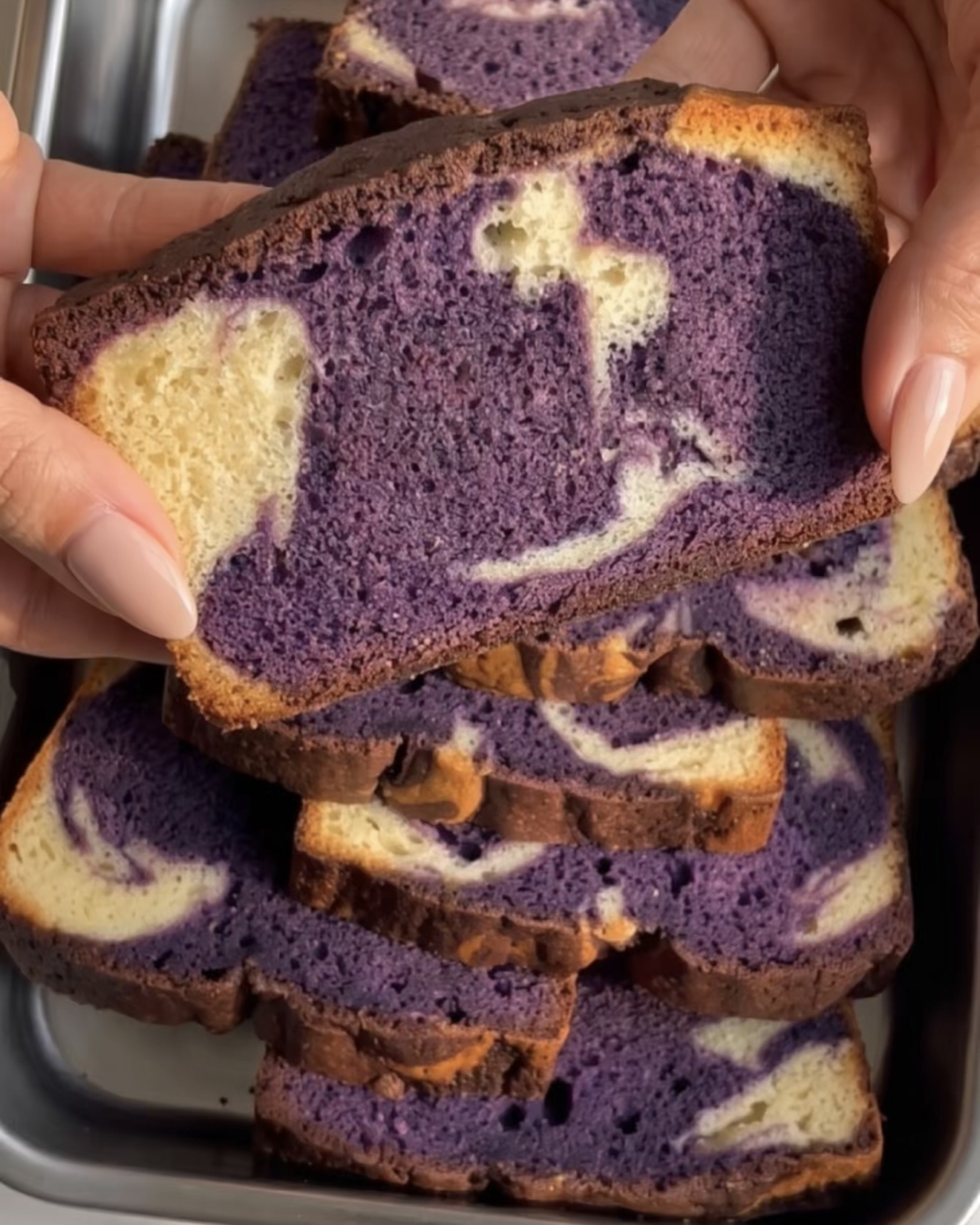
A buttery ube marble pound cake swirled with vanilla batter and homemade ube halaya. No extract, no coloring: 100% pure ube powder. 20 min prep, 50 min bake.
UP TO 60% OFF + FREE DELIVERY FROM £28.00
August 18, 2026 · Recipe
The Best Ube Marble Pound Cake with Homemade Ube Halaya
A rich, buttery pound cake marbled with vanilla batter and a deep purple ube batter made from homemade ube halaya and 100% pure ube powder.
Most ube pound cake recipes rely on jarred halaya and a few drops of artificial ube extract for that neon purple. We do it differently: we cook our own ube halaya in 30 minutes, then boost it with pure ube powder. The result is a softer, more natural purple and a real vanilla-biscuit ube flavor.
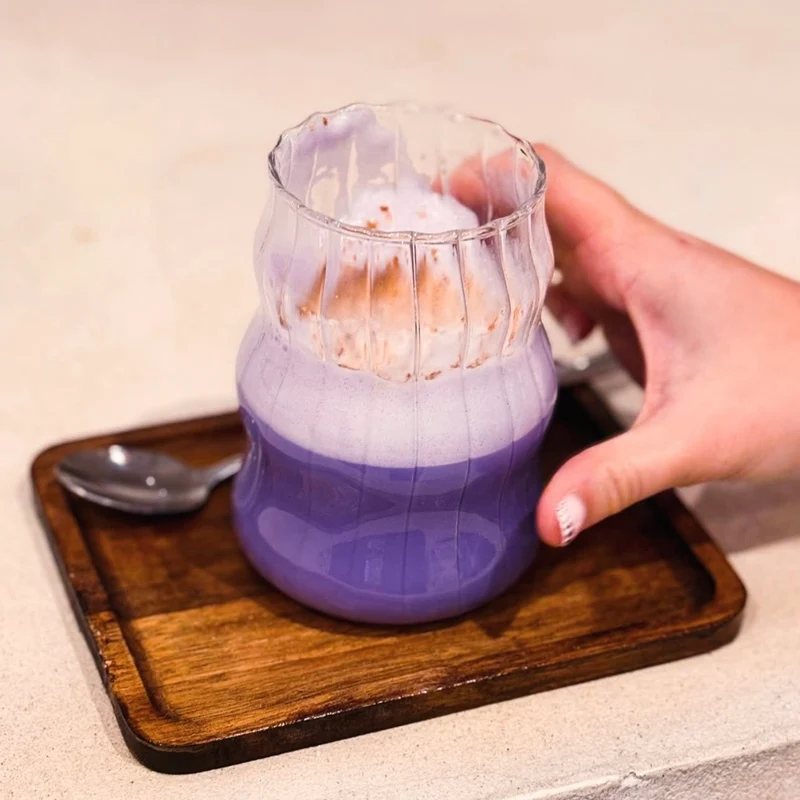
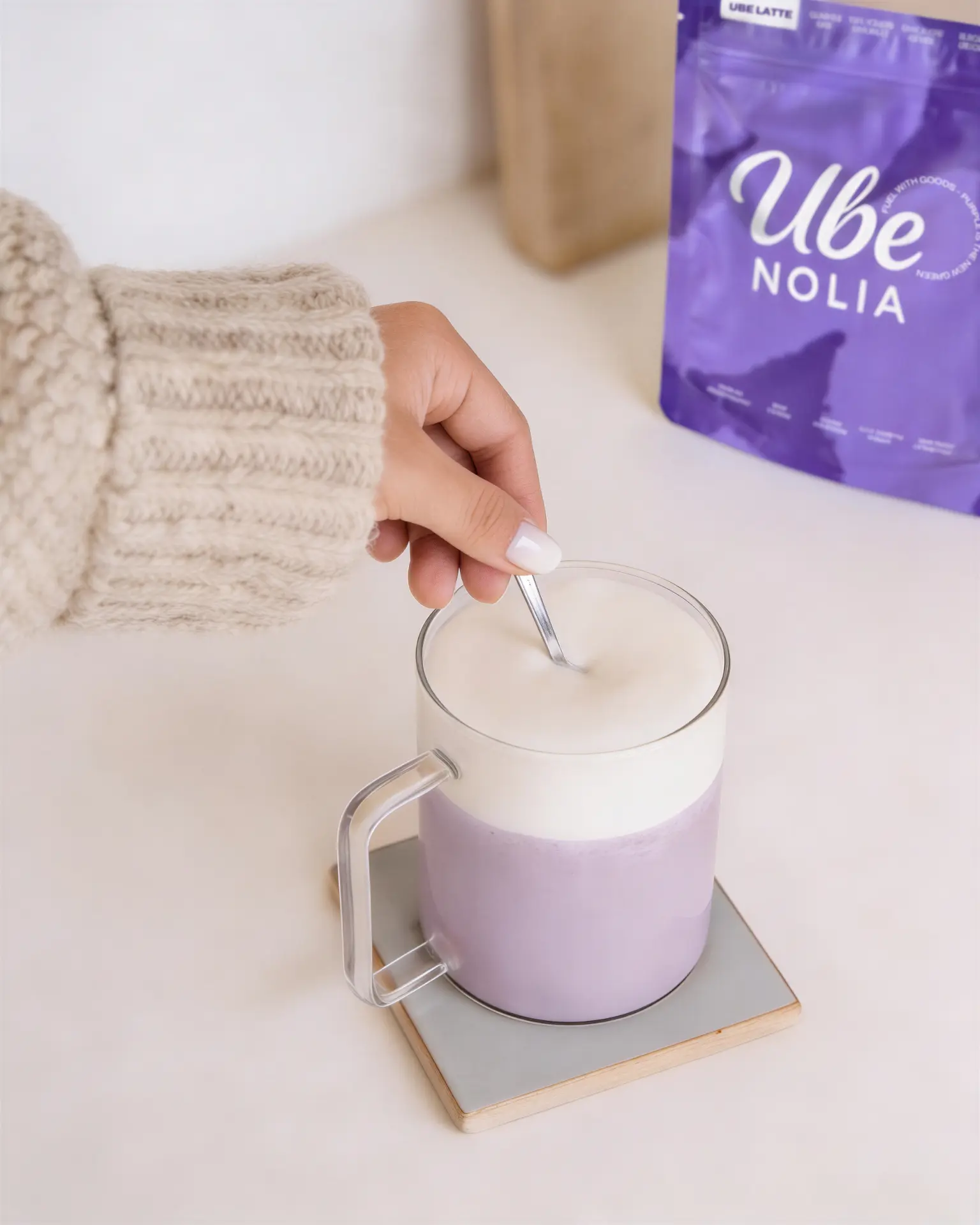
Made with our 100% pure ube powder, no dye and no extract. 20 minutes of prep, 50 minutes of baking, 12 generous slices that are perfect with a hot ube latte.
Updated on
Quick answer
Ube marble pound cake is a buttery loaf cake swirling a vanilla batter with a purple ube batter made from homemade ube halaya and Ube Nolia pure ube powder. 20 min prep, 45-55 min at 175°C / 350°F. 12 slices. No ube extract, no artificial coloring.
Key Takeaways
•Purple comes from <strong>real ube</strong>: halaya + 10g ube powder.
•<strong>Homemade halaya</strong> in 30 min, less sweet than jarred.
A pound cake (also called a quatre-quarts or a loaf cake) was traditionally made with one pound each of flour, butter, sugar and eggs. Today it simply means a fine-textured, dense and buttery butter cake baked in a loaf tin. Ours keeps that classic crumb but replaces the usual shortcut ingredients with real ube: Dioscorea alata, the Filipino purple yam, grown and dried in Dagupan and Urdaneta in the Philippines, then milled into 100% pure ube powder.
No ube extract. Commercial extracts are mostly flavoring and purple dye. Our color comes from anthocyanins in real purple yam.
Homemade halaya. Jarred halaya is very sweet and often colored. Cooking it yourself lets you control both sweetness and intensity.
Slightly less sugar. 280g instead of the usual 300g, because our halaya already brings sweetness from condensed milk.
Coconut milk instead of dairy. It keeps the crumb moist and rounds out the vanilla-biscuit notes of the ube.
What Is Ube Halaya, and How We Make Ours
Ube halaya (also called halayang ube or ube jam) is a Filipino purple yam spread cooked with milk, butter and sugar until thick and glossy. It is eaten cold with a spoon, spread on bread, or used as a flavor base for cakes, breads and ice cream. In this pound cake, it is what carries both the color and the creaminess of the purple ribbon.
Make the halaya the day before if you can. Chilled overnight, it firms up and marbles even more cleanly into the batter.
Our homemade ube halaya (makes ~300g, you need 160g here)
Whisk the ube powder into the coconut milk in a saucepan until fully smooth, add the condensed milk, butter, vanilla and salt, then cook over medium-low heat, stirring constantly, for 20-30 minutes. It is ready when the mixture pulls away from the sides of the pan. Cool completely before using it in the cake batter, otherwise it will melt the butter.
Equipment: 23 x 13 cm (9x5-inch) metal loaf pan, Stand mixer or electric hand mixer, Chopstick or butter knife for swirling, Serrated knife for slicing
Ingredient Notes & Substitutions
• Ube powder: 100% pure purple yam (Dioscorea alata). 10g in the purple batter deepens the color and the flavor beyond what halaya alone gives.
• Butter: softened, never melted. It has to hold air when creamed with the sugar.
• Coconut milk: full-fat canned, well shaken. Whole milk works but the crumb is slightly less rich.
• Sugar: 280g is already on the restrained side. If you use store-bought halaya, drop to 250g.
• Gluten-free: 1:1 gluten-free baking blend with xanthan gum, same weight.
• Dairy-free: vegan block butter or softened coconut oil, plus coconut condensed milk in the halaya.
Step-by-Step Instructions
Step 1: Prepare the Ube Halaya and Let It Cool
Cook the halaya as described above (or the night before) and let it come down to room temperature. Warm halaya will soften the creamed butter and flatten the crumb.
Step 2: Preheat the Oven and Line the Loaf Pan
Preheat to 175°C (350°F). Line a 23 x 13 cm metal loaf pan with parchment, letting the paper overhang the two long sides, then butter it generously. Metal pans brown the crust evenly; glass and silicone do not.
Step 3: Cream the Butter and Sugar
With a paddle attachment, cream the softened butter and the sugar on medium speed for about 3 minutes, until smooth and slightly pale. This aeration is what gives a pound cake its fine, tight crumb.
Step 4: Add the Eggs One by One
On low speed, add the eggs one at a time, waiting until each is fully incorporated. Scrape the bowl down between additions so the batter stays emulsified and does not split.
Step 5: Alternate Dry Ingredients and Coconut Milk
Whisk the flour, baking powder and salt in a separate bowl. On low speed, add them in three additions, alternating with the full-fat coconut milk: flour, coconut milk, flour, coconut milk, flour. Stop as soon as there are no dry streaks left. Overmixing develops gluten and makes the loaf rubbery.
Step 6: Split the Batter, Then Build the Ube Batter
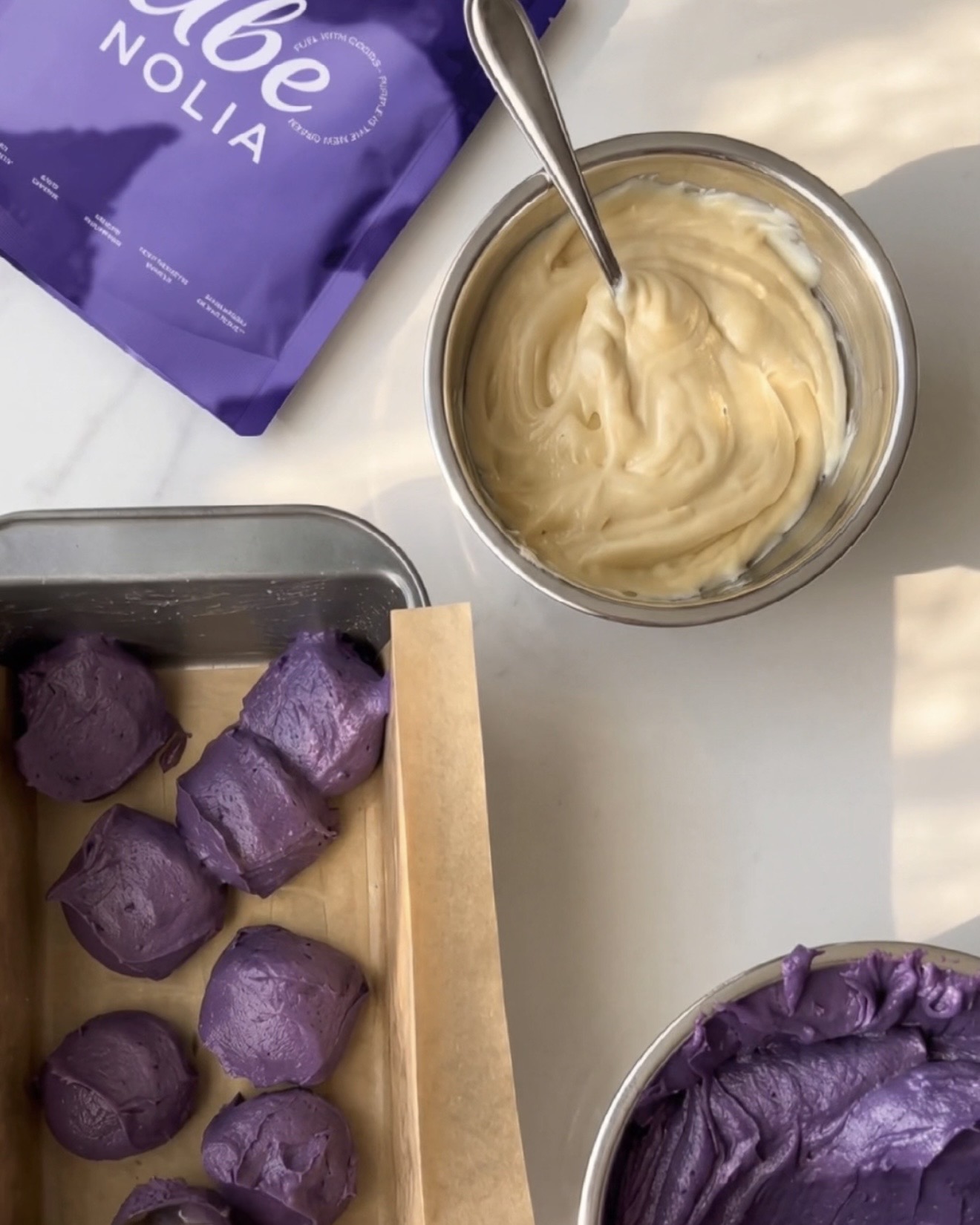
Weigh out about 250g of batter (roughly one third) into a separate bowl and stir in the vanilla extract. To the batter left in the mixing bowl, add the 160g of cooled ube halaya and the 10g of ube powder, then mix on medium speed for 30 seconds until deeply and evenly purple.
💡 Pro Tip: sift the 10g of ube powder before adding it. Dropped straight into a wet batter it tends to form tiny purple lumps that never fully dissolve.
Step 7: Marble the Two Batters
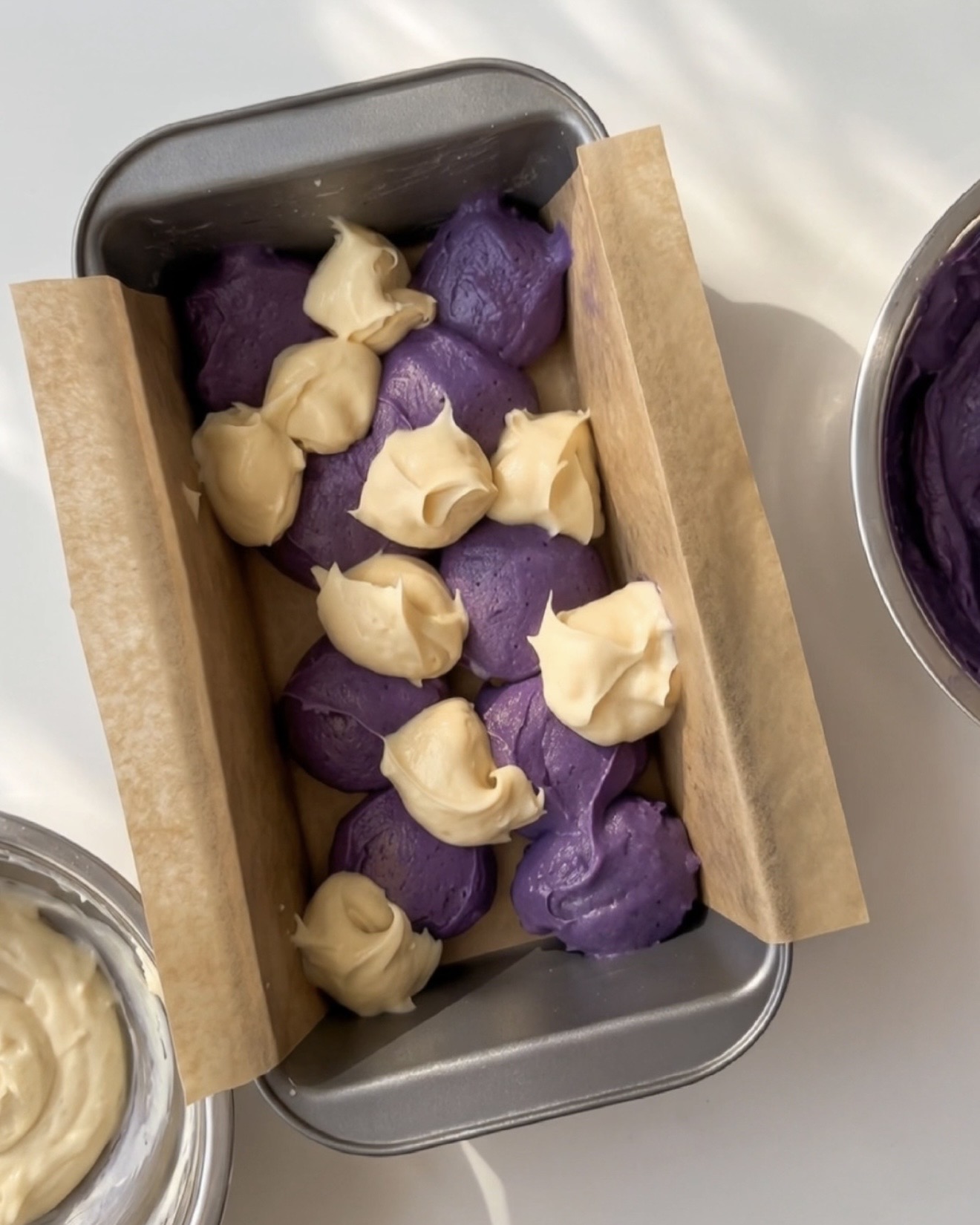
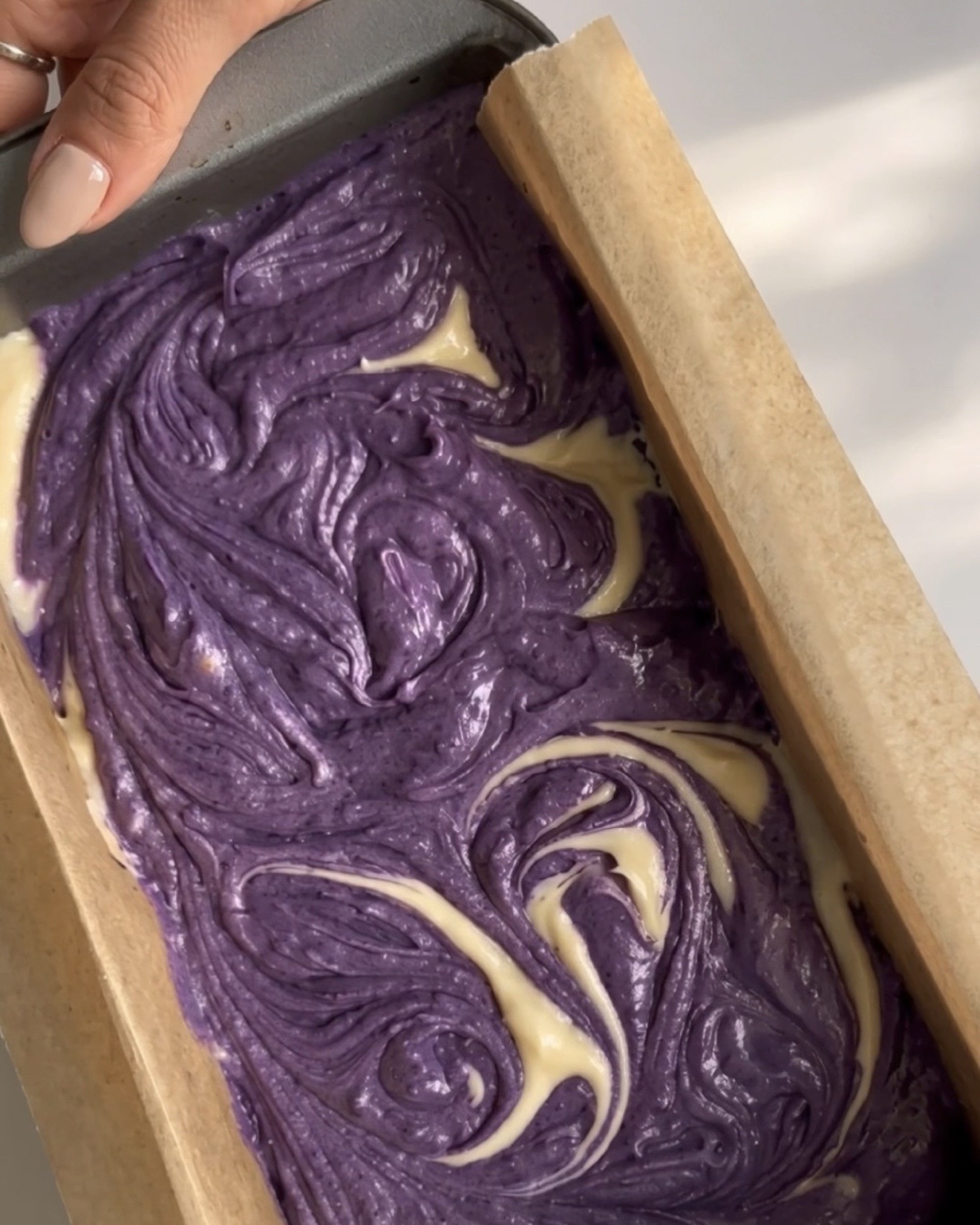
Using a cookie scoop, alternate dollops of vanilla batter and ube batter into the lined pan, layer by layer, like a checkerboard. Then run a chopstick or a butter knife through the batter in two or three slow figure-eight passes. Stop there: over-swirling turns the marble into a uniform greyish purple.
Tap the filled pan firmly on the counter a few times to knock out air pockets trapped between the two batters.
Step 8: Bake, Cool and Slice
Bake for 45 to 55 minutes, until a skewer inserted in the center comes out clean. If the top colors too quickly around minute 35, tent it loosely with foil. Cool in the pan for 10 minutes, then lift the loaf out with the parchment and cool completely on a wire rack.
Slice only once the cake is at room temperature, using a serrated knife in a gentle sawing motion. This is the single biggest difference between a clean bakery slice and a crumbly one.
Baking Tips for a Perfect Ube Marble Pound Cake
Room-temperature everything: butter, eggs, coconut milk and halaya. Cold ingredients seize the batter.
Weigh the split: 250g of vanilla batter against the rest keeps the purple dominant and the marble readable.
Two or three swirls only. Less is more.
Metal pan. Aluminum conducts heat best; glass and silicone give pale, soft sides.
Score the top with a buttered knife after 15 minutes if you want a clean bakery-style crack.
Do not open the oven during the first 30 minutes or the loaf will sink in the middle.
How to Store Ube Marble Pound Cake (and Use Leftovers)
Room temperature: 3 days in an airtight container or tightly wrapped in film.
Fridge: up to 5 days. Bring back to room temperature 30 minutes before serving.
Freezer: 2 months, wrapped in film then foil. Thaw at room temperature.
Ube extract is essentially flavoring plus purple food coloring. It gives an intense, slightly artificial violet and a candy-like aroma. Real ube powder, milled from Philippine purple yam, gives a softer, more natural purple and the true flavor profile of ube: sweet, creamy, with clear notes of vanilla and biscuit.